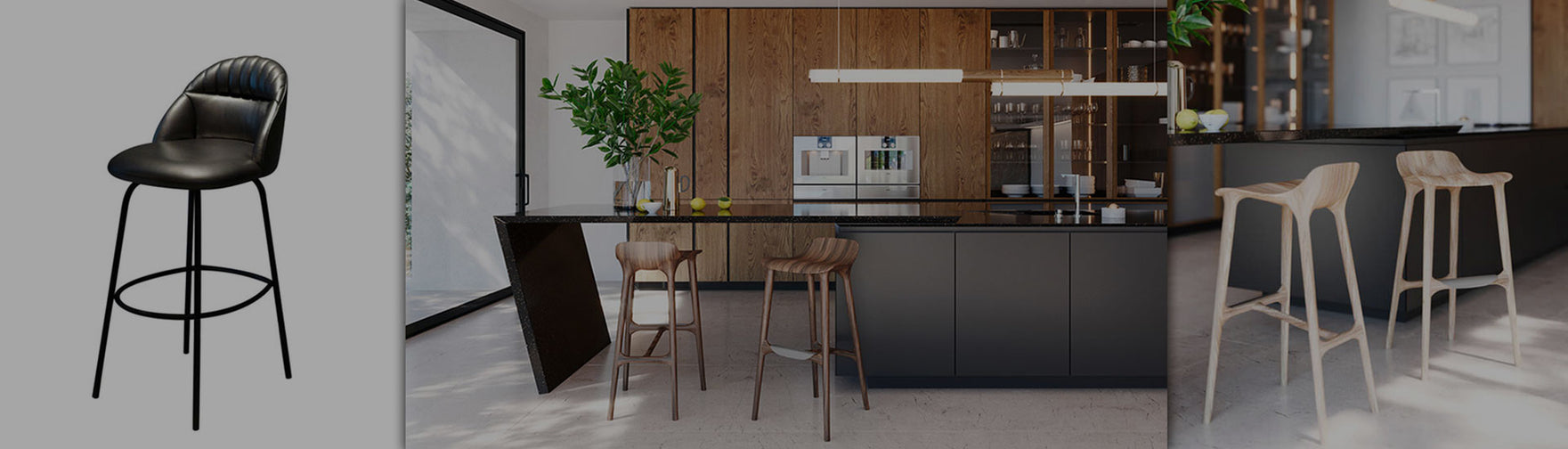
Bar Stools for Kitchens, Breakfast Bars and Home Bars
Bar stools are raised seats designed for counters, breakfast bars and tables that sit higher than standard dining tables. Their defining feature is seat height, which allows people to sit comfortably at a raised surface while keeping their legs supported. Depending on the design, they may have a backrest, armrests, a footrest or a swivel seat.
Bar stools differ from ordinary dining chairs because they are made for higher seating positions. Choosing the right design involves more than appearance: seat height, legroom, stability and the amount of space available around the counter all affect everyday comfort.
Types of Bar Stools
Bar stools vary in their level of support, construction and visual presence. The most suitable type depends on how long people will sit, the height of the counter and whether the stools will be used for quick meals, conversation or longer periods of seating.
Bar Stools with Backrests
A backrest provides support when sitting for longer periods, making these designs useful for breakfast bars and home bars used for meals or conversation. The height and shape of the backrest influence both comfort and the way the stool looks against the counter.
Backless Bar Stools
Backless designs have a more open profile and can be tucked beneath a counter when not in use, provided the seat and base allow sufficient clearance. They suit settings where a lighter visual presence and flexible seating arrangement are priorities. They offer less back support than stools with backrests.
Upholstered Bar Stools
Upholstered seats introduce softness through fabric or leather, depending on the design. Padding and seat shape can make a difference during longer periods of use, while the upholstery colour and texture help connect the stools with nearby furniture and finishes.
Swivel and Adjustable Bar Stools
Swivel seats allow users to turn without moving the entire stool, which can be useful in social spaces. Height-adjustable designs offer flexibility where the seating surface or users' needs vary. Check the adjustment range, stability and mechanism before choosing a stool for a particular counter.
Materials and Finishes for Bar Stools
Materials affect the look, feel and upkeep of a bar stool. Consider the seat, frame and finish together, as well as how they relate to the counter, cabinetry, flooring and other furniture in the room.
Wood
Wooden frames and seats can introduce natural grain and warmth into a kitchen or bar area. Their appearance depends on the wood, shape and finish, allowing them to work with both restrained interiors and settings with more pronounced material contrasts.
Metal
Metal frames can create a slim, defined profile or a more substantial base, depending on their construction. Finishes such as chrome, brushed metal or darker tones can relate to taps, handles, lighting and other metal details in the room.
Fabric and Leather Upholstery
Upholstery changes the feel of the seat and offers opportunities to introduce colour and texture. When choosing fabric or leather, consider how frequently the stools will be used, how easy the surface is to maintain and whether the finish suits the demands of the setting.
Mixed Materials
Bar stools that combine materials can bring contrast to a room, such as an upholstered seat on a metal frame or a wooden seat with a contrasting base. The combination should relate to the wider interior without making the seating arrangement feel disconnected from the counter.
How to Choose the Right Bar Stool Height
Seat height is one of the most important measurements when choosing bar stools. A stool that is too high can leave little room for the legs, while one that is too low can make the counter uncomfortable to use.
Measure the Counter Height
Measure from the floor to the top of the counter or table. As a general guide, allow around 25–30 cm between the seat and the underside or top seating surface, checking the actual clearance beneath the counter. The required gap can vary with seat thickness, body proportions and the counter's construction.
Check Legroom and Footrest Position
Make sure there is enough room for the knees and thighs beneath the counter. A footrest can help support the legs when the seat is raised, but its position should feel natural for the intended user. Counter supports, drawers and overhangs can also affect comfort.
Allow Space Between Stools
Leave enough room for people to sit, stand and move without knocking elbows. The spacing required depends on the width of each stool and whether it has arms. Swivel stools may need additional clearance to turn comfortably.
Comfort, Support and Everyday Use
The right bar stool should suit the way the counter is used. Seating for a quick breakfast may have different requirements from stools used for long conversations or working at a kitchen island.
Seat Shape and Padding
A well-proportioned seat should support the body without restricting movement. Padding can improve comfort, while the shape and depth of the seat influence how it feels over time. Try to assess the seat together with the footrest and overall stool height.
Back and Arm Support
Backrests can provide additional support during longer periods of sitting. Armrests may add comfort but can limit how closely a stool fits beneath a counter. Check the overall height and width, including the arms, before deciding how many stools will fit.
Stability and Construction
A stool should stand securely on the intended floor surface and support its user within the manufacturer's stated limits. Consider the base design, construction and maintenance requirements, particularly in frequently used kitchens and shared spaces.
Where to Use Bar Stools
Bar stools can serve several purposes at home, from informal dining to seating for conversation. Their dimensions and level of support should suit the space rather than being chosen on appearance alone.
Kitchen Islands and Breakfast Counters
Bar stools turn a kitchen island or raised counter into a place for breakfast, quick meals and conversation. Choose a seat height that allows comfortable legroom and leaves the kitchen's working routes clear.
Home Bars and Entertainment Areas
In a home bar or entertainment area, stools can help define a social seating zone. Back support, upholstery and swivel movement may be useful when people are likely to remain seated for longer periods.
Open-Plan Living and Dining Spaces
In open-plan interiors, bar stools can connect the kitchen with nearby living or dining areas. Their materials and finishes can relate to surrounding furniture, while a suitable profile helps preserve sightlines and movement between zones.
Styling Bar Stools Within an Interior
Bar stools are visible elements of a kitchen or dining setting, so their proportions and finishes should work with the counter and the wider room. Matching every finish is not essential; a considered contrast can create a stronger composition.
- Relate materials: Connect the stool frame or upholstery with selected finishes in the cabinetry, flooring or nearby furniture.
- Consider visual weight: Slim frames can keep a compact setting open, while upholstered or substantial stools can give a larger counter more presence.
- Keep the arrangement balanced: Check stool spacing and alignment with the counter rather than crowding the available length.
- Think about the view: In open-plan rooms, the backs and sides of stools may be visible from the living area, so their profile matters.
- Plan for maintenance: Choose finishes and upholstery suited to the frequency of use and the likelihood of spills or marks.
Frequently Asked Questions About Bar Stools
How do I choose the correct bar stool height?
Measure the counter and choose a seat that leaves comfortable space for the legs. Around 25–30 cm between the seat and the counter is a useful starting point, but actual clearance should be checked against the counter design and stool dimensions.
What is the difference between a bar stool and a counter stool?
The main difference is usually height. Counter stools are designed for standard kitchen counters, while bar stools are generally taller. Product naming varies, so check the listed seat height rather than relying on the name alone.
Are bar stools with backrests more comfortable?
A backrest can provide extra support, especially when sitting for longer periods. Comfort also depends on seat shape, padding, footrest position and the fit between the stool and counter.
How many bar stools can fit along a counter?
This depends on the counter's usable length and the width of each stool. Allow enough room between seats for comfortable movement, and consider extra clearance for stools with arms or swivel seats.
Are upholstered bar stools suitable for kitchens?
They can be suitable, provided the upholstery is appropriate for the setting and can be maintained as needed. Consider the material's cleaning instructions and how close the stools will be to food preparation areas.
Can bar stools be used at a kitchen island?
Yes, if the island has a suitable overhang, enough legroom and a height that matches the stools. Check the seat height and spacing before deciding on the number of seats.
Where to Explore Bar Stools in India
When comparing bar stools, consider seat height, width, support, materials and the available space around the counter. Spacio's online collection allows customers across India to explore seating options for kitchens, breakfast counters and home bars. For in-person furniture enquiries, contact Spacio about visiting the Kolkata showroom at Topsia Road South, Kolkata.
Why Explore Bar Stools at Spacio?
Spacio Collections brings together furniture for considered residential interiors. When choosing bar stools, the focus should be on finding the right relationship between seating height, comfort, material and the proportions of the counter, so the stools work as part of the room rather than as separate additions.
Choosing Bar Stools for Your Space
The most suitable bar stools are those that fit the counter, support the way the space is used and complement the surrounding materials. By considering height, comfort, construction and visual proportion together, you can create a seating arrangement that works for everyday use and fits naturally within the interior.