Luxury Console Tables: A Guide to Design and Interior Styling
A console table is a relatively narrow table designed to sit against a wall or behind other furniture. Its defining feature is its ability to provide a useful surface without occupying the same depth as a conventional table. Depending on its design, a console may serve as an entrance table, a display surface in a hallway, a decorative focal point in a living room or a practical addition to a bedroom.
Console tables occupy an interesting place between furniture and interior styling. Their proportions make them useful in transitional spaces, while their form, materials and detailing can give a wall a clear visual identity. Some are designed primarily as sculptural objects; others offer drawers, shelves or additional storage. Understanding this distinction helps you select a console that suits both the room and its intended use.
What Is the Difference Between a Console Table and a Side Table?
Although both are accent tables, console tables and side tables generally serve different spatial roles. A console is usually longer and narrower, making it suitable for placement along a wall, behind a sofa or within an entrance. A side table is generally smaller and is placed beside a sofa, lounge chair or bed to keep everyday items within reach.
The distinction is not absolute, as individual designs can overlap in scale and use. The more useful question is how the table will relate to the furniture around it. A console can establish a long horizontal line against a wall, while a side table usually supports a specific seating or sleeping position. Explore luxury side tables if you need a smaller surface beside a chair, sofa or bed.
Types of Console Tables
Sculptural Console Tables
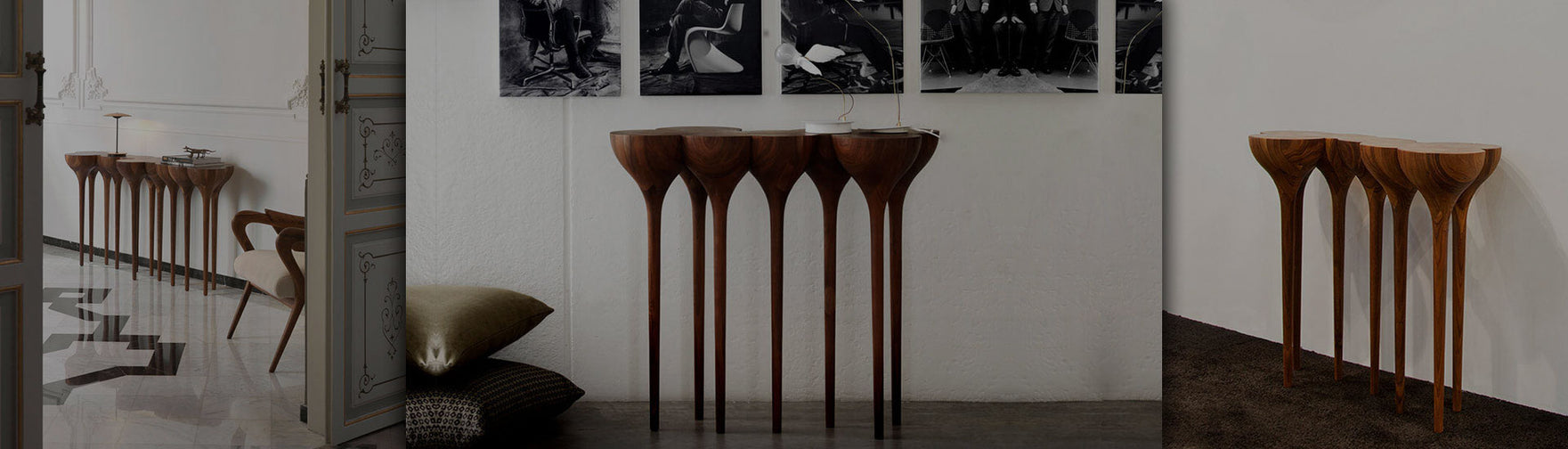
Sculptural consoles are chosen for the character of their form as much as for their practical use. Distinctive bases, curved profiles, geometric shapes or unusual combinations of materials can make the table a focal point in an entrance or living room. When selecting a statement design, consider the view from the doorway and the surrounding furniture. A strong silhouette needs enough visual space to be appreciated.
Console Tables with Storage
Some consoles include drawers or other enclosed storage, while others provide only an open surface. Storage can be useful in an entrance for small everyday belongings or in a living room for items that need to remain close at hand. Check the dimensions and internal layout of the individual design, as the presence of a drawer or cabinet can affect both capacity and the table's visual proportions.
Minimal and Contemporary Consoles
Minimal consoles rely on proportion, line and material rather than extensive ornament. Their restrained form can suit interiors where furniture and decorative objects need to work together without competing for attention. Contemporary designs may also use a bold base, an unexpected profile or contrasting finishes to give a simple table a distinctive identity. The choice depends on whether the console should blend into the setting or become one of its main features.
Materials and Finishes in Console Table Design
The material of a console influences its visual weight, surface character and relationship with other furniture. It should be considered alongside the table's construction and intended position, rather than treated as a purely decorative choice.
Wood and Natural Grain
Wood introduces visible grain and warmth, making it useful in interiors with natural materials, textured fabrics or understated finishes. Walnut, for example, can create a rich visual presence without relying on bright colour or elaborate ornament. The grain, tone and finish should relate to the wider palette, although an exact match with other wooden furniture is not always necessary.
Marble and Stone Surfaces
Stone surfaces can give a console a strong material presence through their veining, tonal variation and weight. Calacatta marble, as used on the Arc Calacatta console, brings a distinctive natural pattern to the design. When considering a stone-topped table, check the product specifications for the actual material, finish and care guidance. Also consider the visual balance between the top and the base, particularly in a narrow hallway or a compact entrance.
Concrete and Mixed Materials
Combining materials can create contrast between the table's surface and its supporting structure. The Arc Calacatta console, for example, combines a Calacatta marble top with a fibre-concrete base. Such combinations can make the base as important to the design as the surface itself. When selecting a mixed-material console, consider how its different textures and finishes relate to the flooring, wall finishes and nearby decorative objects.
Choosing the Right Console Table: Size, Scale and Proportion
The first step is to measure the available space. Check the console's width, depth and height against the wall or furniture where it will stand. A table that is too deep can restrict movement in a narrow passage, while one that is too short may appear disconnected from a long wall. In an entrance or hallway, allow enough clearance for people to pass comfortably, including when doors are open.
Height also affects how a console works with the objects placed on it. A lamp needs sufficient height and space around its base; a large sculpture may require a stronger surface and a quieter background. If the console sits behind a sofa, compare its height with the back of the sofa and consider how the table will look from both sides of the room. The goal is a coherent composition rather than a table chosen in isolation.
Finally, decide whether the console is primarily functional or decorative. A table used for everyday belongings may need storage and a durable surface. A console intended for art or display may place greater emphasis on its silhouette, finish and relationship with the wall. Some designs can serve both purposes, but their dimensions and features should be checked before making a decision.
Where to Place Console Tables
Entrance Foyers and Hallways
An entrance console can establish the first visual impression of a home. It provides a surface for a lamp, a bowl for small belongings or a selected decorative object, while helping organise an otherwise empty wall. In a narrow foyer, depth and circulation matter especially. A slim profile may be more suitable than a substantial sculptural design if the entrance also serves as a busy route through the home.
For a more complete entrance scheme, explore entrance foyer furniture and styling. This broader setting can bring together the console, lighting, mirrors, seating and decorative objects as parts of one composition.
Living Rooms
In a living room, a console can sit against an unused wall, behind a sofa where space allows, or within a larger furniture arrangement. It can provide a second display surface without taking the place of a centre table. If positioned behind a sofa, check the height and depth carefully so the table does not interfere with seating or movement. If placed against a wall, consider the relationship between the console, artwork and lighting above it.
Bedrooms and Dressing Areas
A console can provide a surface for a lamp, selected accessories or personal objects in a bedroom or dressing area. Its suitability depends on the available space and the way the room is used. Where storage is required, check whether the design has drawers or whether a dedicated dressing table would be more practical. A console should support the room's purpose without obstructing wardrobes, doors or circulation.
Offices and Hospitality Interiors
Consoles can also be used in reception areas, executive offices, hotel lobbies and other commercial settings. In these spaces, the table may establish a focal point, display selected objects or support the overall interior scheme. Consider the amount of traffic, the need for storage and the relationship between the console and the surrounding furniture. For project use, confirm the dimensions, materials and suitability of the individual product with the supplier.
How to Style a Console Table
A well-styled console balances the table's own design with the objects placed on it. Begin by deciding what should lead the arrangement: the console itself, an artwork above it or a decorative object on the surface. If the table has a strong sculptural base or distinctive stone top, a restrained display may allow those details to remain visible.
Varying the height and scale of objects can create a more considered arrangement. A table lamp, vase, sculptural object, decorative bowl or a small stack of design books can provide contrast without requiring many items. Leave enough open surface to show the table's material and shape. The arrangement should also make sense from the main viewing angle, particularly in an entrance where the console may be seen as soon as the front door opens.
Wall styling matters too. A mirror can reflect light and provide a useful last look before leaving home; artwork can introduce colour or create a visual focus. Choose the scale and placement of the wall piece in relation to the console rather than treating them as separate decisions. Explore luxury decor accessories for vases, sculptural objects, decorative trays and other pieces that can support the display.
Three Console Designs with Distinct Design Approaches
Console tables can differ considerably in their use of form, material and detail. Spacio's current collection includes designs that illustrate these differences.
Frequently Asked Questions About Console Tables
What is a console table used for?
A console table provides a relatively narrow surface for display or everyday use. It is commonly placed in entrance foyers, hallways and living rooms, but can also work in bedrooms, dressing areas and commercial interiors. Depending on the design, it may offer storage or function mainly as a sculptural furniture piece.
What is the difference between a console table and an entryway table?
The terms often describe the same type of furniture. An entryway table is named for its location and purpose, while console table refers more broadly to the furniture form. A console can be used at an entrance or in other rooms, provided its proportions suit the available space.
How deep should a console table be?
There is no single ideal depth for every room. The right measurement depends on the available space, the intended use and the circulation around it. In a narrow hallway, a shallow console may preserve movement; a larger living room can accommodate a deeper design if it does not obstruct walkways. Always check the full product dimensions before purchase.
Can a console table be used behind a sofa?
Yes, provided the table's height and depth suit the sofa and the room. Check that it does not interfere with seating, walking routes or access to nearby furniture. The objects placed on the console should also be stable and positioned so they do not obstruct movement around the sofa.
How do I decorate a console table?
Start with the role of the display and the design of the table. A lamp, vase, sculpture, decorative bowl or selected books can create a considered arrangement. Balance the height and scale of the objects, leave some surface visible and relate the display to any artwork or mirror above the console.
Which material should I choose for a console table?
Choose a material that suits the room's design, practical requirements and the visual effect you want. Wood can introduce grain and warmth, while marble and mixed materials can create a stronger contrast of texture and form. Check the individual product's confirmed materials, finish and care requirements rather than assuming all consoles share the same properties.
Where to Explore Luxury Console Tables in India
Explore Spacio's console table collection online to compare the available designs and request current product information. Check dimensions, material details, finishes, availability and pricing for the specific console you are considering. Online discovery allows customers and design professionals across India to begin evaluating a piece for a home or interior project.
For furniture consultations, Spacio's Kolkata showroom is located at 86B, Topsia Road South, Kolkata 700046.
Why Choose Spacio for Console Tables?
Selecting a console is an exercise in proportion, material and placement. A design that looks striking on its own may not be right for a narrow foyer or a wall already carrying strong visual elements. Considering the table alongside lighting, artwork, decorative objects and other furniture helps create a more coherent result.
Spacio brings together furniture and interior styling products for homeowners, architects and interior designers working across different kinds of spaces. The collection includes contrasting design approaches, from the marble-and-fibre-concrete Arc Calacatta to the walnut Esgrimas and the customisable Mercury. This range of design characteristics gives customers a useful starting point for considering how a console should function and look within a wider interior.
Choosing a Console That Belongs in the Room
A console table works best when its function, proportions and design character respond to the space around it. Measure carefully, consider how people move through the room and decide whether the table should provide storage, support a display or act as a focal point. The most successful choice is not simply an attractive piece of furniture; it is one that contributes to the balance and purpose of the complete interior.