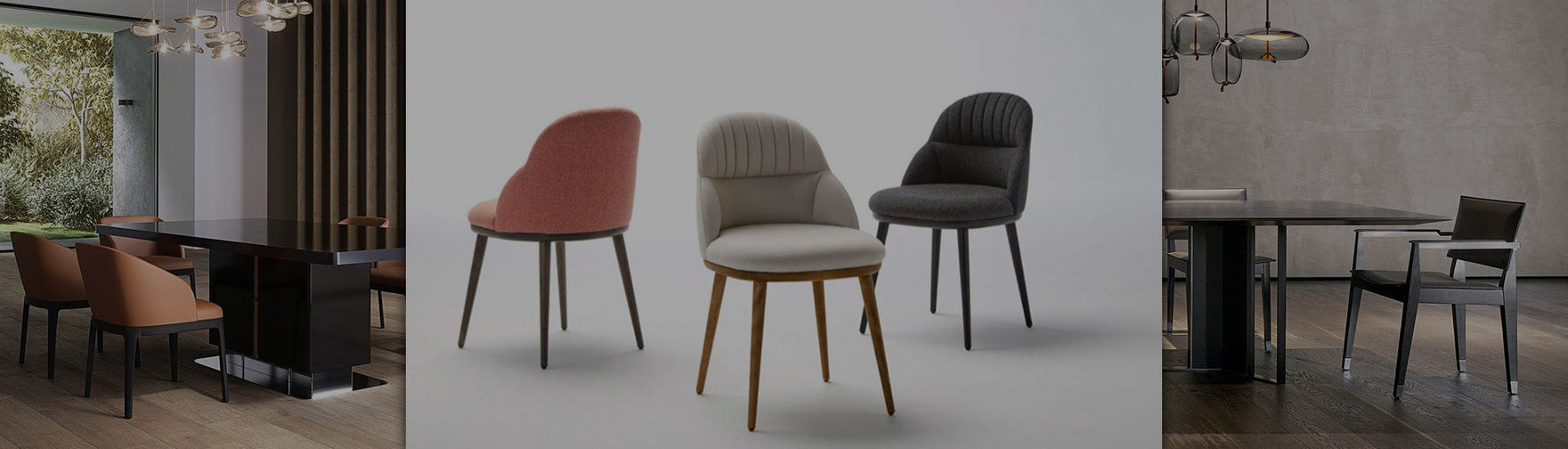
A Guide to Luxury Dining Chairs
Dining chairs influence how a dining room looks, feels and functions. They provide the seating for everyday meals and long conversations, while their shape, material and finish contribute to the room's overall design. A chair may be visually striking, but it also needs to offer suitable support, fit beneath the table and allow diners to sit comfortably.
Designer dining chairs explore this balance in different ways. Some feature upholstered seats and backs, while others use visible wood or metal frames to define their character. Curved silhouettes, shaped armrests, distinctive legs and carefully selected finishes can turn a functional chair into an important part of the interior.
Types of Dining Chairs
Dining chairs vary in their shape, support, upholstery and visual weight. The right type depends on the dining table, the space available and how the room is used.
Upholstered Dining Chairs
Upholstered dining chairs have a seat, back or both covered in a material such as fabric or leather, depending on the design. Upholstery can introduce colour, texture and softness alongside a hard tabletop. Padded seats and backs may also provide added comfort for longer meals, although the level of support depends on the chair's shape and construction.
When choosing upholstered chairs, consider the fabric or covering, cushion firmness, back height and maintenance needs. The colour should relate to the table and wider room palette without requiring every finish to match exactly.
Dining Chairs with Arms
Dining chairs with arms can provide additional support and a more substantial appearance. They may be suited to the ends of a dining table or to a room where comfort and a defined seating presence are priorities. However, the arms need to fit beneath the tabletop if the chairs are intended to be tucked in when not in use.
Check the chair's total width, arm height and distance between table legs. These dimensions can affect how many chairs fit around the table and whether diners have enough room to sit and move comfortably.
Armless Dining Chairs
Armless chairs offer a clean silhouette and can be easier to position around a dining table where space is limited. Their narrower form may allow more seating flexibility, depending on the width of the seat and the table's base. They can also create a more continuous line around a rectangular or oval tabletop.
Without armrests, the shape of the seat and back becomes especially important for support. Check the seat depth, back angle and overall dimensions before selecting chairs for extended dining.
Curved and Sculptural Dining Chairs
Curved backs, rounded forms and distinctive frames can give dining chairs a sculptural quality. These designs can soften a room dominated by straight lines or create a strong visual relationship with a round or oval table. Their form may be a defining feature even when the colour palette remains restrained.
Look at the chair from the front, side and back, particularly if it will be placed in an open-plan room where the dining furniture is visible from several directions. The shape should complement the table without making the overall arrangement feel crowded.
Contemporary and Minimalist Dining Chairs
Contemporary dining chairs often use clear shapes, considered proportions and a balance between material and form. Minimalist designs may have slim frames, restrained colours or limited detailing. These chairs can work well in modern interiors where the dining table, lighting or surrounding finishes provide the main visual focus.
A restrained design does not have to feel plain. The shape of the back, the angle of the legs, the finish of the frame and the texture of the seat can all contribute to the chair's character.
Classic and Statement Dining Chairs
Classic dining chairs may feature shaped backs, decorative frames, richer finishes or more traditional proportions. Statement designs can also introduce bold colour, unusual silhouettes or contrasting materials. Either approach can give a dining room a distinctive identity when the chairs relate well to the table and surrounding furniture.
For a coordinated setting, consider whether the chairs should blend with the table or create a deliberate contrast. A detailed chair may be balanced by a simpler table, while a visually strong table can work with more restrained seating.
Dining Chair Materials and Upholstery
Materials affect the look, feel, care and long-term use of a dining chair. The frame provides its structure, while the seat and back determine much of the comfort and visual character. Some chairs use a single dominant material; others combine upholstery, wood, metal and decorative finishes.
Fabric Dining Chairs
Fabric upholstery offers a wide range of colours, textures and patterns. Depending on the material, it can create a soft, understated appearance or a more pronounced tactile effect. Fabric chairs can help connect the dining area to curtains, rugs or other upholstered furniture in an open-plan home.
Consider how easily the covering can be cleaned, how it may respond to spills and whether its texture suits your household's needs. Fabric types and performance vary, so check the specific upholstery details and care instructions for each chair.
Leather and Vegan Leather Dining Chairs
Leather and vegan leather coverings can create a smooth, defined finish that works with both contemporary and classic dining furniture. Their appearance depends on the material, colour, texture and stitching. Darker tones may create contrast with a pale table, while lighter finishes can make a dining arrangement feel more open.
Leather and vegan leather are different materials, with different compositions and care requirements. Confirm the actual covering used in the chair and follow the manufacturer's cleaning guidance rather than assuming all finishes respond in the same way.
Wooden Dining Chairs
Wooden frames bring grain, warmth and natural texture to a dining room. They can suit contemporary, classic and Japandi-inspired interiors, depending on their shape and finish. A visible wood frame can also provide contrast against an upholstered seat or a stone tabletop.
Look at the frame's construction, finish and proportions in relation to the table. Different woods and finishes can vary in colour and grain, so confirm the material specification of the selected chair.
Metal Dining Chair Frames
Metal frames can create a slender, modern profile or a more defined sculptural structure. Depending on the design, they may be paired with upholstered seats, wood or other materials. The frame finish can relate to metal details elsewhere in the room, including lighting and table bases.
Consider the overall weight and visual presence of the chair, along with the finish and construction. A slim frame may look light in the room, but seat comfort and stability remain essential considerations.
Mixed-Material Dining Chairs
Some dining chairs combine materials to balance texture, structure and comfort. A wood or metal frame may be paired with an upholstered seat, while contrasting finishes can highlight the chair's shape. These combinations can help connect different materials already present in the dining room.
When selecting mixed-material seating, look at the complete chair rather than judging each material separately. The frame, seat, back, stitching and finish should work together as a considered design.
How to Choose the Right Dining Chairs
The right dining chair must fit the table and the people using it. Before choosing a design, check the dimensions, seating arrangement and available clearance. Comfort, material and appearance should be considered together rather than treated as separate decisions.
Seat Height and Table Compatibility
Measure the distance between the floor and the underside of the dining table, not only the tabletop height. The chair needs enough clearance for the seat and, where applicable, the arms. Diners should be able to sit comfortably without their knees pressing against the table or apron.
If the table has a central pedestal, trestle base or legs positioned close to the corners, check how the chair fits around that structure. The base can affect both the number of chairs and their placement.
Seat Width, Depth and Back Support
Seat width and depth influence how the chair feels and how many chairs can fit along each side of the table. A deep seat may suit some users but may not be comfortable for everyone. Back height, angle and shape also affect support, so look beyond the chair's appearance when assessing comfort.
Where possible, try the chair with a table of a similar height. If you are choosing remotely, compare the published dimensions with a chair you already find comfortable.
How Many Chairs Will Fit?
The number of chairs depends on the table's dimensions, the width of each chair and the position of the legs or base. Armchairs generally require more space than narrower armless designs. Allow enough room between diners so that seating does not feel cramped.
For a complete dining set, check the table and chair dimensions together. A table's stated seating capacity may not account for the width of the particular chairs you intend to use.
Comfort and Everyday Maintenance
Consider how the chairs will be used. Everyday family dining, long meals and formal entertaining may place different demands on the seat, back support and upholstery. Materials should suit the household's cleaning routine and tolerance for visible marks or wear.
Ask about the covering, frame finish, cleaning method and any specific care requirements for the chosen model. These details are especially important when selecting light upholstery or delicate finishes for frequent use.
Dining Chairs for Different Interior Styles
Dining chairs can reinforce the character of the dining room or provide a contrast that makes the overall design more interesting. Their colour, shape and material should relate to the table, flooring, lighting and nearby furniture.
Modern and Contemporary Dining Rooms
Modern dining rooms can suit chairs with clean silhouettes, defined frames and a considered mix of materials. Upholstered chairs can soften a table with a stone or glass top, while wood and metal frames can introduce contrast. The proportions of the chairs should suit the table and the scale of the room.
Minimalist and Japandi Interiors
Minimalist and Japandi-inspired dining rooms often work well with restrained shapes, natural textures and a balanced material palette. Wood, muted upholstery and simple frames can create a calm setting. Comfort and proportion still matter: a pared-back design should be as practical as it is visually quiet.
Classic and Formal Dining Rooms
Classic dining rooms may suit chairs with shaped backs, richer upholstery or decorative frame details. The table and chairs can share a finish for a coordinated look or use contrasting materials to create depth. Consider the room's lighting, wall finishes and other furniture when deciding how detailed the seating should be.
Pairing Dining Chairs with Dining Tables
Dining chairs and tables should be selected as a combination, even when they are purchased separately. The table's height, edge profile and base influence which chairs will fit comfortably. Their shapes and finishes also affect the balance of the room.
Explore dining tables alongside the chairs to compare proportions and materials. A table with a visually strong base may pair well with a more restrained chair, while a simple table can provide space for seating with more distinctive shapes or upholstery.
Creating a Complete Dining Room
Dining chairs are part of a wider setting that includes the table, lighting, tableware and surrounding furniture. The arrangement should leave enough space to pull chairs back and move around the room. In an open-plan home, the dining area should also feel connected to the living space without losing its own identity.
Consider how dining room furniture and styling work together, from the table and seating to decorative lighting and tableware. A coordinated setting does not require every piece to match; a thoughtful relationship between shape, material and finish can create a more individual result.
Dining Chairs for Homes and Interior Projects
For homeowners, dining chairs should support daily routines while complementing the character of the home. For architects and interior designers, selection also involves the floor plan, seating count, circulation, table dimensions, material specifications and the relationship between the dining area and adjacent spaces.
When selecting chairs for a larger project, confirm the exact dimensions, finish, upholstery and product availability before finalising the layout. If a particular table and chair combination is being considered, review the specifications together rather than relying on photographs alone.
Frequently Asked Questions About Dining Chairs
How do I choose dining chairs for my dining table?
Check the table height, underside clearance, leg positions and available width for each chair. Then consider seat height, seat depth, back support, material and style. The chairs should fit comfortably and leave enough room for diners to sit and move.
Are upholstered dining chairs practical for everyday use?
They can be, depending on the upholstery material, finish and care requirements. Check how the covering responds to spills and everyday cleaning, and choose a material that suits your household's use. Performance varies between fabrics and coverings.
Should dining chairs have arms?
Chairs with arms can provide a more substantial seating experience, but they need enough space around the table and sufficient clearance beneath the tabletop. Armless chairs may offer greater flexibility where space is limited. The choice depends on comfort, table design and the available room.
Can I mix different dining chair styles?
Yes. Different chair designs can work together when they share a clear connection, such as a similar material, finish, colour or overall form. Check that their seat heights and proportions are compatible with the table, even if their shapes differ.
How many dining chairs do I need?
The number depends on the table size, chair width and base design. Measure the usable length of each side and allow enough room between diners. Also check whether chairs at the ends of the table will fit without obstructing the legs or pedestal.
Where can I explore luxury dining chairs in India?
You can browse Spacio's dining chair collection online and contact the team to confirm current models and finishes. For an in-person furniture consultation, visit Spacio's Kolkata store at 86B, Topsia Road South, Kolkata 700046. Confirm that the chair you wish to see is available before visiting.
Choosing Dining Chairs at Spacio
Dining chairs help define the dining room through their shape, comfort, materials and relationship with the table. Whether the preference is for upholstered seating, a clean contemporary frame or a more distinctive silhouette, the selection should support the way the room is used while contributing to its overall design.
Start with table compatibility and seating needs, then compare the materials, finishes and forms that suit the interior. By considering comfort and design together, you can create a dining arrangement that feels cohesive and works well for everyday meals as well as occasions spent around the table.