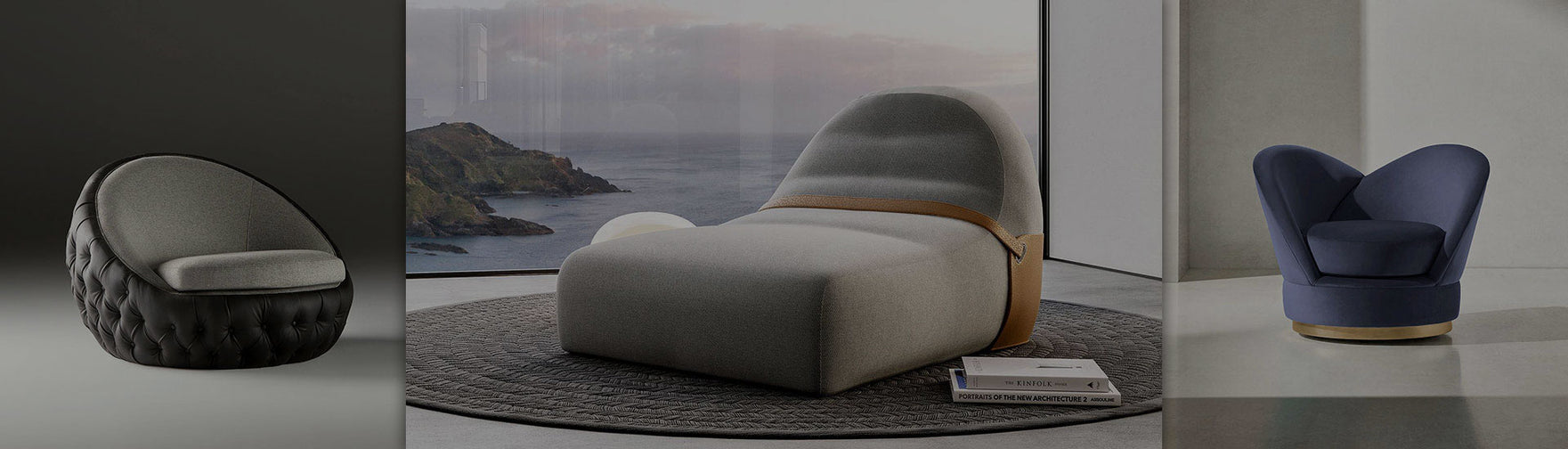
A Guide to Luxury Lounge Chairs
A lounge chair is designed for relaxed, individual seating. Compared with many dining chairs, it often has a more generous seat, a different back angle or a form intended for longer periods of sitting. Some designs focus on deep upholstery and enveloping comfort, while others use sculptural frames and distinctive silhouettes to make a visual statement.
Lounge chairs can be used throughout the home, from living rooms and reading corners to bedrooms, studies and private sitting areas. Their appeal lies in the balance between comfort and design. The right chair should feel inviting, suit the intended activity and relate naturally to the room's scale, materials and other furniture.
Types of Lounge Chairs
Lounge chairs come in a wide range of shapes and seating styles. Understanding their differences helps you select a chair that suits the space, the way you intend to use it and the visual character you want to create.
Accent Chairs
An accent chair introduces an additional seat while adding a distinct design element to the room. It may stand out through its colour, upholstery, frame or shape, or provide contrast against a sofa with a different texture or silhouette. Accent chairs can work beside a centre table, near a window or in an otherwise underused corner.
The best placement gives the chair a clear purpose. Consider whether it will form part of the main seating group or create a separate spot for reading and relaxation. Its size and colour should complement the room without obstructing circulation.
Upholstered Lounge Chairs
Upholstered lounge chairs use fabric, leather or another covering over a padded seat and, in some designs, the back and arms. Upholstery can soften a room filled with hard surfaces and introduce colour, texture and visual depth. The degree of cushioning and support varies by model, so the appearance alone does not determine comfort.
When choosing an upholstered chair, consider seat firmness, back support, arm height and the care needs of the covering. A textured fabric can add depth to a restrained palette, while a smooth leather finish may create a more defined look. Check the actual upholstery specification for each design.
Club Chairs
Club chairs traditionally have a substantial, rounded or enclosed form, often with a low back and generous arms. Their compact, grounded appearance can make them suitable for intimate seating areas, reading corners and conversational arrangements. Contemporary interpretations may use cleaner lines or different upholstery while retaining the idea of a comfortable individual seat.
Because club chairs can have a broad footprint, measure the space carefully. Check the seat depth, arm width and back height, particularly if the chair will sit alongside a sofa or between other pieces of furniture.
Sculptural and Designer Lounge Chairs
Sculptural lounge chairs use shape, proportion and construction to create a distinctive presence. Curved backs, unusual frames, bold legs and carefully balanced volumes can make the chair an important design feature even when it is not being used. These pieces can suit contemporary interiors as well as rooms that combine modern furniture with classic elements.
Allow enough space around a sculptural chair to appreciate its form. If the design has a visually strong frame or unusual profile, consider its appearance from different angles, especially in open-plan spaces where the chair may be seen from the side or back.
Swivel Lounge Chairs
A swivel lounge chair can turn towards different parts of a room, making it useful in flexible seating arrangements. It may face a sofa for conversation, turn towards a window or reposition towards a television or reading area. The function depends on the design and its base.
Check the chair's overall dimensions and the space needed for it to rotate. A swivel mechanism does not remove the need for clear circulation, and the available movement should work with nearby tables, walls and other seating.
Reading and Relaxation Chairs
A lounge chair placed for reading or quiet relaxation should support the activity for which it is intended. Seat depth, back angle, arm support and the position of the head and shoulders can all affect comfort. A nearby side table and suitable lighting can make the spot more useful without requiring a large area.
Comfort is personal, so try the chair where possible. If selecting online, review the dimensions and available product information carefully, and consider whether the chair's posture and proportions suit the way you prefer to sit.
Lounge Chair Materials and Finishes
The frame, upholstery and finish determine much of a lounge chair's character. Materials can create contrast, add warmth or give the chair a lighter visual profile. The right choice depends on the room's design, the level of use and the maintenance you are comfortable with.
Fabric Lounge Chairs
Fabric upholstery offers a broad range of colours, patterns and textures. It can make a chair feel soft and inviting, introduce a contrasting tone or connect the chair with rugs and other textiles in the room. Depending on the fabric and construction, the surface may be smooth, textured or more visibly woven.
Consider cleaning requirements, the likelihood of spills and how the colour may appear under the room's lighting. Fabric performance varies, so confirm the covering and its care instructions for the specific chair rather than assuming all fabrics behave alike.
Leather and Vegan Leather Lounge Chairs
Leather and vegan leather can give a lounge chair a defined surface and a different character from fabric upholstery. Depending on the colour, finish and design, they can suit classic club chairs, contemporary armchairs and more sculptural seating. Their appearance can also change how the chair relates to wood, metal and stone in the room.
These coverings are not the same material and may have different care requirements. Confirm the exact upholstery type, finish and recommended cleaning method before choosing a chair for frequent use.
Wooden Frames
Wooden frames bring grain, warmth and natural variation to lounge chairs. They may be exposed as part of the chair's structure or used in arms, legs and decorative details. The shape and finish of the wood can make a chair feel understated, classic or distinctly contemporary.
Consider how the frame relates to other wood finishes in the room. Exact colour and grain vary by material and finish, so check the product details when coordinating the chair with flooring, side tables or other furniture.
Metal Frames and Bases
Metal frames can create a slim outline, a strong geometric form or a sculptural base. They can be paired with upholstered seats, leather coverings or other materials to create contrast between structure and softness. The finish may be subtle or deliberately prominent, depending on the design.
Look at the chair's frame from different angles and consider its relationship with nearby furniture and lighting. A metal finish does not need to match every other metal detail in the room, but the overall combination should feel considered.
How to Choose the Right Lounge Chair
A lounge chair should suit both the room and the person who will use it. Before selecting a design, consider its intended purpose, dimensions, seat depth, back support and relationship with the surrounding furniture. A chair chosen for occasional conversation may have different requirements from one intended for reading or extended relaxation.
Seat Depth, Height and Back Support
Seat depth influences how far back you sit and how your legs are supported. Seat height affects how easily you get in and out of the chair, while the back angle and height influence the sitting position. Arm height and width also matter if you want to rest your arms comfortably.
There is no single set of dimensions that suits everyone. If possible, try the chair before buying. When shopping online, compare the listed dimensions with a chair you already find comfortable and check the product's intended seating position.
Scale and Room Layout
A chair should fit the available floor area without making the room difficult to move through. Large, deep chairs can create a strong presence in a spacious living room, while a more compact silhouette may be better suited to a smaller sitting area. Remember to account for the chair's full footprint, including any recline or swivel movement if the design allows it.
Consider how the chair relates to the sofa, centre table, side table and rug. The pieces should form a useful seating arrangement, with enough space to reach tables and walk around the furniture comfortably.
Comfort and Intended Use
Think about what you will do in the chair most often. Reading may call for supportive arms and a comfortable back angle; conversation may benefit from a more upright position; relaxed lounging may suit a deeper seat. Cushion firmness and the shape of the chair also affect how it feels over time.
Do not judge comfort from appearance alone. Product descriptions and dimensions can help narrow your choices, but personal comfort is best assessed by trying the chair where possible.
Upholstery Care and Everyday Use
Choose upholstery according to how the chair will be used and maintained. A chair placed in a frequently used family living room may face different demands from one in a formal sitting room or bedroom. Consider spills, dust, sunlight and the cleaning routine needed for the chosen material.
Check the manufacturer's guidance for the exact covering and finish. Avoid assuming that all leather, vegan leather or fabric upholstery can be cleaned with the same products or methods.
Lounge Chairs for Different Rooms
Lounge chairs can serve different purposes throughout the home. Their position and style should reflect the activity planned for the space, as well as its size, lighting and relationship with the rest of the interior.
Living Rooms
In a living room, lounge chairs can extend the main seating arrangement beyond the sofa. One chair may create a quiet corner, while a pair can frame a centre table or face the sofa to support conversation. Their shape and upholstery can complement the sofa or introduce a deliberate contrast.
Keep sightlines and movement in mind when placing the chairs. The seating should feel connected, but there should still be enough room to walk through the space and reach nearby tables.
Bedrooms
A lounge chair can create a separate place to read, relax or sit while getting ready. In a larger bedroom, it may sit near a window or in a quiet corner. In a smaller room, a compact design can provide useful seating without taking over the floor area.
Consider the chair's proportions in relation to the bed, bedside tables and wardrobes. A chair should not obstruct cupboard doors, drawers or the main path through the room.
Studies and Reading Corners
A lounge chair in a study or reading corner creates an alternative to desk seating. Choose a shape that supports the way you like to sit and allow room for a side table and reading light if required. Upholstery, back support and seat depth matter when the chair is intended for regular use.
Good placement is as important as the chair itself. Position it where there is enough light and space to sit down comfortably without interfering with the desk or main circulation route.
Open-Plan and Formal Sitting Areas
In an open-plan home, a lounge chair can help define the living area without using a partition. Its orientation, colour or shape can create a visual connection with the sofa and centre table. In a formal sitting room, a pair of distinctive chairs can establish a more deliberate arrangement for conversation.
Where the chair is visible from several parts of the home, consider the back and side profiles as well as the front. A well-chosen design should work as part of the wider room, not only from one viewpoint.
Styling Lounge Chairs with Other Furniture
A lounge chair works best when it has a clear relationship with the other pieces around it. It may complement the sofa through colour or upholstery, contrast with it through shape, or connect to the room through a shared material. The goal is a balanced arrangement rather than a matching set of furniture.
Explore sofas to plan the main seating arrangement, and consider centre tables and side tables for practical surfaces within reach. A lamp, a book or a carefully chosen decorative object can complete the corner without overcrowding it.
Lounge Chairs for Homes and Interior Projects
For homeowners, the choice of a lounge chair often begins with comfort and the role it will play in the room. For architects and interior designers, selection may also involve dimensions, circulation, upholstery specifications, frame finishes and the relationship between the chair and the wider furniture scheme.
For a larger project, confirm the dimensions, upholstery, finish and product availability before finalising the layout. Where a particular chair needs to work with existing furniture, check the actual measurements and material specifications rather than relying on photographs alone.
Frequently Asked Questions About Lounge Chairs
What is the difference between a lounge chair and an accent chair?
A lounge chair generally emphasises relaxed individual seating, while an accent chair is defined by its role as an additional or visually distinctive seat within a room. The terms can overlap: an accent chair may also be designed for lounging, depending on its shape and comfort.
How do I choose a comfortable lounge chair?
Consider seat depth, seat height, back angle, arm support and cushion firmness. Your preferred sitting position matters, so try the chair where possible. If buying online, compare the dimensions with a chair you find comfortable and review the product details carefully.
Which upholstery is best for a lounge chair?
Fabric, leather and vegan leather each offer different looks and care requirements. The best option depends on your preferred texture, intended use and maintenance needs. Check the exact material and cleaning guidance for the selected chair.
Can I place a lounge chair in a bedroom?
Yes. A lounge chair can create a reading or relaxation corner in a bedroom, provided there is enough space for comfortable use. Measure the chair and check that it does not obstruct wardrobes, drawers, doors or the main path through the room.
How do I pair a lounge chair with a sofa?
Look for a connection through shape, colour, material or overall style. The chair does not have to match the sofa exactly. Check the scale of both pieces and leave enough room for movement, a centre table or a side table where needed.
Where can I explore luxury lounge chairs in India?
You can browse Spacio's lounge chair collection online and contact the team to confirm current designs and finishes. For an in-person furniture consultation, visit Spacio's Kolkata store at 86B, Topsia Road South, Kolkata 700046. Confirm that the chair you wish to see is available before visiting.
Choosing Lounge Chairs at Spacio
Spacio's lounge chair collection includes seating for different interiors, from contemporary accent chairs to distinctive designs that can become focal points in a room. Shape, upholstery, frame and proportion all influence how a chair looks and feels, as well as how it relates to the surrounding furniture.
Begin with the space and the way you intend to use the chair, then consider comfort, materials and design. A well-chosen lounge chair can provide a personal place to relax while adding another considered layer to the interior.