
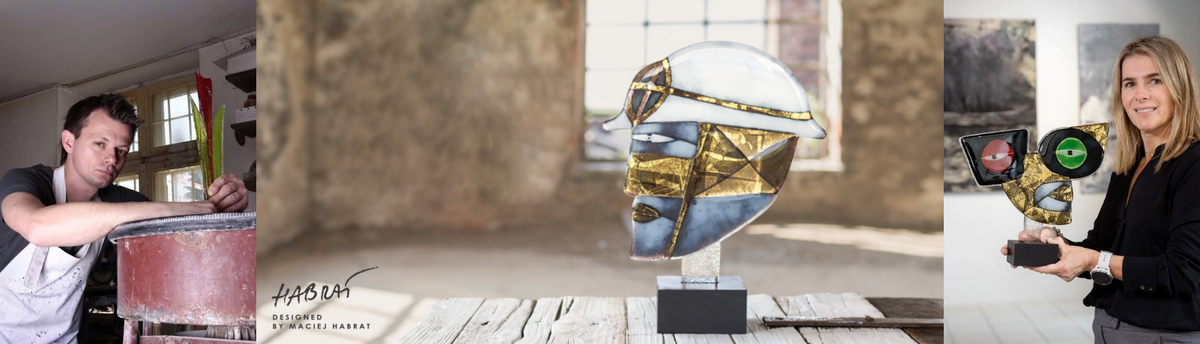

Spacio introduces Glass Studio Habrat, a Polish art-glass studio founded in Krosno in 1997. Curated by Navin Kanodia for Spacio, the launch brings Habrat's expressive contemporary glass sculptures and decorative objects to Indian interiors for the first time, with the collection exclusively available at Spacio in India.
Based in Krosno, Poland, Habrat was established in 1997 and is known for distinctive art glass sculptures and decorative objects created by artist Maciej Habrat. The studio works with the fusing technique to shape layers of glass into expressive forms, combining colour, transparency and sculptural detail.
For Navin Kanodia, the curation of Habrat continues Spacio's approach of identifying distinctive international design brands and bringing them to Indian customers. For Spacio, the launch adds a new Polish voice to its collection of European and international home decor brands, while giving homeowners, collectors, architects and interior designers access to unique glass sculptures, statement home decor and premium European decor accessories that were previously difficult to experience in India.
Table of Contents
- Habrat: A Polish Glass Studio Arrives at Spacio India
- The Story Behind Habrat's Polish Glass Art
- How Habrat Uses Glass to Create Sculptural Forms
- Exploring Habrat's Glass Sculptures
- Glass Face Sculptures: Art with an Expressive Presence
- Flower Glass Sculptures for Contemporary Interiors
- Styling Habrat Glass Sculptures in Indian Homes
- Habrat for Book Shelves & Niches
- Habrat for Office and Workspace Styling
- Habrat Glass Sculptures for Wedding & Special Occasion Gifting
- Why Navin Kanodia Curated Habrat for Spacio
- Ideal For
- Frequently Asked Questions
Habrat: A Polish Glass Studio Arrives at Spacio India
Habrat brings the character of contemporary Polish glass art to Spacio. Based in Krosno, Poland, the studio was established in 1997 and is associated with artist Maciej Habrat. Its work uses layers of glass and the fusing technique to create expressive sculptures and decorative objects where colour, transparency, form and detail work together.
Unlike conventional glassware created primarily for function, Habrat's pieces are designed to be looked at, considered and lived with. A sculpture can become the focal point of a console, bookshelf, sideboard or display surface, while a smaller piece can introduce colour or character into an otherwise restrained composition.
The Habrat collection at Spacio brings these Polish art glass and contemporary glass sculptures to Indian customers, making the studio's work accessible within a wider selection of European and international home decor and art objects.
The Story Behind Habrat's Polish Glass Art
Krosno has a long association with glassmaking, and Habrat's story is closely connected to that glassmaking environment. Founded there by Maciej Habrat in 1997, Glass Studio Habrat developed an artistic approach to glass that uses fusing to create sculptures, decorative objects and other distinctive forms. The studio's work places the material tradition of Krosno within a contemporary sculptural language.
Maciej Habrat's background is rooted in Poland's glass-art tradition. He studied at the Academy of Fine Arts in Wrocław in the Faculty of Ceramics and Glass before returning to Krosno, where he established Glass Studio Habrat in 1997. His distinctive glass works have subsequently been exhibited internationally, with works also held in the collection of The Corning Museum of Glass in the United States.
The studio's work demonstrates how glass can move beyond the idea of a transparent vessel. Colour, layering, texture and form can turn the material into a sculptural medium, allowing each object to occupy a different visual role within an interior.
This is what makes Habrat relevant to the growing interest in unique glass sculptures and European home decor brands in India. The pieces introduce an artistic European sensibility while remaining versatile enough to work within contemporary residential and professional spaces.
How Habrat Uses Glass to Create Sculptural Forms
Habrat works with the fusing technique, shaping layers of glass into expressive forms. This approach allows colour and transparency to become part of the structure of the sculpture rather than simply surface decoration.
In glass art, fusing involves combining layers or pieces of glass through controlled heating so that they bond together. For Habrat, the technique becomes part of the creative language of the work, allowing colour, transparency, layering and form to be composed within the sculpture itself.
The resulting objects can have a strong relationship with light. Transparent and translucent areas allow surrounding light and colour to influence how the sculpture is perceived, while layered or textured areas introduce greater visual depth.
For an interior, this means a Habrat sculpture does not necessarily look static. Its appearance can shift subtly according to its position, background, surrounding materials and available light.
This interaction is particularly useful when selecting statement home decor. The strongest object is not always the largest one. Sometimes a distinctive silhouette, unusual colour combination or expressive form is enough to establish a visual focal point.
Exploring Habrat's Glass Sculptures
The Habrat collection at Spacio brings together several distinct expressions of glass sculpture. There are colourful figures, face-inspired forms, floral sculptures and other decorative glass objects, giving the collection a character that is both artistic and highly adaptable to interior styling.
Pieces such as Golden Face Big demonstrate how glass can be used to create an expressive sculptural form with colour, layering and visual depth. Its face-like composition makes it particularly suited to interiors where a decorative object is expected to become a conversation point.
For a more organic expression, Meadow Flower Dark Red 50 uses a floral form to introduce colour, height and movement. The sculpture can work as a standalone statement object or as part of a carefully edited arrangement.
More expressive colour can be found in the Rainbow Man Red, where vivid red and orange tones, layered glass and a sculptural figure create a stronger visual accent.
Together, these pieces demonstrate the breadth of Habrat's approach: glass can be figurative, floral, colourful, abstract or quietly sculptural, allowing the collection to work across different interior styles.
Glass Face Sculptures: Art with an Expressive Presence
Face sculptures have a particular ability to attract attention because the human face is immediately recognisable. In Habrat's work, this familiarity is translated into a contemporary glass language rather than a literal portrait.
A glass face sculpture can become a strong focal point on a console, sideboard, bookshelf or display cabinet. The combination of recognisable facial elements with abstract colour, texture and geometric forms gives the object an artistic quality without requiring an elaborate setting around it.
For a luxury interior, this can be an effective way to introduce personality. Rather than filling a surface with several small accessories, one expressive sculpture can provide the visual punctuation the composition needs.
In a refined interior, this can be an effective way to introduce personality without relying on a large artwork or an elaborate decorative arrangement. One expressive sculpture can provide the visual punctuation a console, sideboard or display surface needs.
Flower Glass Sculptures for Contemporary Interiors
Floral forms bring another dimension to the Habrat collection. The Meadow Flower sculptures interpret the idea of a flower through glass, turning a familiar natural form into a lasting decorative object.
A flower glass sculpture can be particularly effective where an interior needs colour or vertical movement without introducing a large piece of furniture or artwork. Its organic form can soften the geometry of a console, sideboard or display niche.
The Habrat collection includes Meadow Flower pieces in different sizes and colours, allowing the scale and visual intensity to be considered according to the room and the surface available.
Styling Habrat Glass Sculptures in Indian Homes
Glass sculptures can adapt easily to contemporary Indian homes because they can introduce colour and artistic expression without necessarily adding visual heaviness. Their transparency and reflective qualities can also create a different relationship with natural and artificial light.
In a living room, a Habrat sculpture can anchor a console or sideboard. On a coffee table, a smaller piece can become the central object within a restrained arrangement. In an entrance foyer, a sculptural glass object can provide an immediate introduction to the personality of the home.
The material also works naturally with other refined interior finishes. Glass can sit alongside marble, timber, metal, mirrors and neutral upholstery, allowing the sculpture to become a point of contrast rather than competing with the architecture.
The principle is simple: let the sculpture have enough space to be seen. Particularly expressive glass pieces do not need to be surrounded by numerous accessories. A quieter setting can often make their form, colour and craftsmanship more noticeable.
Habrat for Book Shelves & Niches
Book shelves and architectural niches are natural settings for sculptural glass objects. These spaces already provide a framework for displaying books, art and decorative accessories, and a Habrat sculpture can introduce a stronger three-dimensional element.
On a bookshelf, use the sculpture to interrupt repetition. Books create regular vertical and horizontal lines; an expressive glass object can introduce a contrasting silhouette and create a visual pause.
In a niche, consider the relationship between the sculpture and its backdrop. A darker or quieter background can help a lighter or more colourful glass sculpture stand out, while a highly patterned background may compete with an intricate object.
Spacio's Book Shelves & Niches collection brings together sculptures, decorative objects, vases, books and other pieces selected for shelf and niche styling. Habrat can therefore be considered as part of a broader composition rather than as an isolated object.
Habrat for Office and Workspace Styling
Glass sculpture can also bring personality to professional spaces. In an executive office, private study, reception area or creative workspace, a carefully selected sculpture can communicate individuality without making the environment feel overly decorative.
A face sculpture can become a conversation piece in a director's office. A colourful figure can introduce personality to a creative studio. A floral sculpture can soften a more formal workspace, while a restrained glass object can complement books, artwork and other executive accessories.
Habrat therefore fits naturally into office styling as well as home styling. The important consideration remains the same: choose an object according to the scale, character and visual language of the space rather than treating it as an accessory to be added at the end.
Habrat Glass Sculptures for Wedding & Special Occasion Gifting
A distinctive glass sculpture can also become a meaningful gift when the intention is to give something that remains part of the recipient's home long after the occasion. Unlike a purely consumable gift, a sculptural object can become associated with a particular milestone or relationship.
Habrat's expressive figures and floral glass sculptures can be considered for wedding gifting, anniversary gifting, housewarming and other special occasions, particularly when the recipient appreciates design, art or distinctive home accessories.
For a newly married couple, a colourful sculpture can become an accent within their first home. A floral piece can mark a celebration with a form that feels appropriate to a domestic setting, while a more expressive sculpture can suit someone who prefers statement decor.
Spacio also offers a Gift Curation Service for customers looking for a more considered approach to selecting luxury gifts.
Why Navin Kanodia Curated Habrat for Spacio
Habrat was not selected simply because it is a glass brand. Its appeal lies in the way it uses glass as an artistic and sculptural medium, creating objects with enough individuality to become part of the identity of an interior.
For an interior stylist, that individuality matters because a sculptural object should contribute something that cannot be achieved simply by adding another conventional decorative accessory. Habrat's combination of colour, transparency, expressive form and sculptural presence gives the pieces the ability to become focal points within an otherwise carefully edited interior.
Navin Kanodia, whose work with Spacio focuses on luxury interior styling and the curation of distinctive international design, selected Habrat for its ability to bring something different to the Indian market: contemporary Polish glass art that can function as a sculptural object, a statement accessory or a considered element within a larger interior composition.
The launch therefore represents more than the addition of another European home decor brand. It reflects Spacio's continuing role in introducing distinctive international design to India and creating access to objects that combine design identity, craftsmanship and artistic expression.
Habrat's introduction to the Indian market was also marked by its launch at The Wedding Collective 2026 in Mumbai, a setting that brought together design, celebration and curated lifestyle experiences. The launch reflects the versatility of Habrat's glass sculptures as objects that can move naturally between interior styling, art-led spaces and special occasion gifting.
With Habrat now exclusively available at Spacio in India, customers can explore the collection as part of Spacio's wider selection of sculptures, art objects and premium home decor accessories.
Ideal For
- Luxury apartments and villas
- Contemporary living rooms
- Entrance foyers and consoles
- Book shelves and niches
- Sideboards and display cabinets
- Home offices and executive workspaces
- Architects and interior designers
- Collectors of contemporary glass art
- Wedding and special occasion gifting
Frequently Asked Questions
What is Habrat?
Habrat is a Polish glass studio established in Krosno in 1997 and known for contemporary art glass sculptures and decorative objects created by artist Maciej Habrat.
What makes Habrat different from ordinary glass decor?
Habrat uses glass as a sculptural medium rather than limiting it to functional objects. Its work combines colour, transparency, layered forms and sculptural detail to create distinctive decorative art objects.
Where can Habrat glass sculptures be used?
Habrat sculptures can be styled on consoles, sideboards, coffee tables, bookshelves, display cabinets and architectural niches. Depending on the piece, they can also work in living rooms, foyers, studies, home offices and professional spaces.
What types of glass sculptures are available from Habrat at Spacio?
The collection includes expressive figures, face-inspired sculptures, floral glass sculptures and other contemporary decorative glass objects in different forms, colours and sizes.
Are Habrat glass sculptures suitable for Indian homes?
Yes. Their combination of colour, transparency and sculptural form can work naturally with materials commonly used in contemporary Indian interiors, including marble, timber, metal and neutral finishes.
Can Habrat sculptures be used for wedding gifting?
Yes. Selected Habrat glass sculptures can make distinctive wedding, anniversary, housewarming and special occasion gifts for people who appreciate contemporary art and design-led home decor.
Where can I explore Habrat glass sculptures in Mumbai?
If you want to see Habrat glass sculptures in Mumbai in person, visit the Spacio Mumbai store at 3BK, Laxmi Industrial Estate, New Link Road, Andheri (West), Mumbai 400 053. It is a useful destination for exploring unique glass sculptures, statement home decor and other European design objects in a physical showroom. You can also view the Spacio Mumbai showroom on Google Maps before planning your visit.
Can I see Habrat and other Polish glass sculptures in Kolkata?
For customers looking to experience Polish glass sculptures in Kolkata, the Spacio Kolkata store at 86B, Topsia Road South, Kolkata 700 046 provides a physical destination to explore distinctive European home decor and sculptural objects. You can also view the Spacio Kolkata showroom on Google Maps before visiting.
Available at Spacio. Explore Habrat, the Polish glass studio bringing expressive contemporary glass sculptures and decorative objects to India.
Explore the Habrat Collection


