
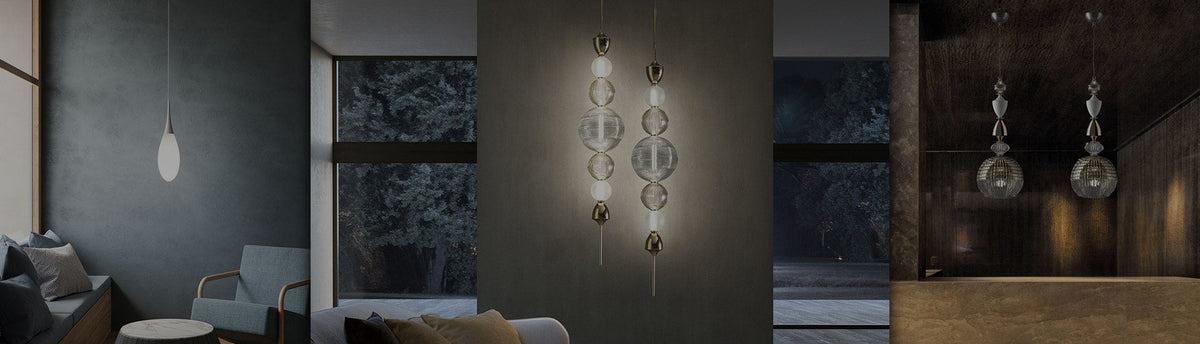

Dining Table Lights in Kochi
Explore designer dining table lights in Kochi from Spacio's curated collection of Italian, European and international lighting brands. Discover chandeliers, pendant lights, linear suspensions, kinetic lights, decorative ceiling lights and sculptural designs for dining spaces. From apartments in Marine Drive, Kakkanad and Edappally to independent homes in Panampilly Nagar, Kadavanthra and Tripunithura, explore lighting for different Kochi interiors.
Choosing the right dining table light involves more than selecting a design. The shape and dimensions of the table, ceiling height, room proportions, surrounding furniture and other ceiling fittings all influence the choice. Explore different forms, materials and finishes, from individual pendants and statement chandeliers to elongated suspensions and adjustable kinetic lighting, for compact dining areas, open-plan spaces, long kitchen islands and larger dining rooms.


Read more
Dining Table Lighting for Kochi Homes and Projects
Dining table lighting helps define the dining area, provides comfortable illumination and gives the table a clear visual focus within the interior. The fitting should relate to the table's dimensions, the ceiling height, the surrounding furniture and the way the dining area connects with other parts of the home.
Spacio is an Indian luxury interiors and interior styling brand established in 1995. Its collections bring together furniture, decorative lighting, fireplaces and decor accessories from international design houses. For dining spaces, the lighting collection includes pendant lights, linear suspensions, chandeliers, sculptural fittings and selected kinetic designs. Customers in Kochi can explore the collection online and contact the Spacio team for product information and selection guidance.
Kochi has a varied residential landscape, with established neighbourhoods and newer residential developments across the wider city. Marine Drive, MG Road, Panampilly Nagar, Kadavanthra and Thevara form part of the central residential and commercial areas. Edappally, Palarivattom and Vennala offer other established residential settings, while Kakkanad, Maradu, Vyttila and Tripunithura include a mix of apartments and independent homes. The dining area may be a separate room, part of an open-plan living space or connected to a kitchen and family area. The lighting choice should respond to the actual layout rather than follow a fixed rule based on the locality.
In a separate dining room, a chandelier or a larger suspension can establish the main focus above the table. In an apartment with an open-plan layout, a pendant or linear suspension can define the dining zone while keeping the living and kitchen areas visually connected. Larger rooms and selected villa interiors may allow for sculptural chandeliers, clusters or adjustable kinetic lights. The dimensions of the room, table and fitting should always be considered together.
This guide explains the different types of dining table lights, the factors to consider when selecting them and how they can work across Kochi homes and projects. It also introduces 20 international lighting brands available through Spacio and explains how customers in Kochi can explore the collection and make enquiries.
Types of Dining Table Lights
Dining table lights are available in several forms, from individual pendants to large chandeliers and motorised kinetic designs. The right format depends on the table shape, ceiling height, room proportions and the role of the dining area within the interior.
Pendant Lights
A pendant light hangs from the ceiling by a rod, cable or cord. A single pendant can create a central focus above a round or compact dining table. Two or more pendants can be arranged in a line or grouped together to cover a wider area.
Pendants are available in glass, metal, crystal, ceramic and other materials. Their forms range from restrained shades to more expressive designs that become a feature above the table. The size of the pendant should relate to the table: a small fitting may appear lost above a large surface, while an oversized design can dominate a compact dining area.
In an open-plan Kochi apartment, a well-proportioned pendant can help define the dining setting without taking up floor space or creating a visual barrier between adjoining areas.
Linear Suspension Lights
A linear suspension has an elongated form that works particularly well above long rectangular and oval dining tables. Its length follows the table and helps distribute light along a wider part of the surface, rather than concentrating it at one point.
Linear designs range from slim fittings to more decorative compositions using glass, metal and sculptural elements. The length and width of the fitting should be considered against the table dimensions. A light that is too short may look disconnected from the table, while one that is too long can dominate the setting.
A linear suspension can also be considered when the dining table is used for several activities, such as meals, reading, working or entertaining. The light should provide comfortable illumination without creating glare for people seated around the table.
Multiple Pendant Arrangements
Two or more pendants can be arranged in a straight line, grouped at different heights or brought together as a cluster. This creates a composition above the table instead of relying on one large fitting.
Multiple pendants can work above long tables, larger dining areas and open-plan spaces. Their number, spacing and individual dimensions should be planned around the table. The arrangement should feel balanced when viewed from the dining chairs as well as from adjoining parts of the room.
Chandeliers for Dining Rooms
A chandelier can act as the main decorative feature of a dining room. Designs range from traditional crystal and glass forms to contemporary compositions in metal and mixed materials. Some use repeated arms or light sources, while others take a more sculptural approach.
In a separate dining room or a larger residence, a chandelier can establish a strong focal point above the table. In an apartment, its diameter, depth and suspension need closer attention so that the fitting does not overwhelm the room or obstruct views across the table.
The chandelier should be considered in relation to the table, ceiling height and room volume. Its appearance from adjoining spaces also matters, particularly where the dining room opens into a living area.
Glass and Murano Glass Chandeliers
Glass lighting can introduce colour, transparency and texture above a dining table. Depending on the design, individual glass elements may be clear, coloured, textured, blown or shaped into more complex compositions.
Murano glass chandeliers are a distinctive part of the wider decorative lighting category. Their appeal lies in the character of the glass, the arrangement of the elements and the way the material interacts with light. The scale and visual density of the fitting should be considered against the table and room. A richly detailed chandelier may need more visual space around it than a slim glass suspension.
Glass designs can be considered for both contemporary and more traditional dining rooms. The choice of colour, finish and form should relate to the table, furniture and other materials in the interior.
Cluster and Sculptural Dining Lights
Cluster lights bring several light elements together in one composition. The individual forms may be repeated, arranged at different heights or grouped to create a wider visual spread. Sculptural lights take this approach further, using shape, material and form to create a distinctive feature above the dining area.
These designs can be considered when the dining table needs a clear identity within an open-plan interior or when the light itself is intended to become a statement piece. The overall width, depth and suspension should be checked against the table and the available ceiling space.
In larger dining rooms, the fitting may be viewed from several points in the room. Its scale should therefore work from the dining table as well as from the entrance and adjoining living areas.
Kinetic Dining Lights for High and Low Ceilings
A conventional pendant or chandelier has a fixed suspension position once installed. A kinetic dining light works differently. Its motorised mechanism allows the fitting to move vertically, changing its height in relation to the dining table and the ceiling. Depending on the model, its light elements or overall configuration may also be adjustable.
This movement offers another option for dining areas where ceiling height or the required position of the fitting makes a fixed suspension difficult to plan. Selected kinetic lights can be considered for both low- and high-ceiling spaces, provided the model's adjustment range and dimensions suit the room.
For rooms with lower ceilings: A kinetic light can be raised towards its higher position to help maintain clearance and reduce the visual intrusion of a long suspended fitting. However, the minimum overall height of the selected model must still suit the room. Its dimensions, movement range and required clearance should be checked before selection.
For rooms with high ceilings: A kinetic light can be lowered towards the dining table, bringing the light closer to the area where it is needed. It can then be raised when the dining space is not in use or when a more open view of the room is preferred. This can be useful in larger dining rooms and double-height spaces, where a fixed suspension may otherwise remain too high above the table.
Kinetic lighting is also worth considering above extendable dining tables and long kitchen islands. For an extendable dining table, check that the light provides suitable coverage in both its regular and expanded positions. Height adjustment changes the vertical position of the fitting, not its horizontal spread. Selected models also offer adjustable brightness and colour temperature, allowing the lighting to respond to different activities without requiring an expensive home automation system. These functions vary by model and should be confirmed before selection. Check the motor mechanism, operating controls, ceiling support, electrical requirements and movement clearance before installation.
Some models offer additional functions such as adjustable brightness and colour temperature. These features vary by product and should not be assumed to be available on every kinetic light. For example, the Neuhaus Pure E-Popup Bronze 180 offers motorised height adjustment from 45 to 240 cm, adjustable brightness and warm-to-cool white light, all controlled by a remote. It does not require a home automation system for these functions.
Decorative Ceiling Lights
A decorative ceiling light can be used where a suspended fitting is not suitable. This may be the case in rooms with limited ceiling height, where the dining table sits below other ceiling elements or where a long suspension would interfere with the layout.
Flush-mounted and semi-flush designs provide a decorative focal point without a long drop. Their dimensions and light distribution should still be considered in relation to the table. A ceiling-mounted fitting should illuminate the dining area comfortably rather than serve only as a decorative feature.
How to Choose the Right Dining Table Light
The right dining light is selected in relation to the table and the room around it. Table dimensions, ceiling height, suspension position, light quality and the surrounding fittings all influence the final choice. Considering these details together helps avoid a fitting that looks right on its own but does not work well in the space.
Table Shape and Dimensions
The table is the starting point. A round table often works well with a central pendant or chandelier. A long rectangular table may need a linear suspension, an elongated chandelier or a planned arrangement of several pendants. For oval and irregular tables, the fitting should relate to the visual centre and overall length of the surface.
Measure the table before shortlisting a light. Consider its length and width against the dimensions of the fitting, leaving enough visual space around the composition. A fitting that is too small may appear lost, while one that is too large can dominate the dining area.
For a long table, also consider whether the light covers the full seating area. The fitting should relate to the table rather than simply to the centre of the room or the existing ceiling point.
Ceiling Height and Hanging Position
Ceiling height affects the type of light you can use and how far it can hang above the table. A common starting reference is around 75–90 cm from the tabletop to the bottom of the fitting. This is not a fixed rule. The final position depends on the fitting's depth, ceiling height, table dimensions and seated sightlines.
The light should illuminate the table without blocking views across it or becoming uncomfortable for people seated around it. A deep shade or chandelier may need a different position from a slim linear fitting. The hanging height should therefore be checked for the selected design and the actual room.
In rooms with lower ceilings, consider a compact pendant, a shallow chandelier or a decorative ceiling light. Taller rooms may allow a longer suspension or a larger composition. Selected kinetic lights provide another option because their height can be adjusted within the model's specified range. Their minimum and maximum dimensions still need to suit the space.
False Ceilings and Structural Support
Dining areas may have false ceilings with recessed lights, air-conditioning outlets, concealed wiring and other services. The dining light should be planned alongside these elements. Check that the electrical point aligns with the table and that the fitting has enough clearance from nearby ceiling features.
In open-plan rooms, the table may not sit directly below the centre of the ceiling. If the existing electrical point is not in the right position, the installation requirements should be discussed with the relevant site professional before work begins.
Heavy chandeliers and large suspended fittings need suitable structural support. A false ceiling panel alone may not be able to carry the weight. The fixing arrangement, ceiling structure and electrical provision should be checked before installation, preferably while the ceiling work is still being planned.
Light Quality, Glare and Dimming
A dining light should make the table comfortable to use and allow food, tableware and faces to be seen clearly. Brightness, colour temperature and the direction of light all affect the result. Exposed lamps or bright light sources may cause glare, particularly when the fitting is viewed from a seated position.
Dimmable lighting can help change the mood between everyday meals and evening entertaining. If you plan to use a dimmer or home automation system, confirm that the fitting, LED driver and control system are compatible before ordering. Not every LED light works with every dimmer. Dimming and colour-temperature control are product-specific features, not standard functions across all dining lights.
Where adjustable colour temperature is important, check that the selected model offers this function. Consider how its available settings will work with the other lights in the room.
Ceiling Fans, Air-Conditioning and Other Fittings
Some dining areas have ceiling fans, air-conditioning outlets, recessed lights or other ceiling services close to the table. A suspended fitting should be positioned with these elements in mind. A long pendant placed in a direct airflow may move, while a fan blade may come too close to a wide or low-hanging fitting.
Check the fan's position, blade clearance and airflow before finalising the lighting layout. Where the dining table is close to the kitchen, consider the position of task lights and other fittings as well. The aim is to avoid a ceiling where different elements compete for attention or interfere with one another.
Choosing Dining Table Lighting by Table Shape and Ceiling Height
| Dining Table or Space | Lighting Formats to Consider |
|---|---|
| Round dining table | Central pendant or chandelier |
| Long rectangular dining table | Linear suspension or multiple pendants |
| Oval dining table | Elongated suspension or balanced cluster |
| Large dining table | Larger chandelier or sculptural composition |
| Low-ceiling dining area | Compact pendant, shallow chandelier or suitable kinetic light |
| High or double-height dining area | Longer suspension, large chandelier or suitable kinetic light |
These are starting points rather than fixed rules. The final selection should account for the fitting's dimensions, light output, ceiling conditions and the way the dining area is used.
Dining Table Lighting for Different Kochi Interiors
Kochi's residential settings include apartments, independent homes and larger residences across central neighbourhoods and the wider metropolitan area. Dining table lighting should respond to the actual space, its proportions and the way the family uses it.
Apartments in Marine Drive and Central Kochi
Dining areas in apartments around Marine Drive and the central parts of Kochi may form part of an open-plan living and kitchen space or sit within a more defined dining zone. The available floor area, ceiling height and position of the dining table will influence the choice of fitting.
A single pendant can work above a compact or round table. A linear suspension may suit a longer rectangular table, while a small cluster can create a focal point without taking up floor space. In an open-plan setting, the fitting should define the dining area while relating to the lighting in the living room and kitchen.
Where the dining table is positioned near a window or has a view towards the surrounding waterfront, consider how the fitting will appear from different viewpoints. A visually open glass design or a more sculptural chandelier can each work, depending on the room's proportions and the desired focal point.
Panampilly Nagar, Kadavanthra and Thevara
These established residential areas include a mix of apartment settings and independent homes. A separate dining room may allow for a larger chandelier or a more expressive suspension, while a dining area connected to the living room may call for a fitting with a more measured scale.
For a long dining table, consider a linear suspension or a balanced arrangement of pendants. For a round or square table, a central pendant or chandelier may provide a clearer relationship between the fitting and the table. In either case, the light should be considered from the dining chairs as well as from the adjoining parts of the room.
Apartments in Kakkanad and Edappally
Residential developments around Kakkanad and Edappally include different apartment layouts and dining arrangements. Some dining spaces are integrated with the living room, while others have a more defined position within the home.
A pendant can create a clear focus above a compact dining table. A linear suspension may suit a longer table, while a cluster can bring several smaller forms together. If the dining table is close to a kitchen island, check the relationship between the two lighting arrangements so that each area has a clear purpose.
Maradu, Vyttila and Tripunithura
These areas include a variety of residential settings, from apartments to independent homes. The size and arrangement of the dining space will determine whether a compact pendant, a linear suspension or a larger chandelier is appropriate.
In a home with a separate dining room, the light can become a more prominent decorative feature. In an open-plan layout, its size and position should define the dining area without interrupting movement or views between adjoining spaces.
Independent Homes, Villas and Double-Height Dining Spaces
Independent homes and villas may have separate dining rooms, larger tables or double-height spaces. These settings can allow for larger chandeliers, sculptural compositions and fittings with a longer suspension, provided the ceiling height and room proportions support the design.
For a double-height dining area, consider the fitting's appearance from both the upper and lower levels. A chandelier should have enough visual presence to relate to the room volume without becoming oversized in relation to the dining table. Selected kinetic lights can also be considered where adjustable height is useful. The model's movement range and overall dimensions must be checked against the ceiling height.
Restaurants, Hotels and Hospitality Projects
Dining table lighting in restaurants and hotels has to respond to more than the appearance of an individual table. The number of tables, seating arrangement, ceiling height, circulation and the wider lighting scheme all influence the selection.
Individual pendants can define smaller dining settings, while linear suspensions and larger chandeliers may suit selected restaurant areas or private dining rooms. The light should create a comfortable atmosphere while allowing guests and staff to use the space properly. Maintenance access, light source specifications and control requirements should also be considered during project planning.
Materials and Finishes in Dining Table Lighting
The material of a dining light influences its appearance, the way it interacts with light and how it relates to the furniture and finishes around it. Glass, crystal, metal and mixed materials each create a different effect above the table.
Glass and Murano Glass
Glass can create a sense of transparency and visual lightness, particularly in dining areas where a solid or heavy fitting may feel too dominant. Clear, coloured, textured and blown glass designs offer different ways to introduce material and colour above the table.
Murano glass lighting has a distinctive place within decorative lighting. Its appeal comes from the glassmaking tradition, the form of each element and the way colour and transparency work together. Consider the overall size and density of the composition in relation to the table and the room.
Crystal
Crystal chandeliers can introduce reflection and sparkle into a dining room. Depending on the design, they may use traditional multi-arm forms or more contemporary arrangements with a lighter visual profile.
The size and detail of a crystal fitting should relate to the room. A large, elaborate chandelier needs enough space around it, while a more compact design may be considered for a smaller dining room.
Metal and Brass Finishes
Metal is used in a wide range of dining lights, from slim linear suspensions to chandeliers and sculptural compositions. Brushed, polished, dark and warm-toned finishes can change the character of a fitting and influence how it relates to the surrounding furniture and hardware.
Metal can also provide structure around glass or other materials. When selecting a finish, consider the other visible metals in the room, including furniture details, handles and decorative accessories. They do not have to match exactly, but the combination should feel considered.
Ceramic and Mixed Materials
Ceramic and mixed-material lights offer another approach to dining table lighting. Their forms may be more tactile or sculptural, with finishes that create a contrast against glass, metal, stone or timber surfaces.
When considering a fitting made from more than one material, look at how its parts work together. The colour, texture and visual weight should relate to the dining table and the wider interior rather than compete with them.
Consider the coastal environment: In Kochi, humidity and moisture exposure should be considered when selecting decorative lighting, particularly for balconies, verandahs and semi-open dining spaces. The suitability of the fitting depends on its location, materials, finish and the manufacturer's stated installation requirements. A fitting intended for an indoor dining room should not automatically be assumed suitable for a space exposed to coastal air or moisture.
Creating a Balanced Lighting Scheme Around the Dining Table
The dining table light is often the main decorative feature in the dining area, but it should not be expected to do every lighting job in the room. In Kochi homes, the dining space may connect directly with a living room, kitchen or family area. A considered lighting plan uses different types of light for different purposes.
Dining Table Lighting
The pendant, chandelier or linear suspension provides the focal point above the table. It should relate to the table's dimensions and offer comfortable light for dining. The fitting can be decorative, functional or a combination of both, depending on its design and light output.
Ambient Lighting
Ambient lighting provides the general light for the dining room and adjoining areas. Recessed ceiling lights, wall lights or other indirect sources can help reduce the contrast between the illuminated table and the rest of the room. They also allow the dining suspension to remain the main feature without having to provide all the room's light on its own.
Kitchen and Task Lighting
Where the dining table is close to an open kitchen or island, task lighting should serve the work surfaces separately. Under-cabinet lights, suitable kitchen ceiling lights and island pendants can provide focused light for food preparation. The dining light should be selected as part of the wider scheme, but it does not need to illuminate every kitchen surface.
When these layers are planned together, each area can be used comfortably without one fitting competing with another.
International Lighting Brands at Spacio
Spacio brings together international lighting brands with different approaches to form, materials, craftsmanship and light. The selection includes Italian, European and other international design houses, offering a range of pendants, linear suspensions, chandeliers, glass lighting and sculptural designs for dining spaces.
- Aromas del Campo — Spain: Combines contemporary forms with considered materials and metalwork. Its pendants and suspensions can be considered for dining tables, while its wider collection offers related lighting for adjoining spaces.
- Foscarini — Italy: Explores light through expressive shapes, materials and colour. Its decorative pendants and suspensions offer options for dining rooms where the fitting is intended to have a distinct visual identity.
- Italamp — Italy: Combines decorative glass, metal details and contemporary design across its lighting collections. Its chandeliers and suspensions can be considered for both formal dining rooms and modern interiors.
- Neuhaus Pure — Germany: Focuses on contemporary lighting and integrated technology. Its kinetic designs offer motorised height adjustment, with functions varying by model. The E-Popup Platinum 180 is one example with adjustable height, brightness and colour temperature.
- Serip — Portugal: Creates sculptural lighting inspired by organic forms. Its designs can be considered for dining rooms where the light is intended to become a strong visual feature.
- Sylcom — Italy: Creates decorative chandeliers and suspension lights using blown and worked glass. Its designs range from traditional forms to contemporary compositions combining glass and metal, with colour and texture playing an important role.
- Terzani — Italy: Explores light, shadow, material and movement through sculptural chandeliers and suspensions. Its designs can suit dining rooms where the fitting is intended to create a distinctive visual effect.
- Vistosi — Italy: Offers decorative glass lighting, including pendants, suspension lights, chandeliers, wall lights and ceiling fittings. Its designs explore the relationship between glass colour, shape and finish across contemporary and classic interiors.
- CVL Luminaires — France: Known for its work with brass and precise geometric forms. Its contemporary suspensions offer an option for dining rooms where clean lines and warm metal finishes are part of the interior scheme.
- DCW Editions — France: Draws on French design heritage and modernist influences. Its lighting range includes sculptural pendants and functional designs that can work above dining tables in contemporary apartments and larger homes.
- Esperia — Italy: Has a design language shaped by brass, glass and alabaster. Its horizontal suspensions and sculptural forms offer options for dining spaces that call for a distinctive material presence.
- Euroluce Lampadari — Italy: Brings together different expressions of Italian lighting. Its Elegance collection draws on classical Venetian influences, while TXXNTY explores more contemporary forms, making the brand relevant to both formal dining rooms and modern interiors.
- Il Pezzo Mancante — Italy: Takes inspiration from the artisan culture of Tuscany. Its lighting combines materials such as brass, wood, crystal and marble, offering sculptural designs for dining rooms where the light is intended to be a focal point.
- Ilfari — Netherlands: Has an expressive design approach. Its chandeliers and suspensions use sculptural forms, metal finishes, glass and crystal to create a stronger visual presence above dining tables.
- KDLN — Italy: Formerly known as Kundalini, this Italian lighting brand is recognised for experimental forms and material expression. Its designs bring together glass, metal and contemporary lighting technology, making them worth considering for dining areas with a modern design language.
- Lorenzon — Italy: Its collection includes chandeliers and pendants in glass, crystal and metal. The range offers both classic and more decorative choices for dining rooms, particularly where the material and finish of the light need to relate to the furniture and surrounding surfaces.
- Masiero — Italy: Combines Italian lighting traditions with contemporary design. Its collection includes decorative chandeliers, pendants and other lighting formats, with glass and metal details that can suit both formal dining rooms and more modern interiors.
- Marset — Spain: Founded in Barcelona, the brand places emphasis on form and the quality of light. Its pendants and other fittings can bring a more restrained, contemporary character to a dining space.
- Karman — Italy: Uses imaginative forms and expressive materials to create distinctive lighting. Its collection includes sculptural pendants and chandeliers that can be considered for dining rooms where the light is intended to make a clear design statement.
- 101 Copenhagen — Denmark: Brings Scandinavian design influences together with Japanese references and sculptural forms. Its lighting collection includes pendants and chandeliers with a restrained, contemporary character.
Each brand offers a different approach to form, material and light. Glass can keep a fitting visually light, crystal can introduce reflection, metal can add structure, while sculptural designs can create a stronger focal point. The selection should be based on the dining table, ceiling height, desired light distribution and the wider interior scheme. Explore Spacio's decorative lighting collection to discover more designs.
Explore Related Decorative Lighting Collections
Dining table lighting is part of a wider lighting plan. The surrounding spaces may need additional fittings to create a balanced scheme and provide different levels of light. Explore related collections at Spacio when considering the lighting for the dining area and adjoining rooms.
- Chandeliers: Decorative centrepieces for dining rooms and larger interior spaces.
- Pendant Lights: Individual and grouped pendants for dining tables and other areas.
- Kinetic Lights: Adjustable lighting compositions for dining tables and long kitchen islands, with functions that vary by design.
- Ceiling Lights: Decorative fittings for spaces where a suspended light may not be suitable.
- Wall Lights: Additional light for dining rooms, side walls and adjoining spaces.
- Table Lamps: Accent lighting for sideboards, consoles and nearby surfaces.
- Floor Lamps: Additional lighting for adjoining seating and lounge areas.
For a closer look at suspended lighting formats, materials and selection considerations, explore our guide to Hanging Lights for Dining Tables. That national guide looks more closely at suspended dining lights, while this Kochi page addresses the wider choice of dining table lighting and its applications across the city.
Frequently Asked Questions About Dining Table Lights in Kochi
Which type of dining table light is suitable for an apartment in Kochi?
The choice depends on the table size, ceiling height and available space around the dining area. A single pendant can work well above a compact table, while a slim linear suspension may suit a longer rectangular table. A chandelier or cluster can be considered for a larger dining zone. In an open-plan apartment, the fitting should define the dining area without obstructing movement or making the room feel crowded.
What dining light works best above a long rectangular table?
A linear suspension, elongated chandelier or planned row of pendants can spread light along the length of the table. The dimensions and position of the fitting should be based on the table rather than the full room alone. Check that the light covers the seating area without extending too far beyond the table.
Are pendant lights suitable for an open-plan dining and living area?
Yes. A pendant or linear suspension can help define the dining area within an open-plan interior. Its size and position should relate to the table while allowing clear views and movement between the dining, living and kitchen areas. The surrounding lighting should also be planned as part of the wider scheme.
What is the right hanging height above a dining table?
A common starting reference is around 75–90 cm from the tabletop to the bottom of the fitting. This is not a fixed rule. The final height depends on the fitting's depth, ceiling height, table dimensions and seated sightlines. It should provide useful illumination without blocking conversation or becoming uncomfortable for people seated around the table.
Are kinetic dining lights suitable for high or double-height ceilings?
Yes. A kinetic light with a suitable adjustment range can be lowered towards the dining table when required and raised when a more open view of the room is preferred. Check the maximum suspension length and movement range of the selected model against the actual ceiling height.
Can kinetic dining lights work in rooms with low ceilings?
Selected kinetic lights can be considered for low-ceiling rooms because their motorised suspension can be raised within the model's adjustment range. This can help maintain clearance where a conventional long-drop pendant or chandelier may not be practical. The minimum overall height and dimensions of the specific fitting must still suit the room.
Can I use a decorative ceiling light instead of a pendant?
Yes. A decorative ceiling light can be used where ceiling height is limited or a suspended fitting is not suitable. Flush-mounted and semi-flush designs can provide decorative lighting without a long suspension. The choice should consider the table dimensions, room layout and light distribution.
What should I check before installing a chandelier on a false ceiling?
Check the weight of the chandelier, the ceiling structure, the fixing method and the position of the electrical point. A false ceiling panel alone may not be suitable to support a heavy fitting. The fixing arrangement and any additional support should be confirmed by the relevant site professional before installation.
What are the benefits of kinetic dining lights for a Kochi home?
Kinetic dining lights offer adjustable positioning, allowing the fitting to be raised or lowered to suit the room and the way the dining area is used. They can be useful in homes with high or double-height ceilings, as well as in selected rooms where maintaining clearance is important. Some models also offer adjustable brightness and colour temperature. The available functions and movement range depend on the selected model.
Can a pendant light interfere with a ceiling fan?
It can if the pendant is positioned too close to the fan or hangs within its blade clearance. Check the fan's size, position and movement, along with the pendant's suspension length, before deciding where the light should be installed. Airflow may also cause some suspended fittings to move.
Can I use a decorative pendant in a covered balcony dining area?
Only if the fitting is suitable for the conditions in that location. A covered balcony or terrace may still be exposed to rain, humidity, dust and wind. Check the manufacturer's indoor or outdoor suitability and the required ingress protection rating before installation.
Where can I explore designer dining table lights in Kochi?
You can browse Spacio's collection of Italian, European and international decorative lighting online and view individual product details. Spacio does not have a physical showroom or product display in Kochi. Customers can contact the team for product enquiries and selection guidance for their home or project.
Can I select dining table lights for my Kochi home while living abroad?
Yes. You can share photographs or a video of the dining area, table dimensions, ceiling height and available floor or ceiling plans with the Spacio team. These details help the team understand the space and discuss suitable lighting options. Product details, availability, delivery and installation arrangements should be confirmed with the team.
Does Spacio arrange delivery and installation of dining lights in Kochi?
Customers can contact Spacio to confirm delivery and installation arrangements for their Kochi project. Sharing photographs of the dining area, table dimensions, ceiling height and available floor or ceiling plans helps the team understand the requirements. Installation arrangements depend on the selected fitting and site conditions.
Where to Buy Dining Table Lights in Kochi
Spacio offers a curated collection of Italian, European and international dining table lights for customers in Kochi. You can explore the collection online, compare designs and product details, and contact the team for information about a specific fitting. The range includes pendants, linear suspensions, chandeliers, kinetic lights and decorative ceiling fittings for different types of dining spaces.
Spacio does not have a physical showroom or product display in Kochi. Customers can enquire about products and discuss their requirements with the Spacio team. Photographs, table dimensions, ceiling height and available room or ceiling plans can help the team understand the space and provide relevant product guidance.
Spacio's physical showrooms are located at Laxmi Industrial Estate, New Link Road, Andheri West, Mumbai, and 86B Topsia Road South, Kolkata.
Why Choose Spacio for Dining Table Lighting?
Established in 1995, Spacio brings together international collections across furniture, decorative lighting, fireplaces and decor accessories. Its portfolio includes more than 300 international brands across its wider range, offering different approaches to design, materials, finishes and lighting technology. For dining spaces, the lighting selection includes options ranging from individual pendants and linear suspensions to statement chandeliers, sculptural designs and selected kinetic lights.
Choosing a dining light involves understanding the relationship between the fitting, table, ceiling and wider interior. Spacio can help customers shortlist designs by considering the dimensions of the dining table, ceiling height, room photographs, layout, light requirements and project details. The team can also discuss product information and the arrangements required for delivery and installation.
Spacio's approach to interior styling is guided by the experience of its Co-Founder and Creative Director, Navin Kanodia, whose work in the interiors industry began in 1995. His experience in interior styling and the curation of international interior collections informs the way Spacio approaches design and product selection.
Personalised Guidance for Your Kochi Dining Space
Choosing a dining table light involves several details that are best considered together. To help the Spacio team understand your requirements, share photographs of the dining area, the table's length and width, the ceiling height and any available floor, room or ceiling plans. You can also indicate whether the table is in a separate dining room or part of an open-plan living and kitchen area.
For a kinetic light or a large suspended fitting, the ceiling height, electrical point, support arrangement and required movement or clearance should be discussed before finalising the model. The product's dimensions and technical details can then be considered against the space. If you are selecting a glass chandelier or another statement design, photographs of the surrounding furniture, finishes and room proportions can also help the team understand the intended setting.
Customers in Kochi can contact Spacio by telephone, WhatsApp or email to discuss suitable designs, product details and project requirements. For assistance with a particular fitting or dining space, use the contact details below.
Choosing the Right Dining Table Light for Your Kochi Space
The right dining table light brings together proportion, function and design. Consider the shape and size of the table, the height and structure of the ceiling, the quality of light and the way the dining area connects with the rest of the interior. Depending on the space, you can choose a pendant, linear suspension, chandelier, glass chandelier, kinetic light, decorative ceiling light or sculptural fitting.
The final choice should work with the table and the room as a whole. A well-considered dining light provides comfortable illumination while giving the dining area a clear identity within the wider interior.
Contact Spacio
Telephone: +91 22 40126611
Mobile / WhatsApp: +91 90515 83311
Email: info@spaciocollections.com