
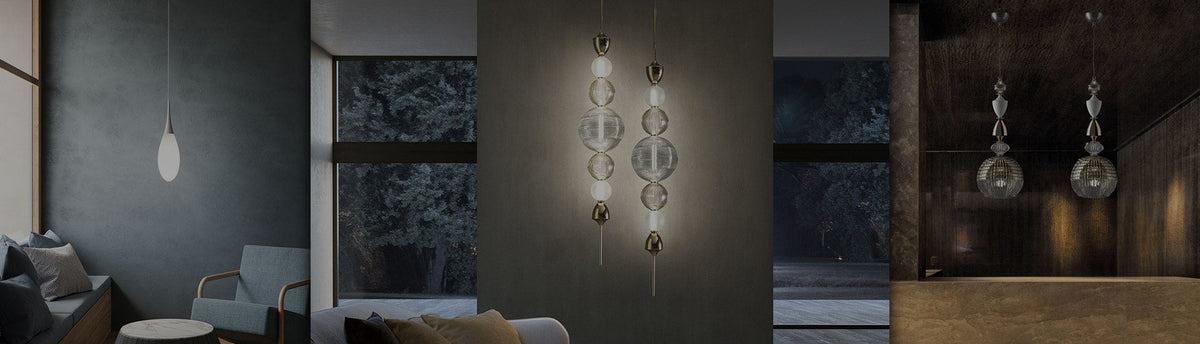

Dining Table Lights in Mumbai
Explore luxury dining table lights in Mumbai at Spacio. A wide selection of designer hanging lights, pendant lights, linear suspensions, kinetic lights and chandeliers for different styles & sizes of dining spaces. From a light above a compact dining table in an apartment to a larger installation in a spacious residence, the choice should relate to the table, ceiling height and proportions of the room.
Visit the Spacio showroom to explore our international decorative lighting collections and discuss your requirements with our interior styling team and decorative lighting experts. Whether you are furnishing a new home, updating a dining area or specifying lighting for an interior project, we can help you consider the design, scale and placement of a suitable light.


Read more
Choosing Dining Table Lights for Mumbai Homes
Dining table lighting in Mumbai calls for more than choosing a pendant or chandelier that looks right in a photograph. The light must work with the dining table, ceiling height, room layout and the way the space is used. Mumbai's humid climate and monsoon conditions also deserve consideration. In homes close to the coast or with dining areas that open to balconies and terraces, exposure to salt-laden air and strong airflow may influence the choice of materials, finishes and suspension.
Mumbai homes range from compact apartments with limited ceiling height to large residences with formal dining rooms, open-plan layouts and double-height spaces. A light that works above a small dining table in an apartment may be entirely unsuitable for a larger dining room. The right choice comes from understanding the space first, then selecting the form, size, finish and light output.
Spacio brings together international decorative lighting collections, including pendants, linear suspensions, chandeliers and sculptural lighting. The following guide looks at the choices that matter when selecting dining table lights in Mumbai.
Types of Dining Table Lights Available
The shape of the dining table, the space around it and the ceiling above it help determine which type of light will work best. These are the main formats to consider.
Single Pendant Lights
A single pendant creates a clear point of focus above a dining table. It is often a good choice for a compact dining area, a small round table or a breakfast table where a larger chandelier may take up too much visual space. The pendant should be sized in relation to the table, not selected only by its appearance.
Glass, metal, ceramic and sculptural forms offer different effects. A transparent glass pendant can keep a smaller room feeling open, while an opaque or more substantial shade creates a stronger visual presence. Explore Spacio's Pendant Lights collection for different shapes, materials and designs.
Linear Suspension Lights
Linear suspensions are designed to spread light along a longer area. They are especially relevant above rectangular dining tables, where one central pendant may not provide an even distribution of light across the full length of the table.
Some designs use a single elongated body, while others arrange several light elements along a shared canopy. Their length, width and suspension points should be considered together. In a narrow Mumbai dining area, a slim linear fitting can follow the table without extending too far into the surrounding space.
Multiple Pendant and Cluster Arrangements
Several smaller pendants can be arranged in a row, grouped at different heights or brought together in a compact cluster. This creates more freedom than a single large fixture and can be useful when the dining table is long or when a lighter visual effect is preferred.
The arrangement needs to be planned as one composition. The number of pendants, distance between them, overall spread and height should relate to the table. In a compact apartment, too many individual fittings can make the ceiling feel crowded. A carefully proportioned group is usually more successful than adding more lights simply to fill the space.
Chandeliers
A chandelier can give a dining room a strong visual centre. The choice ranges from traditional multi-arm designs to contemporary glass compositions, sculptural metal forms and more restrained modern chandeliers.
For a rectangular table, an elongated chandelier or a composition with a wider horizontal spread may work well. A round table can often accommodate a central circular or more compact arrangement. The chandelier must also leave enough visual space around it. In an apartment with a modest ceiling height, a deep or heavily layered fitting may feel too dominant even when its width is suitable.
Explore the Chandeliers and Suspensions collection for different approaches to dining room lighting.
Kinetic and Sculptural Lights
Kinetic lights introduce movement into a lighting composition. Depending on the design, elements may rotate, change position or create different visual arrangements. Sculptural lights, on the other hand, use form, material and the play of light and shadow to create a more expressive focal point.
These designs are best considered in relation to the entire dining space. Their movement, scale and visual spread need enough room to be appreciated. A large kinetic installation may suit a spacious dining room, while a smaller sculptural pendant can be more appropriate for an apartment. Explore Kinetic Lights at Spacio.
Ceiling Lights for Lower Ceilings
Not every dining area can accommodate a long suspension. Where the ceiling is low or the available drop is limited, a close-to-ceiling fitting may be worth considering. This can provide decorative lighting without placing a large object in the line of sight across the table.
The important point is not to force a pendant into a room that cannot support its proportions. A well-chosen ceiling light, combined with other lighting in the room, may give a more balanced result. Explore Decorative Ceiling Lights for alternatives.
Mumbai's Coastal Climate: Humidity, Salt and Lighting Finishes
Mumbai's coastal setting has a direct bearing on the materials and finishes used in an interior. The city experiences high humidity, particularly during the south-west monsoon. Homes close to the sea, especially those with open balconies or windows facing the coast, may also be exposed to salt carried in the air.
This does not mean that every indoor chandelier in Mumbai needs an outdoor or marine-grade specification. A protected dining room is different from an exposed balcony or a semi-open dining area. However, the location of the home, the degree of exposure and the way the room is ventilated should be considered before selecting the fitting.
Metal Finishes and Salt-Laden Air
Metal fittings can have different levels of resistance to corrosion depending on the base material, surface treatment, plating, coating and quality of the finish. Brass, steel, aluminium and other metals should not be treated as interchangeable simply because they have a similar appearance.
For a sea-facing home or a dining area that remains open to outside air, ask about the exact finish and its suitability for the intended location. A polished or plated surface may need different care from a powder-coated or lacquered finish. The manufacturer's maintenance instructions should also be followed.
Do not assume that a gold, bronze, chrome or nickel appearance tells you how well a fitting will withstand a coastal environment. The finish specification matters more than the colour name.
Glass, Crystal and Other Materials
Glass and crystal offer another direction for dining table lighting. They can introduce transparency, reflection and visual detail without relying entirely on a large metal structure. Blown glass, textured glass and crystal elements also respond differently to light, creating varied effects on the table and surrounding surfaces.
These materials still need regular care. Dust, moisture marks and deposits can become visible on glass and crystal, particularly in a home where windows remain open for long periods. Follow the manufacturer's cleaning instructions and avoid using chemicals that may affect metal fittings or surface treatments.
Lighting in Semi-Open Dining Areas
Some homes have dining areas that open directly onto a balcony, deck, terrace or garden. These spaces need more careful product selection than a fully enclosed dining room. Rain exposure, airborne salt, humidity and changes in temperature can affect the fitting and its electrical components.
For a semi-open location, check the manufacturer's stated indoor or outdoor suitability and the required ingress protection rating for the actual exposure. Do not assume that an indoor decorative pendant is suitable simply because it is installed under a covered ceiling. The fitting, wiring, ceiling connection and installation method must all suit the location.
Cross Ventilation and Movement in Suspended Lights
Air movement is another practical point to consider in Mumbai. In homes with windows on more than one side, large openings or direct access to a balcony, cross ventilation can create a noticeable flow of air through the dining area. A suspended light may move when it sits in this path, particularly if it has a long drop, a narrow suspension cable or several freely hanging elements.
This is not a reason to avoid pendant lights. It is a reason to study the position of the fitting before finalising it. A long, lightweight pendant directly between two open windows may be less suitable than a more stable design placed away from the main airflow. The same consideration applies to ceiling fans and air-conditioning outlets. A fitting should not be positioned where regular air movement causes it to swing or where it could come into contact with a fan.
Where movement is a concern, consider the overall weight and shape of the fitting, the length of the suspension, the number of hanging elements and the manufacturer's installation guidance. The ceiling fixing must be secure and appropriate for the weight of the light. If the dining area is exposed to strong air movement, discuss the location with the lighting and installation team before ordering.
Choosing Dining Table Lights for Compact Mumbai Apartments
Space is often the first consideration in a compact apartment. The dining table may sit close to the kitchen, living room, passage or balcony. In these layouts, the light must define the dining area without making the room feel crowded or interrupting movement around the table.
Keep the Scale in Proportion
A large chandelier can dominate a small dining area, while a very small pendant may appear disconnected from the table. Consider the table width, the available ceiling area and the distance to nearby walls, cabinets and furniture. The fitting should relate to the table while leaving enough visual space around it.
Choose the Right Suspension Drop
A low ceiling limits the available drop. The fitting must provide a clear view across the table and should not obstruct people standing, sitting or moving through the dining area. A shallow pendant or a compact arrangement may work better than a tall chandelier with several layers.
Where a suspension is possible, the final height should be decided after considering the ceiling height, the physical depth of the fitting, the seated sightline and the manufacturer's installation guidance. The usual starting reference of around 75–90 cm between the tabletop and the bottom of the fitting can help with planning, but it is not a fixed rule for every design or room.
Avoid Visual Clutter in Open-Plan Layouts
In an open-plan apartment, the dining light is seen from the living room and sometimes from the kitchen as well. Its design should work from more than one viewing angle. A sculptural form may be attractive when viewed directly from below, but a large or visually dense fitting can interrupt the wider room composition.
In these settings, a single pendant, a slim linear suspension or a small group of lights can define the dining table without competing with the lighting in the living area. The fixture should also relate to the finishes and visual weight of the nearby furniture.
Plan for the Dining Table in Use
Measure the dining table with its chairs pulled out. Check the clearance to walls, kitchen counters and walkways. Consider whether the table is used every day, extended for guests or occasionally moved. A light that looks correctly centred when the table is empty may feel poorly positioned when the table is extended or the chairs are in use.
Ceiling Height, False Ceilings and Installation Conditions
Ceiling height can vary within the same apartment. A dining area may have a full-height concrete slab, a false ceiling, a beam crossing the room or a lowered section created for services. These conditions affect the type of fitting that can be installed and the suspension length available.
Check the Actual Ceiling Height
Measure from the finished floor to the finished ceiling, not from the structural slab before the false ceiling is installed. Then check the distance from the ceiling to the tabletop. This gives a clearer picture of the available suspension length and the space occupied by the fitting itself.
Do Not Rely on the False Ceiling Alone
A decorative ceiling panel may not be designed to carry the weight of a chandelier. The fixing method must be suitable for the fitting and the ceiling construction. Heavy chandeliers or multi-part installations may require a secure fixing to the structural slab or a properly designed support arrangement.
Before the ceiling is closed, the electrician and interior team should confirm the power point, driver location where relevant, suspension points and access for future maintenance. This is particularly important for large or complex fixtures that may be difficult to remove once the dining area is complete.
Double-Height Dining Spaces
Some larger Mumbai residences have dining areas connected to double-height spaces. These rooms can accommodate larger chandeliers, longer suspensions and sculptural compositions, but the fitting still needs to relate to the dining table rather than the full height of the room alone.
Consider how the light will appear from the dining table, the upper floor and the surrounding living area. Also plan for installation access, cleaning and future maintenance. A large installation should be designed as part of the room from the beginning, not selected after the ceiling and furniture positions have been finalised.
Dining Table Shape, Size and Light Distribution
The light should relate to the table's shape and dimensions. Its purpose is to illuminate the dining surface while creating a balanced composition above it.
Rectangular Dining Tables
Long tables often benefit from a linear suspension, an elongated chandelier or a planned arrangement of multiple pendants. These formats can distribute light along the table rather than concentrating it at the centre. The fitting should not extend so far beyond the table that it feels detached from the dining area.
Round Dining Tables
A round table usually works well with a central pendant, a circular chandelier or a compact cluster. The light should be centred over the table and should relate to its diameter. A long linear fitting may look out of place unless the wider room composition gives it a clear reason to be there.
Oval and Extendable Tables
Oval tables can suit either a central fixture or an elongated composition, depending on their length and width. For extendable tables, plan the light around the largest configuration used regularly. This avoids a situation where the table extends beyond the illuminated area during gatherings.
Multiple Tables and Dining Zones
In larger homes or hospitality settings, more than one dining table may sit within the same room. Each table can have its own light, but the fittings should be considered together. Their heights, visual weight and spacing should create a clear relationship rather than compete for attention.
Light Quality, Glare and Dimming
A dining light needs to do more than look attractive when switched off. It should provide comfortable illumination for meals, conversation and the different ways a dining area is used.
Consider whether the light source is visible from a seated position. Exposed bright lamps can create glare, especially when the fitting is low or when glass and polished surfaces reflect the light. Diffusers, shades and carefully directed light can help control this, depending on the design.
Warm white light is often preferred for residential dining areas because it gives food, wood, stone and fabric a comfortable appearance. The correct colour temperature and colour rendering should be considered together. A dimmable fitting can also provide more control, allowing the same dining area to be used for everyday meals and evening entertaining.
Before selecting a dimmable light, confirm that the LED driver, dimmer and control system are compatible. Not every LED fitting works with every dimmer. If the project uses home automation, confirm the control requirements with the electrician or automation specialist before ordering the light.
Materials, Finishes and Design Choices
The material of a dining light affects its appearance, weight, light distribution and maintenance. In Mumbai, the surrounding climate and the degree of exposure should also be considered.
Glass and Blown Glass
Glass can be clear, coloured, textured, frosted or opaline. Clear glass keeps the form visually light, while coloured or textured glass changes the way the fitting is seen when illuminated. Blown glass can introduce variations in shape and surface that make each composition more expressive.
Crystal
Crystal can create a more reflective effect, catching and redirecting light through its cut or shaped surfaces. It is often used in chandeliers and decorative suspensions, from compact fittings to larger compositions. The size and number of crystal elements should be considered in relation to the ceiling height and the amount of visual detail already present in the room.
Brass and Other Metals
Metal can provide structure, fine detailing and a strong contrast with glass or crystal. Brass, bronze, nickel, chrome and other finishes can create very different visual effects. For Mumbai homes, ask about the actual surface treatment and care requirements, particularly if the fitting will be close to the sea or in a room that is regularly open to outside air.
Ceramic and Mixed Materials
Ceramic shades and mixed-material fittings can introduce a more tactile surface and a quieter visual character. Some designs combine ceramic with metal, glass, wood or fabric. These combinations can be useful when the dining table and surrounding furniture already have strong material details.
Dining Table Lighting Across Mumbai Homes and Projects
There is no single lighting solution for every Mumbai residence. The requirements change with the room, the table, the ceiling and the way the dining area connects to the rest of the property.
Compact Apartments
In smaller apartments, the dining area may share space with the kitchen or living room. A single pendant, a slim suspension or a compact cluster can give the table its own identity without using too much visual space. The fitting should also allow people to move comfortably around the table.
Open-Plan Residences
Where the dining area forms part of a larger living space, the light can help define the dining zone. Its design should relate to the living room lighting without repeating it exactly. A strong central fixture can provide a visual anchor, while wall and ceiling lights elsewhere in the room provide additional layers.
Large Residences and Formal Dining Rooms
A separate dining room may allow for a more substantial chandelier or a wider suspension arrangement. The fitting can relate to the table, sideboard, artwork and ceiling treatment. In a room with a high ceiling, a larger composition may be suitable, provided it remains in proportion with the dining furniture and does not obstruct views across the room.
Sea-Facing Homes and Balconies
For dining spaces close to the sea, the location of the fitting deserves particular attention. A fully enclosed dining room is not exposed in the same way as a room with open balcony doors or a semi-open terrace. Consider the amount of salt-laden air entering the room, the possibility of direct rain exposure and the airflow around the suspension. Select the material and finish for the actual conditions rather than relying on appearance alone.
Restaurants, Hotels and Hospitality Spaces
Hospitality dining areas have additional requirements. The light must work with the table layout, guest movement, cleaning routine, operating hours and the overall lighting scheme. A restaurant may use repeated pendants above individual tables, linear suspensions over communal tables or larger chandeliers in a main dining room. Maintenance access and replacement of light sources should be considered at the specification stage.
Italian and International Lighting Brands at Spacio
Spacio's international decorative lighting collection brings together design houses from Italy, France, Spain, Portugal, the Netherlands and the United States. Each brand has its own approach to form, materials, glassmaking, metalwork and the use of light. From Italian glass chandeliers and French brass suspensions to sculptural Portuguese lighting, these collections offer different design directions for dining rooms and other interior spaces.
Explore the brands below to understand their individual lighting specialisations and the types of designs they bring to the collection.
- Aromas Del Campo — Spain: Based in Valencia, Aromas Del Campo offers contemporary pendant, ceiling, wall, table and floor lights. Its designs combine metal and glass with materials such as marble, wood and ceramic, offering both restrained forms and more expressive lighting compositions.
- CVL Luminaires — France: A French lighting manufacturer with a special focus on handcrafted brass. Its collection includes pendant lights, linear suspensions, ceiling fittings and wall lights, with designs that explore the shape, finish and detailing of brass.
- DCW Éditions — France: A French design publisher known for considered lighting forms that balance function and design. Its range includes suspension lights, linear fittings and sculptural pendants, alongside wall, ceiling and floor lamps.
- Esperia — Italy: Based in Tuscany, Esperia combines lighting design with technical precision. Its decorative range includes chandeliers, pendant lights and suspensions, using fine materials and carefully developed light distribution.
- Euroluce Lampadari — Italy: An Italian decorative lighting house offering chandeliers, pendant lights and ceiling fittings in classic and contemporary styles. Its collections use materials such as blown glass, crystal and metal to create both traditional and modern lighting compositions.
- Foscarini — Italy: Known for expressive design lighting, Foscarini explores different materials, shapes and ways of diffusing light. Its collection includes distinctive suspension lights, sculptural pendants and chandeliers, as well as wall, ceiling, table and floor lamps.
- IL Pezzo Mancante — Italy: Based in Tuscany, this design house creates handcrafted lighting using materials such as brass, blown crystal, solid wood and marble. Its range includes sculptural chandeliers, linear and circular compositions, cluster arrangements and individual pendants.
- Ilfari — Germany: A German lighting design brand offering decorative chandeliers, pendants and ceiling lights. Its collections combine contemporary forms with more classic influences, creating distinctive suspended compositions alongside wall, table and floor lighting.
- Italamp — Italy: An Italian lighting company with a long history in decorative lighting. Its collections include contemporary and classic chandeliers, pendants and suspensions, often using fine glass varieties and precious materials. Wall, ceiling, table and floor lights complete the range.
- Karman — Italy: Karman explores imaginative forms and materials in its decorative lighting. Its range includes pendant and suspension lights in glass, ceramic and metal, as well as chandeliers, ceiling, wall and table lights. The collections address both residential and hospitality interiors.
- KDLN — Italy: Born in Milan, KDLN develops contemporary decorative lighting across pendant, suspension, ceiling, wall, table and floor categories. Its designs work with materials such as glass, metal and ceramic, combining distinctive forms with practical lighting requirements.
- Lorenzon — Italy: An Italian lighting house with collections ranging from classic chandeliers to contemporary suspensions. Its designs use ceramic, blown glass, crystal, brass, other metals and fabric, with options for table and wall lighting as well.
- Marset — Spain: A Spanish lighting design brand recognised for its contemporary approach to form and illumination. Its range includes pendant lights, ceiling fittings and suspensions, alongside wall, table, floor and portable lights. The designs span sculptural statements and more understated forms.
- Masiero — Italy: An Italian manufacturer of decorative lighting, with collections ranging from traditional Venetian-inspired chandeliers to contemporary designs. Its range includes chandeliers, pendant and linear suspension lights, as well as wall, ceiling, table and floor lamps.
- Penta — Italy: Penta combines Italian design and lighting technology in contemporary decorative fittings. Its collection includes pendant lights, suspensions and ceiling fittings, together with wall, table and floor lights. The designs explore refined shapes, materials and finishes.
- Pieter Adam — The Netherlands: A Dutch lighting design brand known for sculptural forms, distinctive finishes and traditional craftsmanship. Its collection includes chandeliers, pendant lights and suspensions, combining materials such as brass, bronze, blown glass and silk to create expressive lighting compositions.
- Serip — Portugal: A Portuguese lighting house known for sculptural compositions inspired by nature. Its collection includes chandeliers, suspended lights and wall fittings, with organic forms that bring together metal, glass and handcrafted details.
- SkLO — United States: An American design brand built around the tradition of Czech glassblowing. Its lighting includes hand-blown glass pendants, multi-pendant arrangements, chandeliers and wall lights. The variations in handmade glass give each piece its own character.
- Sylcom — Italy: Rooted in the Venetian glassmaking tradition, Sylcom creates decorative chandeliers and suspension lights using blown and worked glass. Its collections range from traditional Murano-inspired forms to contemporary compositions with glass and metal.
- Terzani — Italy: Founded in Florence, Terzani creates sculptural lighting that explores the relationship between light, shadow, material and movement. Its collection includes distinctive chandeliers, suspensions and wall lights, often using metal and other materials in expressive forms.
- Vistosi — Italy: With roots in Murano's historic glassmaking tradition, Vistosi is known for decorative glass lighting. Its collection includes glass pendants, suspension lights and chandeliers, alongside wall, ceiling, table and floor lamps. Glass colour, shape and finish play a central role in its designs.
These brands offer different ways to approach dining table lighting. Glass and crystal can introduce transparency and reflection; brass and other metals bring structure and definition; while sculptural and organic forms can create a stronger focal point above the table. The choice should always be considered in relation to the table dimensions, ceiling height, room proportions and the wider interior.
Explore the Wider Decorative Lighting Collection
Dining table lighting is part of a larger lighting plan. A pendant or chandelier may provide the main decorative focus above the table, while other fittings help balance the surrounding room.
- Pendant Lights: Individual suspended fittings and multi-light arrangements for dining tables, kitchen islands and other interior settings.
- Chandeliers and Suspensions: Larger decorative compositions, from classic chandeliers to contemporary suspended designs.
- Kinetic Lights: Lighting designs that use movement as part of their visual expression.
- Ceiling Lights: Close-to-ceiling and other ceiling-mounted options for spaces with limited suspension height.
- Wall Lights: A useful supporting layer for dining rooms, side walls and adjoining areas.
- Table Lamps and Floor Lamps: Additional light for sideboards, consoles and nearby seating areas.
For a wider understanding of the different formats, materials and design considerations, explore our guide to Hanging Lights for Dining Tables. This national guide looks more closely at the design and selection of suspended lighting, while this Mumbai page addresses the local conditions and requirements involved in choosing a dining light for a home or project in the city.
Frequently Asked Questions About Dining Table Lights in Mumbai
Which type of dining table light is suitable for a Mumbai apartment?
The choice depends on the table size, ceiling height and available space around the dining area. A single pendant or slim linear suspension may work well in a compact apartment, while a small chandelier or cluster can suit a larger dining zone. The fitting should define the table without obstructing movement or making the room feel crowded.
Does Mumbai's humidity affect dining room chandeliers?
Humidity and airborne salt can affect some metal finishes over time, particularly in homes close to the sea or rooms that are regularly open to outside air. The level of risk depends on the material, surface treatment and exposure. Check the manufacturer's finish and maintenance guidance before selecting a fitting for a coastal home.
Can a pendant light swing because of cross ventilation?
It can, particularly if it has a long suspension and is placed in a direct airflow between open windows or balcony doors. Ceiling fans and air-conditioning outlets can also cause movement. Consider the position, suspension length and shape of the fitting before installation.
What is the right hanging height above a dining table?
A common starting reference is around 75–90 cm from the tabletop to the bottom of the light. The final height depends on the fitting's depth, ceiling height, table dimensions and seated sightlines. It should be checked for the specific design before installation.
What if my dining room has a low ceiling?
Consider a shallow pendant, a compact chandelier or a close-to-ceiling fitting. The available suspension drop and the physical depth of the light are both important. A fitting should not obstruct views across the table or make the dining area feel compressed.
Can I install a heavy chandelier on a false ceiling?
Not unless the ceiling and fixing arrangement have been designed to support its weight. A false ceiling panel alone may not be suitable for a heavy fixture. The installation team should check the structural support, fixing points and electrical provision before the ceiling is closed.
Which light works best above a long rectangular dining table?
A linear suspension, elongated chandelier or planned row of pendants can spread light along the length of the table. The fitting's dimensions and position should be based on the table rather than the full room alone.
Can I use a decorative pendant in a semi-open dining area?
Only if the fitting is specified for the conditions in that location. A covered balcony or terrace may still be exposed to humidity, salt-laden air, wind and rain. Check the manufacturer's indoor or outdoor suitability and ingress protection rating before installation.
Where can I explore Italian and European designer lights in India?
Spacio brings together an extensive collection of Italian and European designer lighting from leading international brands. You can explore the collections online at spaciocollections.com or visit our showrooms in Mumbai at Laxmi Industrial Estate, Andheri West, and in Kolkata at Topsia Road South. Our decorative lighting experts can help you discover different designs, understand their materials and finishes, and select suitable options for your interior.
Can Spacio help me select a light for my dining table?
Yes. Share the table dimensions, ceiling height, room photographs or floor plan, along with your preferred design direction. This information helps the team understand the space and guide you towards suitable lighting options.
Why Choose Spacio for Dining Table Lights?
Established in 1995, Spacio brings together international furniture, decorative lighting, fireplaces and decor accessories for residential and commercial interiors. Its lighting portfolio includes Italian, European and other international design houses, with different approaches to glass, crystal, metal, form and illumination.
Choosing a dining light involves more than selecting a design. The fitting must relate to the table, room proportions, ceiling conditions and the wider lighting scheme. Spacio's interior styling team can help homeowners and design professionals consider these elements when exploring the collection.
Get Guidance for Your Dining Space
If you are selecting dining table lights for a home or project in Mumbai, share the table dimensions, ceiling height, photographs of the dining area or a floor plan. If the home is close to the sea or the dining area opens onto a balcony, mention that as well. These details help establish the right lighting format, material and installation requirements. Explore the collection or speak with Spacio's interior styling team for guidance on selecting a suitable dining light.
Visit Spacio: Dining Table Lights Store in Mumbai
SPACIO : Mumbai
Luxury European Home Decor Accessories. Decorative Lighting & Fireplace
3BK, Laxmi Industrial Estate,
New Link Road, Andheri West,
Mumbai – 400053
Timing: 10am - 7.30pm (Monday - Saturday)
Sunday - By appointment
Click here to find us on Google Maps
Tel: +91 22 40126611
Mobile: +91 88792 26611
E-mail: info@spaciocollections.com
Dining Table Lights in Mumbai: The Right Choice for Your Space
The right dining light is selected by looking at the table, ceiling, room layout and the conditions in which it will be used. In Mumbai, that also means considering humidity, coastal exposure and air movement where relevant. A well-chosen pendant, suspension or chandelier should illuminate the dining area comfortably, sit in proportion with the table and work as part of the wider interior.