
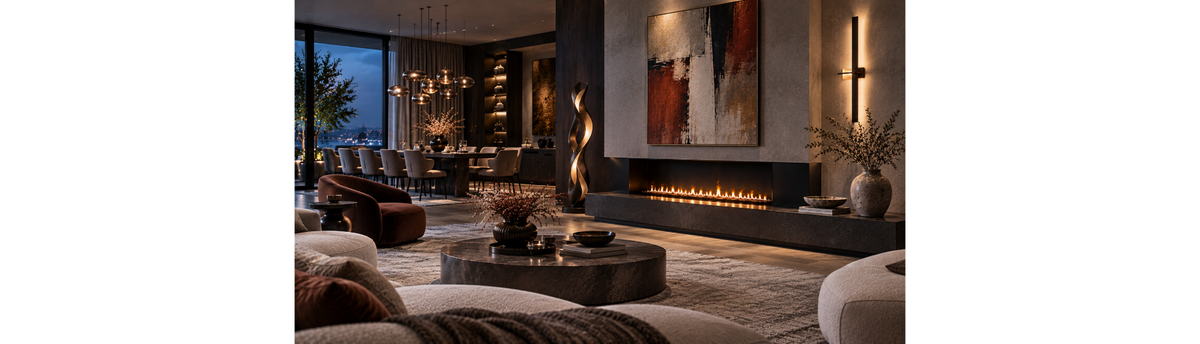

As evening approaches, a fireplace can change the character of a living room. Its moving flame draws the eye, creates areas of light and shadow, and brings a sense of depth to the space. Yet the fireplace is only one part of the lighting arrangement. Table lamps, floor lamps, wall lights and concealed lighting help the rest of the room remain comfortable, balanced and inviting.
The art lies in allowing these sources to work together without competing. Firelight provides movement and a natural point of attention, while decorative lighting brings more controlled illumination to seating, artwork, reading areas and surrounding surfaces. When their brightness, colour and position are considered together, the room can feel warm without becoming dark, dramatic without causing glare, and refined without relying on excessive lighting.
For Indian homes, this approach also offers flexibility. A water-vapour or LED fire feature may provide visual ambience without conventional room heating, while carefully selected lamps and wall lights can create a comfortable evening setting throughout the year. The right combination depends on the room, the fireplace technology, the materials and how the space is used.
Table of Contents
- Understanding the Two Layers of Light
- What Firelight Contributes to an Interior
- Using Table Lamps Around a Fire Feature
- Floor Lamps as Sculptural Light Sources
- Wall Lights and the Fireplace Wall
- Using Concealed Lighting with Firelight
- Colour Temperature and Evening Comfort
- Managing Glare and Reflections
- How Materials Change the Way Light Looks
- Planning the Room for Different Uses
- Firelight, Decorative Lighting and TV Walls
- Common Layered Lighting Mistakes
- Firelight and Decorative Lighting in Six Indian Cities
- Firelight, Decorative Lighting and Vastu
- Frequently Asked Questions
- Bringing Firelight and Decorative Lighting Together
Understanding the Two Layers of Light
A well-lit living room rarely depends on a single source. Instead, it uses different types of light for different purposes. A fireplace contributes a visible glow and movement. Decorative lighting provides more controlled illumination, helping people read, talk, move around and appreciate the room's materials and furnishings.
These sources are related, but they are not interchangeable. Firelight may create a beautiful glow across a stone surround or the edge of a coffee table, but it may not provide enough light for reading or other activities. A table lamp can illuminate a seating area, while a floor lamp can provide light near an armchair. Wall lights can bring attention to a textured wall, and concealed lighting can reveal the depth of a shelf or a change in material.
The most effective arrangement gives each source a clear role. The fireplace can remain the visual focus, while the lamps and other fixtures make the room usable and help its different areas feel connected.
This is also where decorative lighting becomes part of interior styling rather than a finishing touch. The shape of a lamp, the direction of its light and the material around it all influence how the fireplace is experienced. Spacio's decorative lighting collection offers a starting point for exploring lighting as part of a complete interior composition.
What Firelight Contributes to an Interior
Firelight is visually distinctive because it changes from moment to moment. The flame moves, its brightness varies, and its reflections shift across nearby surfaces. This movement gives the fireplace a quality that a fixed lamp cannot reproduce in exactly the same way.
The effect depends on the type of fireplace. A real flame produces light through combustion, while water-vapour, LED and digital fire features create their visual effects through different technologies. Their appearance, brightness and behaviour vary by model. It is therefore important to consider the actual light produced by the chosen fire feature rather than assuming that every fireplace will illuminate a room in the same way.
Firelight often works best as a layer of atmosphere. It can draw attention towards the fireplace wall, bring a subtle glow to nearby materials and create a sense of intimacy around a seating arrangement. The surrounding lamps then provide the light needed for other activities.
Navin Kanodia, Fireplace Expert and Interior Stylist at Spacio, recommends planning decorative lighting around the actual fireplace, the seating positions and the materials in the room. A flame may draw the eye towards a fireplace wall, while a poorly positioned lamp can create glare on polished stone, glass or a television screen. His approach is to decide what each light source needs to do before choosing its position and brightness, so the fire remains a clear focal point without leaving the rest of the room poorly lit.
The right lighting arrangement also depends on the fireplace itself. Real-flame, electric, LED and water-vapour models differ in how they create their visual effect, and their installation requirements vary. For a broader guide to fireplace types, technologies and selection in India, read Spacio's complete fireplace guide.
Using Table Lamps Around a Fire Feature
Table lamps are useful when a living room needs a softer source of light close to the seating. Placed on a side table, console or suitable cabinet, a lamp can illuminate a particular area without making the entire room equally bright.
Near a fireplace, a table lamp can balance the glow of the flame. If the fire is positioned towards one end of a long wall, a lamp on an adjacent console or side table may help the opposite side of the seating arrangement feel less visually empty. The lamp does not have to mirror the fireplace exactly. Its placement should respond to the furniture and the room's overall balance.
The lampshade, bulb and direction of light all matter. A shade that diffuses light can create a softer effect, while a more open design may produce stronger direct light. Consider where the light falls and whether it shines into the eyes of someone seated nearby. A bright bulb exposed to the main seating area may cause discomfort even when the lamp itself is attractive.
Proportion is equally important. A small lamp may disappear beside a broad sofa and a substantial fireplace wall, while an oversized lamp may crowd a narrow side table. The height of the lamp should relate to the seating, the table and the viewer's eye level.
For a considered arrangement, think about the lamp as both a light source and an object. Its form and finish can relate to a nearby sculpture, vase or furniture detail. However, avoid selecting every item in the same material. A little contrast can help each object retain its identity.
Candle holders and candle stands can introduce another small point of light around a fireplace. Treat candlelight as an accent rather than a competing focal point, and consider how its position relates to the fire, nearby lamps and the seating arrangement. Keep lit candles away from curtains, shelves and other combustible materials. For more guidance on selecting and arranging these objects, explore our guide to luxury candle holders and candle stands for interiors.
Floor Lamps as Sculptural Light Sources
A floor lamp can perform two roles in a living room: it provides light and introduces a strong vertical form. This makes it especially useful beside a sofa, an occasional chair or a fireplace wall with a long horizontal profile.
A slender floor lamp can bring height to a room where the fireplace, console and coffee table establish several horizontal lines. A curved design can create movement beside a straight-edged surround, while a more geometric lamp may suit a room with defined forms and a restrained material palette.
Placement should be based on the way the room is used. Beside an armchair, a floor lamp can provide light for reading. Behind or beside a sofa, it may add a softer layer to the seating area. Near a fireplace, it can help connect the fire feature to the rest of the room, provided it does not obstruct circulation or compete with the flame.
Look at the lamp from the main seating positions before deciding where it belongs. A fixture that looks balanced when viewed from the entrance may block the view of the fire when someone sits on the sofa. Its shade should also direct light away from the eyes and screen surfaces.
Materials influence the effect. A metal floor lamp can introduce a crisp line against a textured wall. Glass may feel lighter, while a fabric shade can soften the light. A sculptural lamp can become a secondary focal point, but the fireplace should retain its intended role in the room.
Wall Lights and the Fireplace Wall
Wall lights can help a fireplace wall feel balanced after dark. They introduce light at eye level or above, drawing attention to the wall surface and helping connect the fireplace with artwork, panelling or other interior details.
The right placement depends on the wall's design. A pair of wall lights may create a symmetrical arrangement around a central fireplace or artwork. In a less formal interior, a single wall light may be enough to illuminate an adjoining area. If the wall already contains a television, shelving or several decorative elements, the lighting should be planned carefully to avoid visual competition.
Consider the direction of the beam. Upward-facing wall lights can wash the upper wall with light, while downward-facing designs can emphasise texture or illuminate a specific surface. Some fixtures cast light in both directions. The effect depends on the fixture, its distance from the wall and the finish of the surface behind it.
Wall lights should not automatically be placed at equal distances from every feature. Their positions need to respond to the fireplace opening, artwork, furniture and wall proportions. If the arrangement includes a large artwork above the fire, the lighting may be better placed to illuminate the artwork or the surrounding wall without creating distracting reflections.
For a coherent result, decide the wall composition before finalising the lighting positions. This is particularly important when a fireplace is integrated into a media wall or a custom wall treatment, as the placement of the screen, fire opening, cabinetry and light fittings all affect one another.
Using Concealed Lighting with Firelight
Concealed lighting introduces illumination without making the light source the main visual feature. It may be integrated into a ceiling detail, shelf, cabinet, niche or other suitable part of the room. When planned well, it can reveal the depth of a surface and create a gentle transition between the fireplace wall and the wider interior.
For example, lighting within a shelf beside the fireplace can make selected objects easier to appreciate after dark. Light beneath a floating console may give the furniture a lighter appearance, while concealed ceiling lighting can help maintain a comfortable level of illumination across the room.
Concealed lighting should support the composition rather than create a bright outline around every edge. Too many illuminated niches, shelves and ceiling details can make the room feel busy. Select the areas that genuinely benefit from emphasis and leave other surfaces quieter.
Light output and positioning are important. A strip light that is visible from the sofa may cause glare, particularly when the room is otherwise dim. Reflective surfaces can also reveal individual light points or create bright streaks. Use appropriate diffusers and plan the installation so that the light source is hidden from normal viewing angles.
When working with a fireplace, confirm that any concealed lighting, wiring, cabinetry and finishes are suitable for the installation and the temperatures involved. Follow the fireplace manufacturer's requirements and the advice of the relevant installation professionals. Decorative lighting must not interfere with ventilation, service access or the safe operation of the fire feature.
Colour Temperature and Evening Comfort
Colour temperature describes whether a light appears warmer and more amber or cooler and more neutral. It is commonly expressed in kelvin (K). Lower colour-temperature values generally appear warmer, while higher values appear cooler. The right choice depends on the room, the activity and the effect you want to create.
In an evening living room, warmer decorative lighting often works well alongside the glow of a fireplace. It can support a relaxed atmosphere and complement materials such as timber, warm-toned stone, textured fabrics and brass finishes. A cooler light may be useful for some tasks, but if it is much bluer than the firelight, the difference can feel distracting.
This does not mean every light in the room must use exactly the same colour temperature. Task lighting may need a different quality from ambient lighting. The important point is to avoid unplanned contrasts that make one part of the room feel disconnected from another.
Where possible, assess the lighting in the actual room after dark. The colour of the walls, the amount of daylight, the fireplace technology and the materials nearby can all influence the perceived effect. A bulb that looks warm in a shop may appear different against a cool grey wall or a highly reflective stone surface.
Dimmable lighting can provide greater flexibility, provided the lamps, drivers and controls are compatible. A lower light level in the evening may help the fire remain visually prominent, while brighter settings can support cleaning, reading or other activities. The goal is not to make the room uniformly dim, but to create a useful balance between atmosphere and visibility.
Managing Glare and Reflections
Glare occurs when a light source or reflection feels uncomfortably bright. It can make a carefully styled room difficult to enjoy, especially when the fireplace is viewed from a sofa or when a television shares the same wall.
Start by checking the view from the places where people sit. A lamp may appear well positioned from the entrance but shine directly into someone's eyes from the sofa. A wall light may reflect in glass artwork, while a concealed strip may be visible beneath a shelf. These problems are easier to address during planning than after the furniture and fixtures are installed.
Reflections need particular attention in rooms with glass, polished stone, glossy finishes, mirrors or metallic surfaces. These materials can make a room feel brighter and more layered, but they can also repeat a bright light source across the room. A reflective coffee table, for example, may show the image of a lamp or the fire, creating a strong highlight in the viewer's field of vision.
Several practical adjustments can help:
- Position lamps so that their brightest parts are not directly visible from the main seating area.
- Use suitable shades, diffusers or glare-control accessories where needed.
- Check reflections on television screens, glass artwork, polished stone and glossy furniture.
- Adjust the angle of wall lights and concealed lighting to avoid bright patches on nearby surfaces.
- Use dimming where compatible, rather than relying on a single high brightness setting.
- Review the room at night, when reflections and light contrasts are more noticeable.
The aim is not to remove every reflection. Gentle reflections can add depth and help connect the different materials in a room. The concern is a reflection that becomes so bright or prominent that it distracts from the fireplace, the artwork or the people using the space.
How Materials Change the Way Light Looks
Light does not look the same on every surface. A matte wall absorbs and diffuses light differently from polished marble, glass or metal. The materials around a fireplace therefore influence the character of the room as much as the lamps themselves.
Stone and marble
Stone and marble can show changes in colour, veining and texture when light moves across their surfaces. Grazing light may emphasise texture, while a direct beam can create a strong reflection on a polished finish. Consider the surface before choosing the direction and brightness of nearby lighting.
Timber and textured finishes
Timber can add visual warmth to the fireplace wall and surrounding furniture. Soft, indirect lighting may reveal its grain without creating harsh highlights. Textured finishes can also benefit from carefully directed light, although strong side lighting may exaggerate imperfections or create shadows that are not intended.
Glass and mirrors
Glass and mirrors can extend the sense of light in a room, but their position matters. A mirror opposite a bright lamp may reflect the light directly towards the seating area. Glass objects may catch the flame or lamp light and introduce small highlights. These effects can be attractive when controlled, but too many bright points can create visual clutter.
Metal and reflective finishes
Brass, bronze, chrome and other metallic finishes can reflect or soften light in different ways, depending on their surface and shape. A sculptural lamp with a metallic shade may create a warm pool of light, while a highly polished fixture may produce stronger highlights. Relate these finishes to the fireplace surround and other furnishings without repeating the same metal everywhere.
In every case, the best results come from viewing the materials under the lighting conditions in which the room will normally be used. Daylight and evening light can produce very different effects, so a finish should not be judged under showroom lighting alone.
Planning the Room for Different Uses
A living room may be used for conversation, reading, watching television, entertaining guests or simply relaxing at the end of the day. The fireplace and decorative lighting should support these activities without requiring the room to be redesigned each time its use changes.
For a relaxed evening
Keep the fireplace visible and use a few softer sources of light around the seating area. A table lamp or floor lamp can provide a gentle pool of illumination, while concealed lighting can reveal a shelf or wall finish. Avoid switching on every light at full brightness when the room is intended for relaxation.
For reading and conversation
Ensure that seating areas have enough light for the activity. A floor lamp beside an armchair or a table lamp near a sofa can provide more useful illumination than the fireplace alone. Position the light so that it reaches the reading area without shining directly into the eyes of another person.
For entertaining
Use the fireplace as one part of the atmosphere, then allow decorative lighting to connect the seating, artwork and nearby surfaces. The room should remain easy to navigate and comfortable for conversation. A balanced combination of ambient, task and accent lighting can create depth without making every object equally prominent.
For everyday use
Not every evening needs dramatic lighting. Make sure the room has a practical lighting setting for routine activities, with sufficient light to move safely and use the space comfortably. Where controls allow, separate lighting circuits or dimming zones can help switch between functional and atmospheric settings.
Firelight, Decorative Lighting and TV Walls
When a fireplace is integrated into a television wall, lighting needs more careful planning. The screen, fire feature and decorative lights may all attract attention within the same field of view. Their brightness and position should work together rather than compete.
A lamp placed directly opposite a television may create distracting reflections. Bright wall lights can also draw the eye away from the screen, while concealed lighting that is too strong may reduce the visual impact of the fire feature. Consider the screen's position, the viewing angle from the sofa and the way light falls across the surrounding wall.
Indirect lighting can sometimes make the transition between a bright screen and a darker room more comfortable, but its intensity and position matter. Avoid visible light sources or reflections that become distracting during viewing. If the room has adjustable lighting, a dedicated television setting can reduce the brightness of decorative lights while retaining enough ambient illumination for comfortable use.
Heat management is equally important. A fireplace below or beside a television must be selected and installed according to the requirements of the specific model. Decorative lighting, wiring, cabinetry and screens should not obstruct ventilation or exceed the manufacturer's stated temperature limits. Where required, seek professional advice before finalising the layout.
For more guidance on the relationship between the screen, fire feature and wall composition, read Spacio's guide to choosing a fireplace below a TV in modern Indian homes.
Common Layered Lighting Mistakes
Relying on the fireplace as the only evening light. Firelight can create atmosphere, but it may not provide enough illumination for reading, movement or everyday activities. Add suitable lighting where it is needed.
Making every light equally bright. When all sources compete for attention, the fireplace loses its visual importance. Establish a hierarchy and adjust brightness according to the purpose of each light.
Mixing colour temperatures without a plan. Strong differences between warm and cool lighting can make the room feel disconnected. Review the combined effect in the actual interior, especially after dark.
Ignoring glare from reflective surfaces. Glass, mirrors, polished stone and television screens can reflect lamps or the fire. Check the room from the main seating positions before finalising the layout.
Adding too many illuminated features. Lighting every niche, shelf and wall edge can make a room feel busy. Select the details that deserve emphasis and leave other areas quieter.
Choosing lamps only for appearance. A sculptural lamp should still provide useful light. Consider its beam direction, shade, brightness and relationship with the seating before selecting it.
Forgetting installation requirements. Lighting, wiring and nearby finishes must be suitable for the fireplace and its operating conditions. Follow the manufacturer's guidance and use qualified professionals where needed.
Firelight and Decorative Lighting in Six Indian Cities
The relationship between firelight and decorative lighting can be explored through different types of Indian homes, from contemporary apartments to larger private residences. In each case, the fireplace establishes one layer of atmosphere, while decorative lighting helps illuminate seating areas, highlight materials and create a comfortable evening setting. Spacio's city pages provide a starting point for exploring both categories as parts of a complete interior.
Ahmedabad: Balancing Light Across Contemporary Interiors
In Ahmedabad, a fireplace may form part of a large living-room wall, a media wall or a more intimate seating area. A sculptural floor lamp can introduce height beside a low sofa, while concealed lighting can reveal a textured surface without making it too bright. The choice of lighting should respond to the fireplace, furniture layout and materials already present in the room.
Explore Spacio's fireplace options in Ahmedabad alongside European and Italian decorative lighting in Ahmedabad. Considering both categories together helps establish a clear relationship between the fire feature and the room's other sources of light.
Ludhiana: Creating a Comfortable Evening Setting
In Ludhiana, a living room may need to accommodate different evening activities, from conversation and entertaining to reading during colder periods. The fireplace can establish the main visual focus, while table lamps and floor lamps provide useful light around the seating. Their brightness and position should support the fire feature rather than compete with it.
When planning a fireplace in Ludhiana, consider how it will work alongside European and Italian decorative lights in Ludhiana. A flexible lighting arrangement can support practical activities while preserving a softer atmosphere when the room is used for relaxation.
Coimbatore: Layering Light in Warm-Climate Homes
In Coimbatore, the visual ambience of a fireplace may be more important than additional room heating for much of the year, depending on the chosen technology and the homeowner's needs. Decorative lighting then plays an important role in providing useful illumination. A warm table lamp, a sculptural floor lamp or discreet concealed lighting can add depth without making the room feel crowded.
Explore fireplace options in Coimbatore alongside Spacio's European and Italian decorative lighting in Coimbatore. Consider how each light source will interact with daylight, reflective materials and the room's main seating positions.
Chennai: Managing Reflections and Evening Ambience
In Chennai, a lighting plan may need to work with generous daylight, open-plan living areas and reflective surfaces. As evening approaches, the fireplace can provide a focal glow, while decorative lighting adds controlled illumination around the seating and other parts of the room. The position of lamps and wall lights should be checked carefully where glass, polished stone or television screens may reflect their light.
For a fireplace in Chennai, consider Spacio's European and Italian decorative lights in Chennai as part of the same interior planning process. Reviewing both categories together can help create a balanced arrangement without excessive brightness or distracting reflections.
Pune: Connecting the Fireplace with Furniture and Lighting
Pune's mix of apartments, larger residences and villas calls for lighting that responds to the scale and use of each room. A compact living room may need a table lamp and one carefully positioned accent light, while a larger space may benefit from a floor lamp, wall lights and concealed illumination around selected details.
When planning a fireplace in Pune, explore the options alongside European and Italian decorative lighting in Pune. Begin with the furniture layout, identify the areas that need functional light, and then decide which surfaces should receive softer emphasis. This keeps the lighting scheme connected to the way the room is used.
Kochi: A Softer Approach to Firelight
In Kochi, the visual role of a fireplace may be more important than room heating for much of the year. The selected fire technology should suit the intended application, while decorative lighting supports the rest of the interior. A warm table lamp, a floor lamp beside the seating or carefully positioned concealed lighting can create depth without overwhelming the room.
Explore Spacio's fireplace options in Kochi alongside European and Italian decorative lighting in Kochi. Where glass, metal or polished finishes are present, review their reflections under evening lighting so the fire and decorative fixtures work together comfortably.
Firelight, Decorative Lighting and Vastu
For homeowners who follow Vastu principles, the position of the fireplace may influence decisions about the surrounding furniture and lighting. These preferences can be considered alongside practical requirements such as room use, sightlines, ventilation, electrical planning and the manufacturer's installation instructions.
Decorative lighting should support the room's layout rather than be placed solely to create symmetry around the fire. A lamp must provide useful light, a wall fixture should suit the wall composition, and concealed lighting should remain accessible for maintenance. No styling preference should override the technical or safety requirements of the fireplace.
For a more detailed discussion, read Spacio's guide to Vastu considerations for fireplace placement in India.
Frequently Asked Questions
Can a fireplace provide enough light for a living room?
A fireplace can create a distinctive glow, but it should not normally be treated as the room's only light source. Its output depends on the fireplace technology and model. Table lamps, floor lamps, wall lights or other suitable fixtures can provide the additional illumination needed for reading, conversation and everyday use.
What colour temperature works best with firelight?
Warm-toned decorative lighting often works well with the glow of a fireplace in an evening living room. However, the right colour temperature depends on the room, materials, activities and fireplace technology. Assess the combined effect in the actual space instead of selecting bulbs in isolation.
How do I prevent glare around a fireplace and television?
Check the room from the main seating positions. Position lamps so that their brightest parts are not directly visible, and review reflections on the television, glass, mirrors and polished surfaces. Dimming and indirect lighting can help when the fixtures and controls are compatible.
Should decorative lighting be brighter than the fireplace?
Not necessarily. The fireplace may remain the main visual focus, while decorative lighting provides enough illumination for the room's activities. The right balance depends on whether the space is being used for reading, entertaining, watching television or relaxing.
Can concealed lighting be installed around a fireplace?
It may be possible when the fireplace design and installation allow it. The lighting, wiring, cabinetry and nearby materials must meet the manufacturer's requirements, and the installation must not obstruct ventilation or service access. Confirm the details with qualified professionals before work begins.
Where can I explore fireplaces and decorative lighting in Mumbai?
You can explore Spacio's fireplace collection and decorative lighting collection to consider how these elements work together in a complete interior. To experience the collections in person, visit the Spacio Mumbai store at Laxmi Industrial Estate, Andheri West. You can find the store on Google Maps.
Where can Kolkata homeowners explore fireplaces and decorative lighting?
Kolkata homeowners can explore Spacio's fireplace collection and decorative lighting collection when planning an evening lighting scheme. The collections can also be experienced at the Spacio Kolkata store on Topsia Road South, Kolkata. Find the store on Google Maps.
How should I choose decorative lighting for a living room with a fireplace?
Start by identifying the areas that need light, such as a reading chair, sofa, artwork or display shelf. Then consider table lamps, floor lamps, wall lights or concealed lighting according to the room layout. Check brightness, colour temperature and reflections from the main seating positions, and make sure every fitting and nearby finish is suitable for the specific fireplace installation.
Bringing Firelight and Decorative Lighting Together
A well-planned evening interior uses firelight and decorative lighting for different but connected purposes. The fireplace introduces movement and a natural point of attention. Table lamps and floor lamps provide useful pools of light, wall lights bring depth to the surrounding surfaces, and concealed lighting can reveal selected details without dominating the room.
The best result comes from considering the whole room. Think about brightness, colour temperature, reflections, glare, furniture positions and the materials around the fire. Then give each light source a clear role. This creates an interior that feels inviting after dark while remaining practical for everyday use.
When planning a living room, consider the fireplace and decorative lighting together rather than selecting each in isolation. Start with the role of the fire feature, then assess the light needed for seating, reading, artwork and evening use. Explore Spacio's fireplace collection and decorative lighting collection to consider options for a coordinated interior scheme.


