
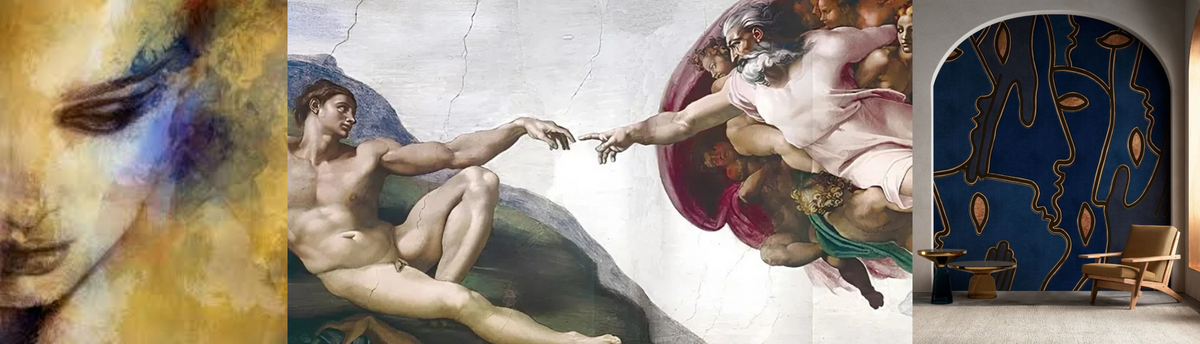

Italian fresco walls offer a distinctive way to give a room character through colour, imagery, surface detail and composition. Within this wall-treatment family, modern, 3D and classical fresco designs create different visual effects. Modern approaches can suit contemporary interiors, 3D designs introduce a stronger sense of depth, and classical compositions draw on traditional artistic language. Choosing between them depends on the room, the desired atmosphere and the role the wall needs to play.
A fresco wall should not be selected only because its design looks attractive in isolation. Its scale, pattern, colours and visual weight need to work with the furniture, lighting, artwork and other finishes in the room. A detailed wall may become the main focal point, while a more restrained design can provide a backdrop for sculpture, decorative objects or a carefully composed seating arrangement.
This guide explains the differences between modern, 3D and classical Italian fresco designs, where each approach may work well, and how to integrate a fresco wall into a considered interior.
A statement wall should be chosen in relation to the room, not as an isolated design feature. I consider the wall's proportions, the visual weight of its pattern, the materials around it and the way people experience the space. These factors help determine whether a modern, three-dimensional or classical treatment will feel appropriate.
In This Guide
- What Are Italian Fresco Walls?
- Modern, 3D and Classical Fresco: What's the Difference?
- Modern Italian Fresco Walls
- 3D Italian Fresco Walls
- Classical Italian Fresco Walls
- How to Choose the Right Fresco Style
- Where Can Fresco Walls Work Best?
- Combining Fresco with Art, Sculpture and Lighting
- Common Selection and Styling Mistakes
- Exploring Italian Fresco Designs in India
- Frequently Asked Questions
- Conclusion
What Are Italian Fresco Walls?
Italian fresco walls are decorative wall treatments associated with the visual language of fresco art and its use of imagery, composition and surface character to give a wall a distinctive identity. In contemporary interiors, the term can be used for different types of decorative wall designs inspired by fresco traditions. The precise material, construction and installation method depend on the individual product, so these details should always be confirmed before specification.
What makes a fresco treatment different from choosing a plain wall colour is the role played by the surface itself. It can introduce a composition, establish a visual direction or connect the room to a particular design language. Depending on the selected style, the effect may be restrained and contemporary, strongly dimensional or informed by classical imagery.
Italian fresco is one of several ways to create a distinctive statement wall. To understand how it relates to other wall treatments, materials and decorative approaches, explore this broader guide to luxury wall styling and statement walls.
Italian fresco should therefore be considered as part of the wider family of specialist wall coverings. Its purpose is not simply to fill an empty wall. It can establish a focal point, support a room's character or provide a visual backdrop for furniture and art.
Modern, 3D and Classical Fresco: What's the Difference?
Modern, 3D and classical Italian fresco designs belong to the same broad wall-treatment family, but they should not be treated as interchangeable. Each approach has a different visual emphasis, and understanding that difference helps you make a more informed choice.
| Fresco approach | Primary visual character | What to consider |
|---|---|---|
| Modern | A contemporary design direction that can support a clean, current interior | Colour, composition, furniture lines and the amount of visual activity |
| 3D | A stronger sense of dimension or depth in the wall's visual effect | Viewing distance, scale, lighting and competing surface details |
| Classical | A traditional artistic language that can bring historical character and formality | Proportion, surrounding finishes, furniture style and visual hierarchy |
These descriptions explain the intended design direction rather than guarantee a particular material or construction. The appearance of individual designs can vary, so assess the actual product rather than assuming every item within a category has the same features.
Fresco is one option within the wider range of decorative wall treatments. If you are comparing different surface approaches before choosing a design, read this guide to luxury wall coverings, including LED wallpaper, fresco and metal fabric.
The decision should begin with the room. Consider whether it needs a contemporary visual statement, a surface that appears more dimensional, or a classical composition that introduces a traditional design language. Once the intended effect is clear, colour, scale and placement become easier to evaluate.
Modern Italian Fresco Walls
Modern Italian fresco designs are worth considering when the interior calls for a contemporary wall treatment. Their role is to work with the room's present-day forms, colours and materials rather than introduce a strongly traditional visual language. The exact appearance depends on the chosen design, so the selection should be based on its composition and relationship with the space.
How modern fresco can shape a room
A modern fresco can act as the main visual anchor in a living room, dining area or entrance foyer. It can also provide a backdrop for a furniture arrangement or a selected piece of art. The key is to decide which element should lead the composition. If the wall has a strong pattern or colour presence, the furniture and accessories may need a more controlled visual role.
In a contemporary living room, for example, a modern fresco can be considered behind a seating arrangement or on a wall visible from the entrance. Its relationship with the sofa, tables, lighting and other finishes matters as much as the design itself. The wall should connect these elements rather than compete with all of them.
Colour and visual balance
When choosing a modern fresco, assess the main colours and their relationship with the room's palette. A wall with strong contrast may become the dominant feature, while a more restrained colour arrangement may integrate more quietly with the furniture and materials.
Do not assume that a contemporary interior needs a completely neutral wall. Colour can create a clear focal point, provided the other elements have been considered alongside it. The objective is a coherent composition, not uniformity.
Explore the available Modern Italian Fresco designs when this contemporary visual direction is appropriate for the room.
3D Italian Fresco Walls
3D Italian fresco is the relevant category when the intended wall effect places greater emphasis on dimension or the appearance of depth. The visual result needs to be assessed in relation to the size of the wall, the viewing distance and the surrounding finishes. The category name alone does not establish the construction or physical depth of an individual product.
Why dimension changes the composition
A wall that appears dimensional can draw more attention than a surface with a flatter visual effect. This can be useful when the wall needs to establish a strong focal point, but it also means the surrounding elements need to be considered carefully. Highly detailed furniture, expressive artwork and several competing textures may make the overall composition feel busy.
Begin by considering how much of the wall will be visible. A large uninterrupted surface may allow its visual depth to read more clearly. A wall broken up by doors, furniture, shelving or artwork may produce a different effect, because the pattern or composition will not be seen as one continuous field.
Lighting and viewing distance
Lighting can influence how a dimensional design is perceived. Shadows and changes in light may make details more or less noticeable, depending on the surface and the light source. Assess the actual design under suitable lighting conditions before making assumptions about how it will appear once installed.
Also consider the distance from which the wall will usually be viewed. Fine details that attract attention at close range may read differently from across a room. A selection that looks striking in a close-up image may not produce the same visual effect across a large wall.
Where dimension is the main consideration, compare the available 3D Italian Fresco designs with the proportions and lighting of the intended space.
Classical Italian Fresco Walls
Classical Italian fresco designs are suited to interiors where a traditional artistic language is part of the intended visual direction. They can introduce a sense of history, formality or decorative richness, depending on the imagery and composition of the chosen design.
A classical fresco does not require every object in the room to be traditional. It can also be considered in a more contemporary setting, where the contrast between the wall's visual language and the furniture creates a deliberate design relationship. The result depends on the scale of the composition and how the different elements are balanced.
Working with classical imagery
When selecting a classical design, look at the composition as a whole. Consider the placement of prominent forms, the amount of detail and the way the image relates to the boundaries of the wall. A design that feels balanced in a product image may need more careful assessment when used across a large surface or placed behind furniture.
Classical visual language can carry considerable presence. Give it room to be seen rather than covering too much of the composition with consoles, shelves or additional wall objects. If the fresco is the principal statement, other decorative elements should support it.
Pairing classical and contemporary elements
A classical fresco can be combined with contemporary furniture when the contrast is intentional. The furniture does not have to imitate the wall's style, but the relationship should be clear. Scale, colour and material can connect the elements, while simpler forms may help prevent the room from feeling overloaded.
For interiors that call for a traditional visual direction, explore the available Classical Italian Fresco designs.
How to Choose the Right Fresco Style
The best starting point is the room's purpose and the effect you want the wall to create. Instead of choosing a category first and trying to fit it into the room afterwards, consider the space, the dominant furniture and the visual character you want to establish.
Start with the room's design language
If the room has contemporary furniture and a clean visual direction, a modern fresco may be a suitable starting point. If the intention is to give the wall a stronger sense of dimension, consider the 3D category. If the room calls for traditional artistic character, a classical design may be more appropriate.
These are starting points, not rigid rules. A classical fresco can provide contrast in a contemporary room, just as a modern design can introduce a current note into a more traditional interior. The decision depends on how the elements relate to each other.
Assess the size and position of the wall
The scale of the wall influences how the design is perceived. A large, uninterrupted wall may support a more expansive composition, while a smaller wall may require greater attention to the size and placement of its details. Openings, furniture and other interruptions also affect how much of the design remains visible.
Before deciding, consider the main viewing positions. A wall seen from the entrance may need to work at a distance, while one viewed mainly from a seating area may be experienced more closely. The chosen design should make sense from the viewpoints that matter in everyday use.
Consider colour and surrounding materials
Fresco designs should be assessed alongside the flooring, furniture, textiles, metal finishes, glass and other wall treatments in the room. The goal is not to match every colour or material. It is to establish a relationship between them so that the wall feels integrated into the interior.
For example, a visually active fresco may work best when nearby objects have a more restrained palette. A quieter wall treatment may allow sculpture or artwork to take the lead. In either case, the selection should be based on the complete arrangement rather than the wall in isolation.
Confirm product details before specification
The category name does not confirm the product's material, finish, dimensions, surface construction or installation requirements. These details need to be checked for the specific design. If the wall has unusual dimensions or a complex layout, confirm the suitability of the selected product and the proposed installation approach before proceeding.
1. Purpose: Decide what the wall needs to contribute.
2. Design language: Choose between modern, 3D and classical visual directions.
3. Scale: Assess the wall's dimensions and viewing distance.
4. Material relationships: Consider colour, furniture, art and surrounding finishes.
5. Lighting: Review how the surface will appear under the room's lighting.
6. Specification: Confirm product details and installation requirements.
Where Can Fresco Walls Work Best?
Modern, 3D and classical fresco designs can be considered in different rooms, but the application should follow the role of the wall rather than a fixed rule about where each style belongs.
Living rooms
In a living room, a fresco wall can provide a focal point behind a seating arrangement or on a surface visible from the entrance. Consider how the composition relates to the sofa, coffee table, decorative lighting and any artwork or sculpture nearby. If the wall has a strong visual presence, avoid introducing several equally dominant features around it.
Dining rooms
A dining room offers an opportunity to use a fresco wall to establish character around the table and lighting. The scale of the wall treatment should relate to the dining arrangement, while its colours and visual detail should work with the table, chairs and finishes. A classical design may introduce a traditional note, while a modern approach can support a more contemporary setting.
Entrance foyers
An entrance foyer is often experienced in a brief first view, so the position and legibility of the design matter. A fresco can establish the visual direction of the interior, particularly when it is seen from the approach. A console or sculptural object may be added if it supports the composition, but the wall should not be crowded with accessories.
Bedrooms and private spaces
In a bedroom, consider the view from the bed and the relationship between the fresco, headboard, bedside lighting and other finishes. A more restrained composition may suit a quieter setting, while a more expressive design may create a stronger focal wall. The decision should reflect the intended atmosphere and the visual activity already present.
Offices and hospitality interiors
In an office or hospitality setting, a fresco wall can contribute to the identity of a reception area, meeting room or lounge. The design should relate to the purpose of the space and the way people experience it. Scale, lighting, furniture placement and the amount of visible detail all influence whether the wall feels appropriate to the setting.
The relationship between the wall, dining table, lighting and surrounding finishes is especially important in a dining space. For more ideas on balancing these elements, explore dining room wall ideas using art, mirrors, lighting, murals and fresco.
Combining Fresco with Art, Sculpture and Lighting
A fresco wall can be the main statement in a room, but it can also form part of a larger composition. Artwork, sculpture and lighting can work with the surface when each element has a clear role. The important decision is how these elements share attention.
Fresco and framed artwork
Framed artwork can sit alongside a fresco wall or be used on a separate wall within the same room. Before placing artwork over a detailed fresco, consider whether the two compositions compete. If both contain strong imagery, they may need separation or a clearer difference in scale and visual weight.
Where the fresco is intended to lead, artwork elsewhere in the room can provide a related point of interest without interrupting the wall's composition.
Fresco and sculpture
Sculpture introduces a three-dimensional object into the room, creating a different relationship with the wall surface. A sculptural piece can provide contrast against a fresco's imagery, but its size and placement should be considered carefully. The wall should remain visible, and the object should not obscure an important part of the design without a clear reason.
Material contrast can also help define the relationship. The visual character of a sculpture may differ from the fresco, while colour or scale can connect the two. The result should feel composed rather than assembled from unrelated decorative elements.
Fresco and decorative lighting
Lighting affects how a wall treatment is perceived. The position of the light source, the direction of illumination and the surrounding finishes can change which parts of the wall draw attention. Decorative lighting should therefore be considered with the fresco rather than added only after the surface has been selected.
Where the wall already has strong imagery or detail, the lighting and nearby objects may need to be more restrained. The aim is to reveal the surface and support the room's focal hierarchy without creating unnecessary visual competition.
Common Selection and Styling Mistakes
Choosing from a picture alone
A product image helps communicate the design, but it cannot show every aspect of how the surface will work at the intended scale. Consider the full wall, the viewing distance, the surrounding finishes and the product's actual specification before making the final decision.
Ignoring the furniture arrangement
A fresco may look balanced on an empty wall but feel different once a sofa, console, dining table or other furniture is placed in front of it. Review the complete arrangement before finalising the design, including the amount of the composition that will remain visible.
Using several competing focal points
A detailed fresco, prominent artwork, large sculpture and expressive lighting can each draw attention. When all four compete equally, the room may feel visually unsettled. Decide which element should lead and edit the others accordingly.
Assuming all fresco products have the same construction
Modern, 3D and classical describe broad design directions, not a universal specification. Materials, finishes, dimensions and installation requirements can vary between products. Confirm the relevant details for the chosen design rather than applying assumptions from one item to the entire category.
Exploring Italian Fresco Designs in India
For interiors in India, the choice of fresco should take account of the room's proportions, the surrounding materials and the way the space is used. A design that suits a spacious villa living room may need a different assessment when considered for an apartment dining wall or a compact entrance foyer. The visual direction should remain consistent with the purpose and scale of the space.
The three design directions can be explored separately: Modern Italian Fresco for contemporary visual language, 3D Italian Fresco when dimension is a central consideration, and Classical Italian Fresco for a traditional artistic direction. The broader Art Surface Coverings collection provides a wider context for considering decorative wall surfaces.
The selection process should include a review of the actual design, its dimensions, the intended wall and any product-specific installation requirements. This makes it easier to judge the fresco as part of a complete interior rather than as a standalone image.
Frequently Asked Questions
What is an Italian fresco wall?
An Italian fresco wall is a decorative wall treatment associated with fresco-inspired imagery and artistic composition. Contemporary products described as Italian fresco can differ in material and construction, so the specific product details should be checked before selection.
What is the difference between modern, 3D and classical Italian fresco?
Modern fresco focuses on a contemporary design direction, 3D fresco emphasises a dimensional visual effect, and classical fresco draws on traditional artistic language. The exact appearance varies by design, so compare the actual products rather than relying on the category name alone.
Is 3D Italian fresco physically raised from the wall?
The term 3D describes a dimensional visual direction, but it does not by itself confirm that a particular product has a physically raised surface. Check the individual product specification to establish its construction and finish.
Can a classical fresco work in a contemporary interior?
Yes. A classical design can provide contrast in a contemporary room when its scale, colours and composition work with the furniture and finishes. The key is to give the wall a clear role and avoid introducing too many competing focal points.
Where can Italian fresco walls be used?
They can be considered for living rooms, dining rooms, entrance foyers, bedrooms, offices and suitable hospitality interiors. The design should be chosen according to the wall's dimensions, the room's purpose and the surrounding composition.
Can fresco walls be combined with artwork or sculpture?
Yes. Artwork and sculpture can complement a fresco wall when their scale, placement and visual weight are considered together. Decide which element should lead the composition and let the others support it.
How should lighting be planned for a fresco wall?
Consider the direction and position of the light source, the room's normal viewing positions and the visual detail of the selected design. Lighting should help the wall read clearly without creating unnecessary competition with artwork, furniture or other finishes.
Where can I explore Italian fresco designs in Mumbai?
You can visit Spacio's store at 3BK, Laxmi Industrial Estate, New Link Road, Andheri West, Mumbai 400 053, to discuss decorative wall treatments and their suitability for your interior. See the Mumbai store details or find the store on Google Maps.
Where can I explore Italian fresco designs in Kolkata?
You can visit Spacio's store at 86B, Topsia Road South, Kolkata 700 046, to discuss decorative wall treatments and options for your space. See the Kolkata store details or find the store on Google Maps.
Conclusion
Modern, 3D and classical Italian fresco designs offer different ways to give a wall a clear visual identity. Modern designs can support a contemporary interior, 3D approaches place greater emphasis on dimension, and classical compositions introduce a traditional artistic language. The right choice depends on the intended atmosphere, the scale of the wall and the relationship with the rest of the room.
A successful fresco wall is not simply the most detailed or striking option. It is the one that works with the furniture, lighting, artwork and surrounding materials to create a coherent composition. Consider the complete interior, confirm the selected product's specification and give each element a clear role.
Compare Modern Italian Fresco, 3D Italian Fresco and Classical Italian Fresco to consider which visual direction best suits your wall and interior.


