
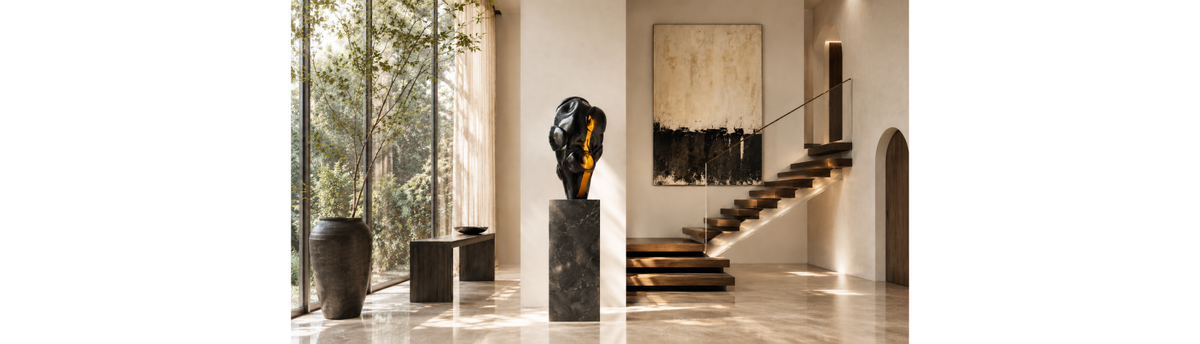

Some objects occupy a space. Others transform it.
In contemporary interiors, sculptural art objects have evolved far beyond decorative accessories. They now function as focal points that influence how a room is experienced, guiding the eye, introducing visual rhythm and creating moments of intrigue within the architecture.
This shift reflects a broader movement in luxury interior styling. Rather than filling homes with numerous decorative pieces, designers increasingly rely on a few carefully selected objects that bring personality, craftsmanship and artistic expression into the space.
The limited-edition Yellow Flash of Light sculpture is a compelling example. With its fluid silhouette, dramatic black glass form and luminous amber detail, it demonstrates how sculptural objects can become an integral part of interior architecture rather than merely an addition to it.
Table of Contents
Why Sculptural Art Objects Matter in Interior Styling
Luxury interiors are increasingly defined by curation rather than excess. Instead of relying on numerous decorative elements, designers often focus on a few meaningful objects that introduce artistic depth and individuality.
Sculptures bring a unique quality to interiors because they can be experienced from multiple perspectives. Unlike artwork that remains confined to a wall, a sculpture occupies physical space, creating a dialogue between itself, the surrounding architecture and the people moving through it.
This interaction allows sculptural objects to contribute to the overall atmosphere of a room while reinforcing a home's design identity.
Creating Visual Focal Points Through Sculpture
Every successful interior benefits from a focal point. It provides visual direction, establishes hierarchy and helps create a sense of order within a space.
In the image above, the sculpture is strategically positioned where circulation paths and architectural elements intersect. The dark glass form immediately captures attention against the lighter backdrop, creating contrast and visual drama.
The amber accent introduces warmth and movement, encouraging the eye to explore the object more closely. This ability to draw attention without overwhelming the room is what makes sculptural art objects such effective styling tools.
Just as a carefully designed luxury entryway styling composition establishes a memorable first impression, a sculptural focal point helps anchor the visual experience of a space.
The Relationship Between Light and Materiality
One of the most fascinating aspects of glass sculpture is its interaction with light. Unlike opaque materials, glass responds continuously to changing conditions throughout the day.
Natural sunlight, ambient lighting and shadows reveal different characteristics within the object, creating an ever-changing visual experience.
The Yellow Flash of Light sculpture demonstrates this beautifully. Created by Glasremis, the sculpture showcases the studio's distinctive approach to contemporary glass artistry, where movement, colour and craftsmanship are brought together in sculptural forms that feel both expressive and architectural. Such pieces demonstrate how collectible design can influence the atmosphere of an interior while serving as a statement of personal taste.
The translucent amber detail appears to glow from within, while the polished black glass reflects surrounding colours and textures.
This relationship between object and illumination reinforces the importance of thoughtful lighting design. As explored in our article on how ambient lighting shapes contemporary luxury Indian interiors, light plays a crucial role in determining how materials and forms are perceived.
Sculptures as Architectural Styling Elements
The most effective sculptures do more than decorate a room. They become part of its architectural composition.
In this setting, the sculpture has been elevated on a marble pedestal, transforming it from an object into an installation. The pedestal establishes presence while giving the artwork a dedicated visual zone within the interior.
This approach is frequently used in luxury residences, galleries and hospitality spaces because it creates a stronger connection between art and architecture.
The result is a more intentional interior where every element contributes to a unified visual experience.
Where Sculptural Art Objects Work Best
Sculptural objects are remarkably versatile and can be used throughout the home.
Entrance foyers are particularly effective locations because sculptures immediately establish character and create a memorable experience of arrival. Living rooms benefit from sculptural focal points that introduce depth and visual interest without relying solely on furniture arrangements.
They can also be used within double-height spaces, stair landings, gallery corridors and open-plan interiors where architectural transitions occur.
Smaller sculptures can complement console styling, while larger statement pieces often perform best as standalone focal points.
The Yellow Flash of Light limited-edition sculpture is particularly effective in entrance foyers, double-height spaces and contemporary living rooms where its dramatic form can be appreciated from multiple viewpoints. Elevated on a pedestal or positioned within a carefully styled architectural niche, it becomes more than a decorative object—it becomes a defining visual moment within the interior.
Explore our curated collection of sculptures and art objects for interiors that celebrate craftsmanship, creativity and individuality.
Sculptural Styling in Contemporary Indian Homes
As contemporary Indian homes continue to embrace cleaner lines and more curated aesthetics, sculptural styling has become increasingly relevant.
Homeowners are moving beyond purely functional interiors and investing in pieces that introduce emotion, artistry and personal expression. Sculptures offer an opportunity to create visual interest while maintaining a sense of sophistication and restraint.
This approach aligns closely with global luxury design trends, where carefully selected art objects often carry greater impact than large quantities of decor.
Whether positioned within an entrance foyer, beside a staircase or within a living area, a thoughtfully chosen sculpture can become one of the defining elements of an interior.
Final Thoughts
Great interiors are often remembered for a single compelling moment. A striking artwork, a beautifully composed console or a sculptural object that captures attention and invites curiosity.
The Yellow Flash of Light sculpture exemplifies how contemporary art objects can shape a space through form, materiality and light. More than a decorative accessory, it becomes part of the architecture itself, creating atmosphere, focus and visual identity.
In contemporary luxury interiors, these are the objects that transform rooms into experiences.
Frequently Asked Questions
How do sculptures enhance interior styling?
Sculptures create focal points, introduce artistic character and help establish visual hierarchy within a space. They add depth and personality while complementing the surrounding architecture.
Where should sculptures be placed in a home?
Sculptures work particularly well in entrance foyers, living rooms, stair landings, gallery spaces and architectural transition zones where they can be appreciated from multiple angles.
Why are glass sculptures popular in luxury interiors?
Glass sculptures interact beautifully with light, creating changing reflections, transparency and visual depth throughout the day. This dynamic quality makes them especially engaging within contemporary interiors.
Can sculptures be used in small spaces?
Yes. Smaller sculptures can be incorporated into console styling, shelving arrangements and side tables, while larger pieces can act as standalone focal points within compact interiors.
What makes a sculpture a focal point?
Scale, material, placement, colour contrast and lighting all contribute to a sculpture's ability to attract attention and establish visual hierarchy within a room.


