
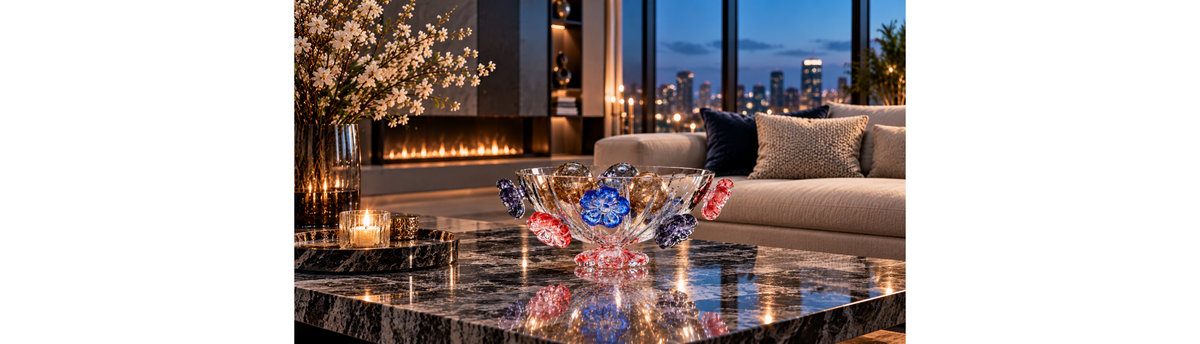

During Diwali, the living room becomes a natural gathering place for family and friends. The coffee table sits at the centre of this activity, bringing together decorative objects, flowers, candlelight and festive refreshments. Styling it well requires more than placing a few attractive accessories on the surface. The arrangement must relate to the furniture, colours and materials in the room while leaving enough space for people to enjoy the celebration.
For Diwali 2026, think of the coffee table as a small composition within the larger living room. A sculptural bowl, a stack of books, a tray, fresh flowers and a carefully chosen candle holder can introduce a festive mood. The result should feel warm and personal, not crowded or overly themed. Each object needs a purpose, whether it brings colour, texture, height, visual interest or a useful serving function.
In this guide, Navin Kanodia explains how to create a Diwali coffee table arrangement through proportion, material contrast, colour and thoughtful layering. You will also learn how to make room for sweets and drinks, style different coffee table shapes and create a festive setting that continues to work after the celebrations.
In This Article
- Three Coffee Table Styling Directions for Diwali 2026
- The Coffee Table's Role in Festive Living
- Read the Table Before Adding Accessories
- Choose One Focal Point for the Arrangement
- Layer Books, Sculptures and Decorative Objects
- Use Bowls and Trays to Bring the Composition Together
- Style Candle Stands to Create Height and Festive Warmth
- Add Flowers and Vases with Care
- Introduce Candlelight for a Festive Atmosphere
- Make Room for Diwali Sweets and Refreshments
- Build a Colour and Material Palette
- Style According to the Shape of the Coffee Table
- Common Coffee Table Styling Mistakes
- Keep the Arrangement Relevant After Diwali
- Frequently Asked Questions
- Creating a Coffee Table That Welcomes Everyone
Three Coffee Table Styling Directions for Diwali 2026
For Diwali 2026, you can create a festive coffee table arrangement in several ways, depending on the character of your living room. Rather than following one fixed theme, choose a styling direction that works with the furniture, finishes and colours already in the space.
Warm Metallics and Rich Colours
Combine a brass or gold-finish candle stand with a decorative bowl, a few coffee table books and flowers in deep red, orange or burgundy. This approach introduces a festive colour palette while allowing the metallic accents to bring warmth and reflection.
Flowers, Glass and Natural Textures
Use a compact arrangement of fresh flowers in a sculptural vase, supported by a glass bowl or tray and a book with a considered cover. This combination works well when the living room already has strong colours or patterned finishes and the coffee table needs a lighter arrangement.
Contemporary and Understated
For a more restrained setting, choose one sculptural object, a simple tray and a pair of LED candles. Keep the palette to neutral tones with one festive accent, such as muted gold, deep green or saffron. The result can feel seasonal without relying on an abundance of decorations.
Whichever direction you choose, leave enough clear surface for serving sweets and refreshments. The arrangement should contribute to the celebration without making the coffee table difficult to use.
The Coffee Table's Role in Festive Living
A coffee table is one of the most active surfaces in a living room. It holds everyday objects, books and refreshments, but during Diwali it also becomes part of the festive setting. Guests may gather around it for conversations, tea, sweets and other treats. Its styling therefore needs to balance two needs: it should contribute to the look of the room and remain comfortable to use.
This is an important difference between styling a coffee table and decorating a display shelf. A shelf can be arranged mainly for visual appeal. A coffee table must allow people to reach across it, place a cup or serve food. An arrangement that looks attractive but leaves no usable surface has not been styled successfully.
Begin by looking at the entire seating area. Consider the sofa, lounge chairs, rug, lighting and the view from the main entrance. The coffee table should connect these elements rather than compete with them. If the room already has a strong artwork or statement chandelier, the table may need a quieter arrangement. If the rest of the living room is restrained, the table can carry a more expressive decorative piece.
I see the coffee table as part of the living room, not as an independent display. During Diwali, I may introduce richer colours, flowers or reflective materials, but the arrangement must still feel connected to the room. The best result is one that looks considered and allows people to use the table naturally.
Read the Table Before Adding Accessories
The coffee table itself should guide the styling. Its size, shape, height and finish affect the number and type of objects that will work on it. A marble table with strong veining already has visual detail. A glass table feels lighter and may need objects with more texture or visual weight. Dark timber can provide a warm base, while a metal or polished surface may introduce reflection.
Look at the table in relation to the seating around it. A low table may benefit from objects that are easy to see from the sofa. A large table can support more than one styling group, provided the groups have a clear relationship. A compact table usually needs a smaller arrangement with fewer pieces.
Also consider how much of the surface should remain free. There is no fixed percentage that suits every table. The useful space depends on the number of people who use the room and how often refreshments are served. The aim is to keep enough open surface for everyday activity while giving the decorative arrangement a clear presence.
For a wider understanding of how accessories contribute to a complete interior, explore the complete guide to luxury home decor accessories for Indian homes. It explains how scale, material, colour and the relationship between objects influence the way a room feels.
Choose One Focal Point for the Arrangement
A strong coffee table arrangement usually begins with one object that gives the eye a place to rest. This could be a sculptural bowl, an artistic vase, a distinctive decorative object or a floral arrangement. The focal point does not have to be the largest object. Its shape, colour or material may be enough to make it stand out.
Choose the focal point according to the character of the room. A coloured glass bowl can bring life to a neutral setting. A sculptural ceramic object can add form to a room with soft furnishings. A metallic accent can introduce warmth against a darker table. The important thing is to select an object that relates to the existing palette instead of introducing a completely unrelated element.
Once the focal point is chosen, add supporting objects only where they improve the composition. A book may provide a low horizontal layer. A small vase can introduce height. A tray may group smaller items. Avoid placing several large statement pieces close together, as they can compete for attention and make the table feel busy.
Layer Books, Sculptures and Decorative Objects
Coffee table books are useful because they add a horizontal layer to the arrangement. Their covers introduce colour and pattern, while their size gives the composition a sense of scale. A single large book may be enough for a small table. On a larger surface, two books of different sizes can be stacked to create a stronger base.
Choose books for their subject as well as their appearance. Art, travel, fashion, photography, jewellery and design can reflect the interests of the homeowner. This makes the table more personal and gives guests something to browse. The cover should relate to the room's colours, but it does not need to match them exactly. A thoughtful contrast can make the arrangement more interesting.
A small sculpture or decorative object can sit on or beside the books. Look at its height and visual weight. A heavy object may overpower a thin book, while a delicate piece may disappear beside a large stack. The relationship should feel balanced from the main seating positions, not just from above.
For more detailed guidance on selecting, stacking and arranging books, read How to Style Coffee Table Books in Luxury Interiors. The article explores how books can bring personality and structure to a living room composition.
You can also look at how different objects work together in The Art of Mixing Vases, Sculptures, Books and Decorative Objects in One Room. The same principles of proportion, contrast and visual balance are useful when styling a coffee table.
Use Bowls and Trays to Bring the Composition Together
Decorative bowls are especially useful on coffee tables because they can work as both focal objects and functional pieces. Their shape creates a clear form on the surface, while their material can add contrast. Glass and crystal can catch the light. Ceramic and porcelain introduce a softer finish. Metal can bring warmth and a stronger visual presence.
A bowl can be left empty when its form is the main feature. During Diwali, it can also hold wrapped chocolates, dry fruits or small treats, provided the material is suitable for food contact. If you plan to use a decorative bowl for serving, check its care instructions before placing food inside it.
A tray serves a different purpose. It gives a group of objects a clear boundary and helps keep the arrangement organised. A candle holder, a small bowl and one decorative object can sit together on a tray without appearing scattered. It can also be lifted away when the table needs to be cleared for guests.
For a festive arrangement, consider the relationship between the tray and the table. A warm metallic finish can stand out against dark timber or stone. A glass tray may work well on a darker surface, while a textured finish can add another layer to a neutral setting.
Explore decorative bowls for sculptural centrepieces and decorative platters when the arrangement also needs to serve festive refreshments.
Style Candle Stands to Create Height and Festive Warmth
Candle stands are among the most useful decorative accessories for Diwali styling. They bring vertical interest to a coffee table and introduce a warm glow that becomes especially inviting during evening gatherings. Their sculptural forms and finishes can also add character to the arrangement, even when the candles are not lit.
Choose candle stands according to the scale of the coffee table. A tall, slender stand can create a striking focal point on a larger table, while a shorter design may work better on a compact surface. If you use a pair, consider different heights to create a more natural arrangement rather than placing two identical stands side by side.
Metallic candle stands in brass, gold or bronze finishes can bring warmth to a festive setting. Crystal and glass designs introduce reflection, while darker finishes can create contrast against lighter table surfaces. The finish should relate to other materials in the room, such as the coffee table, decorative bowls, trays or nearby lighting.
Placement is just as important as the choice of candle stand. You can position one beside a decorative bowl or place a pair towards one end of a rectangular coffee table. A candle stand can also sit on a tray with a smaller decorative object, creating a connected group. Keep the arrangement away from the edge and leave enough space for guests to use the table comfortably.
LED candles are a practical choice for a coffee table where books, flowers, fabric and serving pieces may sit close together. Choose a warm light tone so that the effect feels comfortable rather than harsh. If you use traditional candles or diyas elsewhere in the room, place them on stable, heat-resistant surfaces, away from flammable materials and never leave them unattended.
Explore Spacio's candle holders and candle stands to discover designs that can bring height, material contrast and festive light to your living room.
Add Flowers and Vases with Care
Flowers bring a natural layer to the coffee table. They soften the harder surfaces of stone, glass and metal and can introduce colour without adding another decorative object with a strong shape. For Diwali, marigolds, roses, chrysanthemums and seasonal flowers can create a festive note. Choose flowers that relate to the room's colour palette rather than using every available colour at once.
The vase matters as much as the flowers. A compact vase with a wide opening can hold a small arrangement without taking up too much space. A sculptural vase may look strong even with just a few stems. If the vase itself has a bold pattern or colour, keep the flowers and surrounding objects more restrained.
Height is important. A tall arrangement placed in the centre of a coffee table may block the view between people seated opposite one another. Keep the flowers low enough for conversation, or place taller arrangements on a side table or console nearby. This allows the coffee table to remain visually connected to the rest of the room without interrupting its use.
Fresh flowers also need care during a gathering. Use a stable vase, avoid overfilling it with water and keep it away from electronic accessories. A small arrangement that stays fresh throughout the evening is more useful than a large display that becomes difficult to manage.
Browse the vase collection for forms that can work with fresh flowers or stand alone as sculptural objects.
Fragrance can add another layer to the festive setting, but it should remain subtle around food. A scented candle or diffuser is better placed away from the serving area so that its fragrance does not compete with the smell of sweets and refreshments. Explore candles and diffusers for decorative fragrance pieces that can also contribute to the wider living room atmosphere.
Introduce Candlelight for a Festive Atmosphere
Light plays an important role in the way a living room feels during Diwali. A warm glow can make the setting more inviting and bring out the reflective qualities of glass, crystal and metallic finishes. LED candles are a practical choice when books, flowers and serving pieces are placed close together. Choose a warm light tone rather than a harsh white glow. Traditional candles and diyas can also be part of the festive setting. Place them on stable, heat-resistant surfaces, away from flowers, books, fabrics and other flammable materials. Never leave a burning candle or diya unattended.
Fragrance can add another layer to the festive setting, but it should remain subtle around food. A scented candle or diffuser is better placed away from the serving area so that its fragrance does not compete with the smell of sweets and refreshments. Explore candles and diffusers for decorative fragrance pieces that can also contribute to the wider living room atmosphere.
Make Room for Diwali Sweets and Refreshments
Festive styling should make hospitality easier. During Diwali, the coffee table may hold mithai, dry fruits, chocolates, savouries, tea and other refreshments. These serving pieces should be considered part of the arrangement rather than added at the last minute. Use a platter for a selection of sweets and smaller bowls for nuts or bite-sized treats. A tiered stand can introduce height when the table has enough room around it. For a more relaxed gathering, keep a few smaller serving pieces that guests can reach easily. Avoid placing food behind a tall centrepiece or in a position that requires people to lean across the table.
Think about the material of the serving pieces as well. Clear glass allows colourful sweets to remain visible. Porcelain can provide a quieter surface, while metallic details may connect the serving arrangement with candle holders or other accents. The aim is to make the food presentation feel related to the rest of the table without turning it into a formal display.
Keep a clear place for cups and plates. If you are expecting many guests, use a nearby side table for additional refreshments rather than trying to fit everything onto the coffee table. A separate serving surface can make the living room more comfortable and help the coffee table retain its visual balance. For serving pieces that can be used during celebrations and everyday entertaining, explore Spacio's tableware collection.
Build a Colour and Material Palette
A festive coffee table does not need to use every traditional Diwali colour. A considered palette of two or three main colours, supported by neutral materials, can create a stronger result. Deep red, burnt orange, saffron, burgundy, muted gold and green can all work well, but their use should relate to the rest of the living room.
For example, a neutral living room may benefit from one rich accent colour introduced through a bowl, book cover or flowers. A room with dark timber and warm fabrics may already have enough warmth, so a clear glass object or a lighter floral arrangement can provide contrast. In a room with strong patterns, a quieter arrangement may be the better choice. Material contrast adds depth without requiring more colour. Glass can bring reflection, ceramic can add a softer surface, metal can introduce a warm highlight and natural stone can provide visual weight. These materials can sit together when their finishes and proportions are considered.
Do not make every object match. A complete set of identical accessories may look too arranged, while unrelated pieces can make the table feel disconnected. Look for a common thread: a repeated colour, a similar finish, a shared material or a relationship between shapes. This gives the arrangement cohesion while allowing each object to retain its character.
Style According to the Shape of the Coffee Table
The shape of the coffee table provides a useful starting point for deciding where objects should sit. A round table often works well with a compact central arrangement, while a rectangular table can support a longer composition. The goal is to make the arrangement feel connected to the table's geometry rather than placing objects wherever there is space.
| Coffee Table Shape | Styling Approach |
|---|---|
| Round | Use one central focal point, such as a bowl or tray. Keep the arrangement compact and leave a clear border around it. |
| Rectangular | Create one main group and a smaller supporting group. Keep the arrangement in proportion to the table's length and leave serving space. |
| Square | Build a balanced composition with varied heights. Avoid filling every corner with a separate object. |
| Oval | Arrange objects along the length of the table. Use one main focal piece and a smaller related group to create visual movement. |
Height variation is useful across all shapes. Books create a low horizontal level, bowls add a middle level and a vase or candle holder introduces height. This gives the eye a path through the composition. However, height should not interfere with conversation or make the table difficult to use.
I always step back and look at the arrangement from the sofa and from the entrance. A coffee table should look balanced from the angles from which the room is actually experienced. If one object blocks another or the table feels crowded, I remove something before adding anything else.
Common Coffee Table Styling Mistakes
Even attractive objects can make a coffee table feel untidy when they are not arranged with care. A few common mistakes are worth avoiding:
- Using too many statement pieces: Several large or expressive objects placed together can compete for attention. Choose one main focal point and let the other pieces support it.
- Ignoring the table's proportions: Small accessories may look lost on a large table, while oversized objects can overwhelm a compact surface.
- Using objects at one height: A flat arrangement can feel dull. Introduce a mix of low, medium and taller forms, while keeping the overall height comfortable for conversation.
- Matching every finish: A table filled with identical materials or colours can look like a display set. Introduce contrast while keeping a clear relationship between the pieces.
- Leaving no room for guests: The coffee table should still hold cups, plates and serving pieces. Keep enough open surface for the way the room is used.
- Placing delicate objects near the edge: Keep fragile glass and unstable pieces away from areas where they may be knocked over.
Editing is often the final step that makes the biggest difference. Once the objects are arranged, remove anything that does not improve the composition or serve a purpose. The remaining pieces will have more presence because they have room around them.
Keep the Arrangement Relevant After Diwali
Good festive styling should not depend entirely on seasonal decorations. Many of the objects used during Diwali can remain part of the living room throughout the year. Coffee table books, sculptural bowls, trays, vases and candle holders can be rearranged as the room changes.
After the celebrations, remove the most seasonal colours and serving pieces first. Keep the objects that relate to the everyday palette of the room. A statement bowl may remain the focal point, while the books and a small sculpture can create a quieter arrangement. Fresh flowers can be changed with the season, and serving platters can be brought out whenever guests visit.
This approach also makes buying and selecting accessories more thoughtful. Instead of choosing objects that have only one use, look for pieces that can move between the coffee table, console, side table or bookshelf. A well-made decorative object should be able to contribute to more than one composition.
Frequently Asked Questions
How do I style a coffee table for Diwali?
Start with one focal object, such as a decorative bowl, vase or sculptural piece. Add a book or tray to create a base, then introduce flowers or candlelight if the table has enough space. Keep a clear area for sweets, drinks and cups so the arrangement remains useful during the celebrations.
What are the best accessories for a festive coffee table?
Decorative bowls, coffee table books, trays, vases, candle holders, small sculptures and serving platters can all work well. Choose accessories according to the size and finish of the table, and use only the pieces that contribute to the overall arrangement.
How can I style a small coffee table for Diwali?
Use a compact arrangement with one main object and one or two supporting pieces. A small bowl placed beside a single book or a tray with a candle holder can be enough. Avoid tall flowers and large accessories that take up too much room. Keep space for everyday use.
Which colours work well for Diwali coffee table styling?
Deep red, burnt orange, saffron, burgundy, green and muted gold can introduce a festive feel. You do not need to use all these colours together. Choose a small palette that relates to the living room and balance it with materials such as glass, ceramic, stone or timber.
Can I use fresh flowers on a Diwali coffee table?
Yes. Fresh flowers add colour and soften the harder surfaces of a coffee table. Use a compact arrangement in a stable vase and keep it low enough for people to see one another across the table. Marigolds, roses and chrysanthemums can all work well for a festive setting.
Are LED candles a good choice for a festive coffee table?
Yes. LED candles provide a warm glow without an open flame, making them useful when books, flowers, fabrics and serving pieces are placed close together. Choose a warm light tone and a candle holder that suits the scale of the arrangement.
What should I consider when choosing candle stands for Diwali coffee table styling?
Choose candle stands that suit the size and shape of your coffee table. Brass, gold and bronze finishes bring warmth, while crystal and glass designs add reflection. On a larger table, a pair of candle stands at different heights can create visual interest. On a smaller table, one well-chosen stand may be enough. Keep the arrangement balanced, leave space for serving, and ensure the stand is stable and placed safely away from flowers, books and other flammable objects.
How do I arrange Diwali sweets on a coffee table?
Use a platter for mithai and smaller bowls for dry fruits, chocolates or savouries. Place serving pieces where guests can reach them easily. If the table is small or the gathering is large, use a nearby side table for additional refreshments.
Where can I explore coffee table styling accessories at Spacio in Mumbai?
You can visit the Spacio Mumbai store at Laxmi Industrial Estate, New Link Road, Andheri West. The showroom offers an opportunity to see decorative accessories, books and statement objects in person and consider how their materials, finishes and proportions may work in your living room.
Can I get help choosing coffee table accessories at the Spacio Mumbai showroom?
Yes. Spacio's team offers personalised consultations for homeowners, architects and interior designers. You can discuss the size and finish of your coffee table, the colour palette of your living room and the kind of arrangement you want to create before selecting suitable decorative pieces.
Where can I explore coffee table styling accessories at Spacio in Kolkata?
You can visit the Spacio Kolkata store at 86B Topsia Road South, Kolkata. The showroom brings together furniture, lighting and decor accessories, allowing you to explore objects and materials that can contribute to a considered living room arrangement.
Can I get interior styling guidance at the Spacio showroom?
Yes. Spacio's team can help you consider how decorative objects, books, vases and other accessories relate to the furniture and finishes in your home. This can be useful when you want a coffee table arrangement to feel connected to the wider living room rather than like a collection of separate objects.
Creating a Coffee Table That Welcomes Everyone
A well-styled Diwali coffee table is created through thoughtful choices and a clear understanding of how the living room is used. One strong focal point, a few supporting objects, fresh flowers, warm candlelight and carefully arranged serving pieces can bring the setting together without filling every available space.
Pay attention to the size and shape of the table, the relationship between materials and colours, and the amount of open surface guests will need. Choose objects that have a purpose and give each one enough room to be appreciated. When the composition feels connected to the rest of the living room, the coffee table becomes part of the festive experience rather than simply a decorated surface.
Most importantly, let the arrangement reflect the people and the home. The best festive styling is welcoming, personal and comfortable to live with. It should look just as considered when guests arrive as it does when the family gathers around it.


