
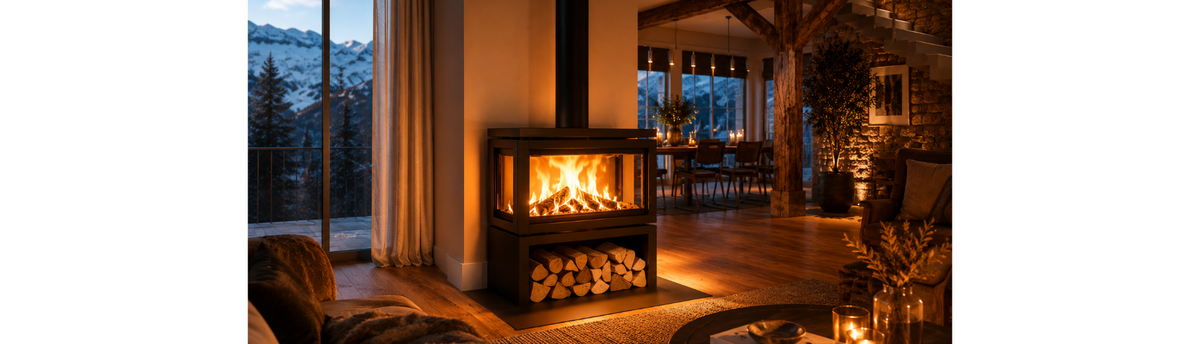

There is something about a real wood fire that even the most advanced fireplace technology tries to recreate. The changing flames, glowing embers, gentle sound of burning logs and natural warmth create an experience that has made wood fires part of homes for centuries.
But the technology behind a wood-burning fireplace has changed considerably. The traditional open hearth that many people picture is no longer the only way to enjoy a real wood fire. Modern wood-burning fireplaces and stoves use enclosed combustion chambers, controlled airflow and more efficient burning to provide useful heat while retaining the character of natural flames.
For Indian homes, this distinction is especially important because India includes very different climates and ways of living. Wood-burning fireplaces make the most sense in colder regions, hill homes, mountain residences, farmhouses and villas where genuine space heating is required. In warmer climates, alternative fireplace technologies may be more practical. Choosing the right fireplace technology therefore begins with understanding not only how it looks, but also how it will actually be used.
So, should you choose a traditional wood fireplace, a modern built-in wood-burning fireplace or a wood-fired stove? And how do you decide whether wood burning is right for your home?
This complete guide explains wood-burning fireplaces and stoves from the perspective of modern Indian living. It covers how contemporary wood fires differ from traditional open fireplaces, the difference between a fireplace and a stove, heating capacity, chimneys and flues, firewood, maintenance, installation planning and the situations where a real wood fire makes the most sense.
Table of Contents
- What Is a Wood Burning Fireplace?
- Why Are Wood Burning Fireplaces Still Relevant Today?
- Traditional Open Fireplaces vs Modern Wood Burning Fireplaces
- What Is the Difference Between a Wood Burning Fireplace and a Wood Burning Stove?
- Why Choose a Wood-Fired Stove?
- How Have Modern Wood Burning Fireplaces Changed?
- How Does a Modern Wood Burning Stove Work?
- Freestanding vs Suspended Wood Burning Stoves
- What Is a Built-In Wood Burning Fireplace?
- Are Wood Burning Fireplaces Suitable for Indian Homes?
- Where Do Wood Burning Fireplaces Make Sense in India?
- How Do You Choose the Right Heating Capacity?
- Understanding Chimneys, Flues and Ventilation
- Choosing the Right Firewood
- Efficiency and Responsible Wood Burning
- How Much Maintenance Does a Wood Burning Fireplace Require?
- What Should You Consider Before Installation?
- Wood Burning vs Gas vs Electric Fireplaces
- Wood Burning Fireplaces in Contemporary Interiors
- Modern Wood Burning Fireplaces by DRU Fires
- Frequently Asked Questions
- Is a Wood-Burning Fireplace Right for Your Home?
What Is a Wood Burning Fireplace?
A wood-burning fireplace is a fireplace that creates real flames and heat by burning natural wood logs. Unlike electric, water vapour or holographic fireplaces, the flame is produced through actual combustion.
In a traditional open fireplace, logs burn inside an open firebox connected to a chimney. The chimney carries smoke and combustion gases outside while the open front allows people in the room to see and feel the fire directly.
A modern wood-burning fireplace can work quite differently. Many contemporary systems place the fire inside an enclosed combustion chamber behind heat-resistant glass. Air entering the fireplace can be managed more carefully, helping the wood burn in a more controlled way while allowing more of the generated heat to be used within the room.
Indoor Wood burning fireplaces are available in several forms. They may be built into a wall or fireplace surround, designed as freestanding stoves, suspended from a wall or positioned as a distinctive feature within a room. The right format depends on the architecture, heating requirement, available space and the way the fireplace is intended to contribute to the interior.
A wood-burning fireplace uses natural wood logs to create a real flame and real heat. Modern versions can use enclosed fire chambers and controlled airflow to provide a more efficient and manageable fire than a traditional open fireplace.
Why Are Wood Burning Fireplaces Still Relevant Today?
Fireplace technology has moved far beyond burning logs. Today's fireplaces can use gas, electric, water vapour, bioethanol and holographic technologies, each offering a different balance of flame experience, heat, installation requirements and convenience.
Yet wood burning continues to appeal to homeowners who want the authenticity of a real fire.
A wood fire is naturally dynamic. Flames change as the logs burn. Embers develop gradually. The sound, light and heat evolve throughout the evening. Instead of switching a visual effect on and off, the homeowner participates in the experience by lighting, tending and replenishing the fire.
For some people, this involvement is part of the appeal rather than an inconvenience. A wood fire creates a strong sense of place, particularly in homes surrounded by mountains, forests or colder landscapes where the fireplace becomes part of daily winter living.
There is also a practical reason to consider wood. A properly selected modern wood-burning stove or fireplace can provide meaningful space heating. In locations where winter temperatures are low, it can supplement another heating system or, depending on the home and system design, become an important source of warmth for the room in which it is installed.
Wood can be a renewable fuel when sourced from responsibly managed forests or other sustainable sources. However, responsible wood burning depends on more than simply choosing wood as a fuel. The quality and moisture content of the logs, the efficiency of the appliance, correct operation and regular chimney maintenance all influence how effectively and cleanly the fire burns.
This is why the conversation around wood fireplaces today is very different from the past. The appeal of the real flame remains traditional, but the technology and planning surrounding it have become considerably more advanced.
Traditional Open Fireplaces vs Modern Wood Burning Fireplaces
One of the most important distinctions when choosing a wood fire is the difference between a traditional open fireplace and a modern enclosed wood-burning fireplace or stove.
A traditional open fireplace is primarily associated with atmosphere. Logs burn in an open hearth, giving an uninterrupted view of the flames and creating the familiar experience of sitting beside a real fire.
The simplicity is appealing, but an open fire offers limited control over combustion. A significant amount of heated air can also escape through the chimney, which means an open fireplace should not automatically be considered an efficient way to heat a room.
Modern wood-burning fireplaces approach the same experience differently.
The fire is generally enclosed behind glass, while engineered air controls regulate the oxygen supplied to the combustion chamber. This allows the fire to burn in a more controlled manner and can improve the way heat is retained and transferred into the room.
The glass front also separates the living space from the open flame while still providing a clear view of the fire. For contemporary homes, this combination of visual connection and controlled combustion is one of the biggest developments in modern wood-burning fireplace design.
| Traditional Open Fireplace | Modern Enclosed Wood Fireplace or Stove |
|---|---|
| Open firebox | Enclosed combustion chamber |
| Primarily valued for ambience | Designed for ambience and useful heating |
| Limited control over combustion | Controlled airflow supports more managed combustion |
| Greater direct interaction with the open fire | Fire viewed through heat-resistant glass |
| More heat can escape through the chimney | Designed to make better use of generated heat |
| Traditional architectural character | Available in contemporary built-in, freestanding and suspended formats |
This does not mean that a modern enclosed fireplace is automatically the right choice for everyone. Someone interested primarily in the traditional ritual and appearance of an open hearth may still prefer that experience. But when meaningful heating, controlled combustion and contemporary installation are important, modern wood-burning systems offer significant advantages.
What Is the Difference Between a Wood Burning Fireplace and a Wood Burning Stove?
The terms wood-burning fireplace and wood-burning stove are sometimes used interchangeably, but traditionally they have served slightly different purposes.
A wood-burning fireplace has historically been chosen primarily for the experience and visual presence of a real fire. It often forms part of the architecture of the room, with the fireplace integrated into a wall, chimney breast, stone surround or other interior feature.
A wood stove, by contrast, has traditionally been designed with heating as its primary purpose. It is a self-contained appliance in which logs burn inside an enclosed chamber, allowing the stove body and glass front to transfer heat into the surrounding room.
Today, however, the distinction is less rigid.
Contemporary wood stoves can be highly sculptural and visually refined, while advanced built-in wood fireplaces can provide substantial heat. This means homeowners no longer necessarily have to choose between an attractive flame picture and effective room heating.
The more useful question is therefore not simply, “Do I want a fireplace or a stove?” It is:
How important are heating performance, architectural integration, floor space and the visual presence of the fire within the room?
If the fireplace is intended to become part of a feature wall or an integrated architectural composition, a built-in wood-burning fireplace may be more appropriate. If efficient space heating and installation flexibility are priorities, a freestanding or suspended wood stove may offer a better solution.
Why Choose a Wood-Fired Stove?
A wood-fired stove combines two qualities that are often considered separately: practical heating and the atmosphere of a real flame.
On a cold autumn or winter day, a wood stove can begin providing noticeable warmth relatively quickly while creating a natural focal point within the room. This makes it particularly appealing in living rooms, family rooms, kitchens and other spaces where people spend long periods together during colder months.
Modern wood stoves can also make better use of the energy produced by burning logs than a traditional open fireplace. Because combustion takes place within an enclosed chamber, airflow can be controlled and heat can be transferred into the room rather than allowing a large proportion of it to disappear directly through an open chimney.
Another advantage is design flexibility. A wood stove does not necessarily need the visual weight of a traditional masonry fireplace. Contemporary models can be freestanding, wall-mounted or suspended, allowing them to work within both traditional and modern interiors.
Some designs also incorporate storage for logs as part of the stove or surrounding composition. Apart from being practical, stacked firewood can become a natural material element within the interior, particularly in mountain homes, farmhouses and spaces designed around stone, timber and other tactile finishes.
For the right home, a wood-fired stove therefore offers more than heating. It combines warmth, flame, materiality and the ritual of a real fire within one functional object.
How Have Modern Wood Burning Fireplaces Changed?
The fundamental idea behind a wood fire has not changed: oxygen supports the combustion of wood, creating flame and heat. What has changed is the level of control around that process.
Traditional fireplaces relied heavily on the natural draught created by the chimney. Modern wood-burning fireplaces and stoves can use carefully designed combustion chambers and controlled air supply to manage how the fire receives oxygen.
This matters because combustion quality affects several aspects of the fireplace experience: how efficiently the wood burns, how much useful heat is produced, how stable the fire remains and how much residue can accumulate within the appliance and flue.
The enclosed glass firebox has also changed the visual relationship between fireplace and room. Instead of hiding the fire inside a deep traditional hearth, contemporary designs can use large glass surfaces to make the flames more visible while retaining an enclosed combustion environment.
Design has evolved alongside engineering. Modern wood fireplaces no longer need to look rustic or traditional. Clean-lined built-in fires can sit within stone, concrete or minimalist feature walls, while freestanding stoves can become sculptural objects in their own right.
This evolution is particularly relevant for contemporary Indian homes. Homeowners can choose the authenticity of burning wood without necessarily introducing the visual language of a traditional European fireplace into a modern interior.
In other words, the experience of the wood fire remains timeless. The way that fire is controlled, heated, viewed and integrated into the architecture has moved forward considerably.
How Does a Modern Wood Burning Stove Work?
A modern wood-burning stove works by burning logs inside an enclosed combustion chamber while controlling the amount and movement of air entering the fire. This controlled environment is one of the main differences between a contemporary stove and a traditional open fireplace.
When the fire is lit, air supports the combustion of the wood. The heat produced warms the stove and surrounding space, while smoke and combustion gases are directed safely outside through a properly designed flue or chimney.
The ability to manage airflow is important. A fire needs sufficient oxygen to burn properly, but simply allowing unrestricted air into the chamber does not necessarily produce the most effective result. Modern stoves are designed so that the supply of combustion air can be managed more precisely.
This allows the homeowner to maintain a more controlled fire while making better use of the heat produced by the burning logs.
The glass door is another important part of the experience. It keeps the combustion chamber enclosed while maintaining a clear visual connection with the flames. The result is a fireplace that provides the authenticity of burning wood without requiring the fire itself to remain open to the room.
This combination of real flame, controlled combustion and useful heat is why modern wood-burning stoves should not be viewed simply as decorative fireplaces. They are functional heating appliances and should be selected and installed accordingly.
Freestanding vs Suspended Wood Burning Stoves
Once you decide that a wood stove is appropriate for your home, one of the next decisions is how the stove should sit within the room.
Contemporary wood-burning stoves are available in several formats, but two particularly useful options are freestanding and suspended stoves. The choice affects not only appearance, but also placement, floor space and the way the fireplace relates to the surrounding interior.
Freestanding Wood Burning Stoves
A freestanding wood stove stands directly on the floor rather than being built into a wall. Depending on the stove and installation, the flue may connect from the top or rear.
One of the main advantages of a freestanding stove is flexibility of placement. Where the architecture and flue route allow it, the stove can become an independent object within the room rather than forming part of a conventional fireplace wall.
This can be particularly effective in large living spaces, mountain homes and open-plan interiors where the stove is intended to have a strong visual presence.
A centrally positioned stove can also allow people to experience the fireplace from different parts of the room, although the exact placement must always be planned around the appliance requirements, flue route, surrounding materials and safe clearances.
From an interior styling perspective, freestanding stoves work especially well when the fireplace is intended to feel like a distinct design object rather than disappearing into the architecture.
Suspended Wood Burning Stoves
A suspended wood stove is raised above the floor, typically installed against or in relation to a wall. The visual effect is lighter because the floor remains visible beneath the appliance.
This can be useful in smaller rooms where a conventional floor-standing stove may appear visually heavy. Keeping the floor clear can create a greater sense of space and can also make the surrounding area easier to clean.
Depending on the design and installation requirements, the area beneath a suspended stove may remain completely open or form part of a wider fireplace composition.
For contemporary interiors, suspended fireplaces can create a particularly clean architectural expression. They retain the warmth and authenticity of a real wood fire while allowing the fireplace to feel visually lighter.
| Freestanding Wood Stove | Suspended Wood Stove |
|---|---|
| Stands directly on the floor | Raised above the floor |
| Can have a strong sculptural presence | Creates a lighter visual appearance |
| Suitable where floor placement and flue planning allow | Usually planned in relation to a wall |
| Works particularly well in larger rooms and open-plan spaces | Can work well where conserving visual floor space matters |
| Feels like an independent object within the interior | Can feel more integrated with contemporary architecture |
Neither format is inherently better. The right choice depends on the room, the available installation position, the desired heating performance and how prominently you want the fireplace to contribute to the design.
What Is a Built-In Wood Burning Fireplace?
A built-in wood-burning fireplace places the fire within an architectural surround rather than presenting the appliance as a freestanding object.
This format is particularly relevant when the fireplace is being planned as part of the interior from the beginning. The fire can become integrated with stone, masonry or other suitable fireplace materials to create a complete feature wall rather than appearing as an appliance added after the room has been designed.
Built-in wood fires can also provide different views of the flames depending on the fireplace design. A front-facing fire creates a traditional single-sided composition, while certain contemporary fireplace formats can offer more expansive views of the flames and allow the fire to become visually connected with more than one part of the room.
The advantage is architectural integration. Instead of asking, “Where should we put the stove?”, the fireplace can be considered alongside the room layout, furniture, materials, circulation and focal points from the beginning of the design process.
This is especially valuable in luxury villas, hill homes and new-build residences where the architect or interior designer has the opportunity to plan the fireplace, chimney and surrounding finishes together.
However, built-in does not mean that the technical requirements disappear. A real wood fire still requires appropriate combustion air, a correctly designed flue or chimney, suitable surrounding materials and professional installation. These requirements should influence the architectural planning from an early stage rather than being addressed only after the interiors are complete.
If a built-in wood-burning fireplace is being considered for a new home, involve the fireplace specialist during the architectural or interior planning stage. The flue route, air supply, fireplace position and surrounding materials are much easier to resolve before ceilings, walls and finishes are completed.
Are Wood Burning Fireplaces Suitable for Indian Homes?
Yes, wood-burning fireplaces can be an excellent choice for certain Indian homes—but they are not equally suitable for every home or every climate.
This distinction is important because India cannot be treated as one fireplace market. A residence in a Himalayan region has completely different heating requirements from an apartment in Mumbai or a villa in Chennai.
In colder parts of India, a modern wood-burning fireplace or stove can provide both genuine heating and the atmosphere of a real fire. Hill homes, mountain residences, holiday homes and villas used during colder months are among the most natural applications.
In warm or tropical regions, the decision is very different. A wood-burning fireplace produces real heat whenever wood is burning. Unlike some modern electric fireplace technologies, the visual flame and heating function cannot simply be separated.
That means a homeowner in a warm climate who wants the appearance of a fireplace throughout the year may find an electric, water vapour or holographic fireplace more practical than a wood-burning system. Our guide to holographic fireplaces in India explains how newer fireplace technologies can create the experience of fire while allowing heat to remain optional.
The architecture also matters. A wood fire requires a safe route for combustion gases to leave the building. In an independent villa or purpose-designed hill home, planning a chimney or flue may be relatively straightforward. In an existing high-rise apartment, however, creating an appropriate flue route can be difficult or may not be possible at all.
So the question is not simply, “Can wood-burning fireplaces be used in India?”
A better question is:
Does a real wood-burning fireplace suit the climate, architecture, heating requirement and lifestyle of this particular home?
When those factors align, wood burning can be one of the most rewarding fireplace experiences available.
Where Do Wood Burning Fireplaces Make Sense in India?
Wood-burning fireplaces have the strongest practical relevance in Indian regions where temperatures fall sufficiently during autumn and winter for genuine space heating to be useful.
This includes many homes in the Himalayan and sub-Himalayan regions, including parts of Himachal Pradesh, Uttarakhand, Jammu & Kashmir and other colder mountain locations. They can also be relevant in hill destinations and elevated regions where winter evenings are considerably colder than in India's major metropolitan cities.
But geography alone should not determine the decision.
The way a property is used is equally important.
Hill Homes and Mountain Residences
This is perhaps the most natural setting for a wood-burning fireplace in India. Cold weather creates a genuine need for heat, while the visual and sensory character of a real fire often complements interiors built around timber, stone and views of the surrounding landscape.
Holiday Homes
For a holiday home used during colder months, lighting the fire can become part of the experience of arriving at the property. Here, the fireplace contributes both practical warmth and a sense of retreat.
Farmhouses and Independent Villas
Larger independent properties may offer greater freedom for planning a suitable chimney or flue than apartments. Where the local climate justifies heating, a wood stove or built-in fireplace can become a meaningful part of a living room, family room or other gathering space.
Boutique Hospitality and Retreats
In colder destinations, real wood fires can contribute strongly to the atmosphere of boutique hotels, mountain lodges and private retreats. The fireplace becomes part of the guest experience while also providing functional warmth.
Urban Apartments
Wood burning is usually more complicated in apartments. A real wood fire requires a suitable flue route, combustion air and compliance with the building's technical and safety requirements. In many completed high-rise buildings, these conditions can make a wood-burning fireplace impractical.
For modern Indian apartments where the objective is primarily visual ambience rather than winter heating, alternative fireplace technologies may therefore provide greater flexibility.
How Do You Choose the Right Heating Capacity?
One of the most important decisions when selecting a wood-burning stove or fireplace is choosing the correct heating capacity for the space.
It may seem logical to assume that a more powerful fireplace is always better. In practice, an oversized wood stove can be just as unsuitable as one that is too small.
If the appliance produces substantially more heat than the room requires, the space can quickly become uncomfortable. The natural response is then to reduce the fire or operate the stove below the conditions for which it was designed. This can result in less effective combustion.
A stove that is too small creates the opposite problem. It may need to work continuously at high output while still struggling to provide the required warmth.
Correct sizing therefore aims for balance.
The required capacity depends on more than the floor area of the room. Important considerations include:
- The volume of the space, including ceiling height.
- The level of insulation within the building.
- The number and size of windows and external walls.
- The local winter climate.
- Whether the room is open to adjoining spaces.
- How frequently the fireplace will be used.
- Whether it is intended as supplementary or primary room heating.
A double-height living room in a mountain villa, for example, behaves very differently from a compact enclosed room even if their floor areas initially appear comparable. Warm air rises, large glazed surfaces can influence heat loss and open-plan layouts allow heat to move into adjoining areas.
For this reason, heating capacity should be determined with professional guidance rather than selected from room dimensions alone.
Do not automatically choose the highest-capacity wood stove available. The correct fireplace should be matched to the room volume, insulation, climate, glazing and intended use. An oversized stove can make a room uncomfortably hot and may encourage inefficient operation.
Understanding Chimneys, Flues and Ventilation
A wood-burning fireplace is a combustion appliance. Unlike an electric fireplace, it cannot simply be positioned wherever there is an electrical connection.
Burning wood produces smoke and combustion gases that must be safely carried outside the building. This is the role of the chimney or flue system.
If a home already has a chimney, that does not automatically mean it is suitable for a modern wood-burning fireplace. The existing chimney should be professionally inspected to determine its condition, dimensions, route and suitability for the intended appliance.
For a new installation, the flue should be planned together with the fireplace. Its route through the building, connection to the appliance and termination outside all form part of the fireplace system.
This is one reason why wood-burning fireplaces are particularly well suited to projects where the fireplace can be considered early in the architectural process. Planning the flue before ceilings, roof details and interior finishes are finalised can avoid unnecessary compromises later.
Combustion air must also be considered. A real fire needs oxygen, and modern homes can be relatively airtight. The appropriate air supply therefore forms part of the technical planning for the fireplace and should follow the requirements of the selected appliance and installation.
The flue is not merely an accessory attached to a fireplace. It is an essential part of how the entire system operates.
For this reason, chimney and flue design, fireplace installation and any required ventilation should always be handled by appropriately qualified professionals and according to the fireplace manufacturer's installation requirements and applicable local regulations.
Choosing the Right Firewood
The performance of a wood-burning fireplace depends not only on the fireplace itself, but also on what is burned inside it. The type, quality and moisture content of the firewood can influence how easily the fire starts, how steadily it burns, how much useful heat it produces and how much residue develops within the fireplace and flue.
For modern wood-burning fireplaces and stoves, properly seasoned dry wood is generally the preferred fuel. Freshly cut wood contains a high level of moisture. Before that wood can burn effectively, some of the fire's energy is used to evaporate the moisture rather than producing useful heat.
Wet or inadequately seasoned wood can therefore be harder to ignite, produce more smoke and result in less effective combustion. It can also contribute to greater deposits within the fireplace and chimney.
This makes firewood storage an important part of owning a wood-burning fireplace. Logs should be stored in a dry, ventilated location where they are protected from rain and excessive moisture. In a hill home or farmhouse where the fireplace is used regularly, planning an appropriate wood storage area can be just as important as planning the fireplace itself.
The size of the logs also matters. Firewood should be appropriate for the dimensions and recommendations of the selected fireplace or stove rather than being chosen simply according to what is locally available.
Homeowners should also avoid assuming that any combustible material can be used in a wood stove. Painted, treated, laminated or chemically processed timber should not be treated as ordinary firewood. The fuel used should always follow the fireplace manufacturer's recommendations.
For a modern wood-burning fireplace, use properly seasoned, dry firewood that is suitable for the appliance. Avoid wet wood and treated or painted timber. Good fuel helps the fire burn more effectively and supports cleaner operation of both the fireplace and flue.
Efficiency and Responsible Wood Burning
Wood is a renewable fuel when it comes from responsibly managed sources, but that does not mean every wood fire has the same environmental impact.
The way wood is burned matters.
Traditional open fireplaces offer the appeal of an exposed flame, but they provide relatively limited control over combustion and can allow a substantial amount of heated room air to escape through the chimney.
Modern enclosed wood-burning fireplaces and stoves are designed to manage combustion more carefully. By controlling airflow within an enclosed fire chamber, they can make better use of the energy contained in the logs and provide more useful heat from the fire.
However, appliance design is only one part of responsible wood burning.
The quality of the firewood, the way the stove is operated, correct sizing of the appliance, chimney performance and regular maintenance all influence combustion. Even an advanced fireplace cannot perform as intended if it is consistently operated with unsuitable fuel or an incorrectly planned flue.
This is also why an oversized wood stove should not be considered an advantage. If a stove produces too much heat for the room, homeowners may be tempted to restrict the fire simply to keep the temperature comfortable. Selecting an appliance that suits the actual heating requirement allows it to operate more appropriately.
Responsible wood burning therefore begins before the first log is lit. It starts with choosing the right appliance for the space, planning the installation correctly, sourcing suitable dry wood and understanding how the fireplace is intended to operate.
For Indian homes, local fuel availability should also be considered. If a wood-burning fireplace is going to be used regularly, homeowners should establish whether an appropriate and dependable source of seasoned firewood is available in the region.
How Much Maintenance Does a Wood Burning Fireplace Require?
A real wood fire requires more involvement than most electric fireplace technologies. For homeowners who enjoy the ritual of a wood fire, that involvement can be part of the experience. But it should be understood before choosing the fireplace.
The most regular task is ash removal. As wood burns, ash collects within the fireplace or stove and needs to be removed periodically once the appliance has completely cooled. The frequency depends on how often the fireplace is used and the design of the appliance.
The glass door of an enclosed wood fireplace may also require cleaning. Good combustion can help keep the viewing area clearer, but deposits can still develop over time. Cleaning should be carried out according to the fireplace manufacturer's instructions and with products suitable for fireplace glass.
The chimney or flue requires particular attention.
Combustion deposits can accumulate within the flue as a wood fire is used. The system should therefore be inspected and cleaned by an appropriately qualified chimney professional at intervals suited to the appliance, fuel and frequency of use.
A fireplace used every day throughout a cold winter will naturally have different maintenance requirements from one used occasionally in a holiday home.
Routine professional inspection is also useful for checking the condition of the flue, seals, fire chamber and other components that influence safe and effective operation.
The important point is that a wood-burning fireplace should not be viewed as a maintenance-free decorative feature. It is a real combustion appliance, and appropriate care is part of owning one.
Typical Wood Fireplace Maintenance
- Remove ash after the fireplace has cooled, as required.
- Keep the fire chamber clean according to the manufacturer's guidance.
- Clean the viewing glass using suitable fireplace cleaning products.
- Have the chimney or flue inspected and cleaned professionally at appropriate intervals.
- Check door seals and other components as recommended for the appliance.
- Use suitable dry firewood to support better combustion and reduce unnecessary deposits.
For someone who wants a fireplace that can be switched on instantly with almost no routine involvement, wood burning may not be the most suitable technology. For someone who values the ritual and authenticity of building and tending a real fire, the maintenance may feel like a reasonable part of the experience.
What Should You Consider Before Installation?
Choosing a wood-burning fireplace should begin with the home, not with the appearance of the fireplace.
A beautiful model may catch your attention, but its suitability depends on whether the architecture can support the installation and whether its heating performance matches the space.
For homeowners, architects and interior designers, the following questions should ideally be resolved before selecting the final fireplace.
1. Do You Actually Need the Heat?
A wood-burning fireplace creates real heat whenever it is operating. This is an advantage in colder climates but can become unnecessary in warmer regions.
If the primary objective is to enjoy a fireplace visually throughout the year in a tropical city, a technology where ambience can be enjoyed independently of heat may be more appropriate.
2. What Space Are You Trying to Heat?
Consider the room volume rather than floor area alone. Ceiling height, insulation, glazing, open-plan connections and local winter temperatures all influence the required heating capacity.
3. Is There a Suitable Chimney or Flue Route?
A real wood fire requires combustion gases to be carried safely outside. In a new-build villa this can often be planned as part of the architecture. In an existing building, the available flue route may influence whether a wood-burning fireplace is practical at all.
4. Where Will Combustion Air Come From?
A fire needs oxygen. The combustion air requirements of the selected appliance should therefore be considered as part of the installation, particularly in contemporary homes designed with tighter building envelopes.
5. Where Will the Firewood Be Stored?
Regular fireplace use requires a practical supply of dry wood. Ideally, the main stock should be kept in a protected, ventilated location, with a smaller quantity brought closer to the fireplace when required.
6. What Materials Will Surround the Fireplace?
A wood-burning fireplace produces substantial heat. The surrounding construction, hearth, wall finishes and nearby materials must therefore be selected and detailed according to the installation requirements of the fireplace.
7. How Will the Fireplace Relate to the Furniture?
Fireplaces naturally become focal points. Their position should therefore be considered together with seating, circulation, television placement, windows and other important architectural features.
In a living room, for example, the fireplace should not be positioned independently and then force the furniture into an uncomfortable arrangement. Fireplace and furniture planning should happen together.
8. How Often Will You Use It?
A fireplace intended for daily winter heating has different priorities from one used occasionally during weekends or holidays. Frequency of use influences heating capacity, fuel storage, maintenance and the type of fireplace that may be most practical.
9. Who Will Install and Maintain It?
Wood-burning fireplaces require specialist installation. Before purchasing, understand who will plan the flue, install the fireplace, commission the system and provide guidance on future servicing and maintenance.
- Local climate and actual heating requirement.
- Room volume and required heat output.
- Existing or proposed chimney and flue route.
- Combustion air requirements.
- Fireplace position and furniture layout.
- Suitable surrounding materials and required clearances.
- Availability and storage of dry firewood.
- Frequency of use.
- Routine maintenance requirements.
- Professional installation and after-sales support.
Wood Burning vs Gas vs Electric Fireplaces
There is no single fireplace technology that is best for every home.
Wood, gas and electric fireplaces create very different experiences and have different technical requirements. The right choice depends on what the homeowner expects from the fireplace.
A wood-burning fireplace is the natural choice for someone who values an authentic log fire and requires meaningful heat. It also involves the greatest level of participation: sourcing wood, lighting the fire, tending it, removing ash and maintaining the flue.
A gas fireplace can provide real flames and useful heat with considerably greater convenience. There is no need to store logs or build a fire each time, although the installation still depends on the selected fireplace, gas supply and appropriate venting requirements.
Electric fireplaces offer a different proposition. They are primarily chosen for convenience, design flexibility and the ability to introduce a fireplace experience into homes where combustion-based systems may not be practical. Depending on the technology, heating may be available independently of the visual flame effect.
This distinction is especially relevant in India.
A hill home that needs genuine winter heating may benefit greatly from wood or another heat-producing fireplace. A luxury apartment in Mumbai, on the other hand, may place much greater value on visual atmosphere, installation flexibility and the ability to enjoy the fireplace without adding significant heat to the room.
| Consideration | Wood Burning | Gas | Electric |
|---|---|---|---|
| Flame | Real flame from burning logs | Real gas flame | Artificial flame effect |
| Heat | Meaningful real heat | Real, controllable heat | Varies by technology; some offer optional heat |
| Fuel / Energy | Firewood | Suitable gas supply | Electricity |
| Chimney / Venting | Requires an appropriate flue or chimney | Depends on fireplace type and installation | No combustion chimney required |
| Daily Operation | Logs must be loaded and fire tended | Convenient controlled operation | Typically switch or remote operation |
| Maintenance | Ash, glass and chimney maintenance required | Periodic professional servicing required | Generally lower routine maintenance |
| Best Suited To | Colder homes where authentic fire and heat are priorities | Homes seeking real flame and convenient heat | Homes prioritising ambience, flexibility and simpler installation |
The purpose of this comparison is not to establish a winner. Each technology solves a different problem.
For homeowners who want the ritual, sound, changing flames and warmth of burning natural logs, wood remains distinctive. For those who want a real flame with easier operation, gas may be more suitable. And for homes where visual atmosphere and installation flexibility matter more than combustion, advanced electric fireplace technologies can be the more practical choice.
Understanding these differences before choosing a fireplace prevents one of the most common planning mistakes: selecting a fireplace primarily because of how it looks rather than because its technology suits the home.
Wood Burning Fireplaces in Contemporary Interiors
A wood-burning fireplace is often associated with rustic cabins and traditional mountain homes, but modern wood fireplaces can work equally well within contemporary interiors.
The difference lies in how the fire is integrated into the space.
Contemporary fireplace design tends to reduce unnecessary ornamentation and allow the fire itself to become the focal point. Large glass viewing areas, clean fireplace surrounds and simple material compositions can create a much more refined relationship between the flames and the architecture.
Natural stone is an obvious companion to a real wood fire, particularly in hill homes and mountain residences. But the surrounding interior does not need to feel rustic. Stone can be combined with clean-lined furniture, timber, neutral plaster finishes, metal details and carefully planned lighting to create a space that feels warm without becoming traditional.
Freestanding wood stoves offer another approach. Rather than being absorbed into a feature wall, the stove can become a sculptural object within the room. A simple black stove positioned against a restrained backdrop can create a strong visual anchor without requiring an elaborate fireplace surround.
The visible flue can even become part of the composition when it is planned deliberately rather than treated as something that needs to be hidden.
Let the Fire Become the Focal Point
A real flame already provides movement, changing light and visual interest. The surrounding design does not need to compete with it.
One of the most effective approaches is therefore restraint. Instead of surrounding the fireplace with too many decorative elements, allow the materiality of the hearth, the texture of stacked logs and the changing flame picture to create the atmosphere.
Plan Seating Around the Experience
The best fireplace interiors consider how people will actually use the room.
Seating should allow comfortable enjoyment of the fire without compromising circulation or placing furniture too close to a heat-producing appliance. In larger living rooms, the fireplace can help organise the seating arrangement and create a natural gathering area during colder months.
In open-plan homes, a well-positioned fireplace can also help visually define the living area without requiring additional walls or partitions.
Consider Firewood as Part of the Interior
Firewood is a practical requirement, but a small quantity of neatly stacked logs can also contribute to the visual character of the fireplace.
Some contemporary wood stoves incorporate log storage into their design, while built-in fireplaces may be accompanied by a dedicated wood niche. Used thoughtfully, the natural variation of timber introduces warmth and texture alongside stone, metal and other architectural materials.
The main supply of firewood, however, should still be stored appropriately in a dry, ventilated location rather than treating the living room as the primary storage area.
Modern Wood Burning Fireplaces by DRU Fires
The evolution from traditional open hearths to advanced contemporary wood fires can be seen in the work of established European fireplace manufacturers such as DRU Fires from the Netherlands.
Modern wood-burning fireplaces and stoves from DRU bring together the qualities discussed throughout this guide: real wood combustion, a clear view of natural flames, useful heating and contemporary forms that can be incorporated into modern interiors.
This is particularly relevant for architects and interior designers working on Indian hill homes, villas, farmhouses and colder-region residences where a fireplace needs to perform two roles at the same time. It must provide meaningful warmth, but it must also sit comfortably within a considered interior.
Instead of recreating the visual language of an old masonry fireplace, contemporary wood fires allow designers to approach the fireplace as part of the architecture. Depending on the selected format, the fire may be integrated into a wall or expressed as a freestanding or suspended object within the room.
For Spacio, the relevance of DRU is therefore not simply that it is a European fireplace brand. It represents the wider evolution of fireplace technology: retaining the authenticity of a real wood fire while bringing greater consideration to combustion, heating performance, flame visibility and contemporary design.
Homeowners considering a DRU wood-burning fireplace should still begin with the practical questions covered in this guide. Climate, heating requirement, fireplace capacity, chimney planning, fuel availability and installation conditions should determine which solution is appropriate before design preferences are considered.
Homeowners, architects and interior designers can also explore Spacio's fireplace collection to understand the different wood-burning, gas and advanced electric fireplace technologies available for contemporary Indian homes.
Frequently Asked Questions
Is a wood-burning fireplace suitable for India?
Yes, particularly in colder parts of India where genuine space heating is useful. Wood-burning fireplaces can be well suited to hill homes, mountain residences, farmhouses, holiday homes and villas in colder regions. In warm or tropical cities, other fireplace technologies may be more practical if the primary objective is ambience rather than heating.
What is the difference between a wood-burning fireplace and a wood stove?
Traditionally, a fireplace has been associated more strongly with the visual and architectural experience of a fire, while a wood stove has been designed primarily as a heating appliance. Modern designs have reduced this distinction considerably because contemporary wood stoves can be highly decorative and modern built-in wood fireplaces can provide useful heating.
Is a modern wood stove more efficient than a traditional open fireplace?
Modern enclosed wood stoves and fireplaces are designed to control combustion and make better use of the heat generated by burning wood. Traditional open fireplaces provide less control over airflow and can allow a significant amount of heated air to escape through the chimney.
Does a wood-burning fireplace need a chimney?
Yes. Burning wood produces smoke and combustion gases that must be safely carried outside through a correctly designed chimney or flue system. If an existing chimney is available, it should be professionally assessed for suitability before a new fireplace is connected.
Can a wood-burning fireplace be installed in an apartment?
It depends on the building and whether an appropriate flue route, combustion air supply and required approvals can be provided. In many completed high-rise apartments, these requirements can make wood-burning fireplaces impractical. Independent homes and projects where the fireplace is planned during construction generally provide greater installation flexibility.
Can a wood-burning fireplace heat an entire home?
That depends on the fireplace, the size and layout of the property, insulation, climate and heating strategy. A wood stove can provide substantial heat to the room in which it is installed, but whether it can serve a wider home should be determined through proper heating and system planning rather than assumed from the fireplace's rated output alone.
How do I choose the correct size wood stove?
The stove should be matched to the heating requirement of the space. Room volume, ceiling height, insulation, glazing, local winter temperatures and connections to adjoining rooms all influence the required capacity. Choosing an oversized stove can make the room excessively hot, while an undersized stove may struggle to provide adequate warmth.
What type of wood should be used in a wood-burning fireplace?
Use properly seasoned, dry firewood that is suitable for the selected appliance. Wet wood burns less effectively and can produce more smoke and deposits. Painted, chemically treated or laminated timber should not be used as ordinary firewood. Always follow the fireplace manufacturer's fuel recommendations.
How should firewood be stored?
Firewood should be kept dry and protected from rain while allowing sufficient ventilation. For homes where the fireplace is used regularly, it is useful to plan a dedicated storage area for the main wood supply and keep only a smaller quantity close to the fireplace for everyday use.
How much maintenance does a wood-burning fireplace require?
Routine maintenance includes removing ash after the fireplace has cooled, cleaning the viewing glass when required and keeping the fire chamber in suitable condition. The chimney or flue also needs professional inspection and cleaning at intervals appropriate to the amount of use, type of fuel and installation.
Can I install a wood-burning fireplace in an existing home?
Possibly, but the feasibility depends heavily on the building. A suitable flue route, combustion air, fireplace position, surrounding construction and required clearances all need to be assessed. Retrofitting is generally more complex than planning a wood fireplace during new construction or a major renovation.
Is a freestanding or suspended wood stove better?
Neither is universally better. A freestanding stove can create a strong sculptural presence and offers different placement possibilities, while a suspended stove keeps the floor visually open and can suit contemporary interiors or smaller rooms. The correct choice depends on the architecture, installation conditions, heating requirement and desired visual effect.
Is wood burning better than gas or electric?
Each fireplace technology serves a different need. Wood is distinctive for homeowners who want authentic burning logs, natural flames and meaningful heat. Gas provides real flame and heat with greater operational convenience, while electric fireplace technologies offer greater installation flexibility and may allow the visual fireplace effect to be enjoyed without heat. The right choice depends on the climate, home and intended use.
When should a wood-burning fireplace be planned during a new home project?
As early as possible. Ideally, the fireplace should be discussed while the architecture and interior layout are still being developed. Early planning makes it easier to coordinate the flue route, combustion air, fireplace position, structural details, surrounding materials and furniture layout before construction and finishes are completed.
Is a Wood-Burning Fireplace Right for Your Home?
Wood-burning fireplaces have evolved considerably from the traditional open hearth. Modern enclosed fireplaces and wood-fired stoves retain what people value most about wood—the real flames, glowing embers, natural warmth and ritual of tending a fire—while introducing greater control over combustion, heating and integration within contemporary interiors.
For Indian homes, however, choosing wood should always begin with context.
In a hill home, mountain residence, farmhouse or villa in a colder region, a wood-burning fireplace can provide both meaningful heating and an experience that becomes central to winter living. In a warm urban apartment where heating is rarely required, another fireplace technology may make considerably more sense.
The right decision therefore depends on more than appearance. Climate, room volume, heating capacity, chimney and flue planning, firewood availability, maintenance and the way the fireplace will be used all need to be considered together.
For homeowners who genuinely want the authenticity of burning natural logs, however, modern wood-burning fireplaces and stoves offer something that alternative technologies intentionally try to recreate: the experience of living with a real fire.
And when the technology, architecture and climate are properly matched, that experience can feel entirely at home within a contemporary Indian interior.
Author
Navin Kanodia is the Founder and Design Director of Spacio, with extensive experience in luxury fireplaces, decorative lighting and interior styling for contemporary Indian homes.


