
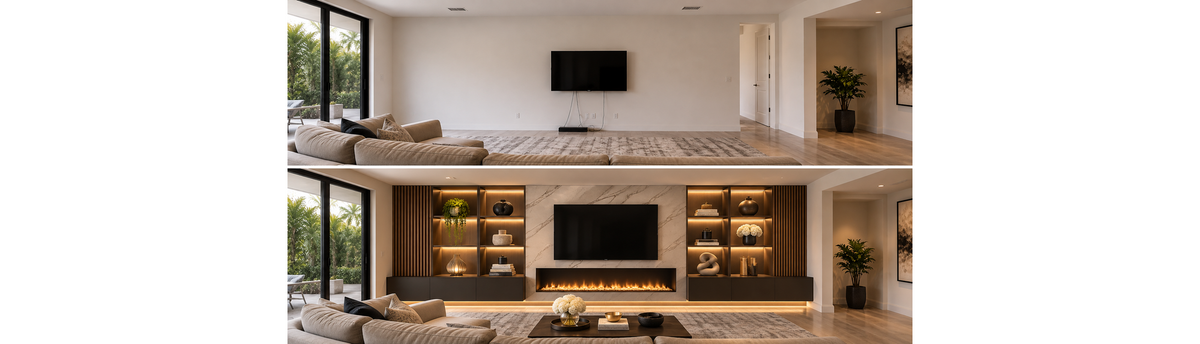

An empty wall can change the way an entire room feels. It may be wide enough to accommodate a striking design, yet without a clear focal point it can remain little more than a blank surface. A fireplace offers an opportunity to give that wall a purpose. When combined with the right materials, cabinetry, display niches, artwork and lighting, it can become the defining feature of the room.
The transformation is not about adding as many elements as possible. It is about creating a clear visual order. The fireplace establishes the centre, the wall treatment gives it a setting, cabinetry provides structure, and carefully selected objects bring personality. Lighting then reveals the composition after dark.
In this guide, Navin Kanodia, Interior Stylist, Co-Founder and Creative Director at Spacio, draws on over 30 years of experience in luxury interiors to explain how a bare wall can become a considered fire-led feature wall for Indian homes. The focus is on planning, proportion, materials, storage, lighting and the decorative details that make the wall feel complete.
Table of Contents
- Reading the Bare Wall Before Designing
- Making the Fireplace the Focal Point
- Building the Wall Around the Fire
- Cabinetry, Shelves and Display Niches
- Bringing Artwork and Sculptures into the Composition
- Using Lighting to Reveal the Feature Wall
- Creating a Fireplace and TV Feature Wall
- Styling the Wall with Decorative Objects
- Connecting the Feature Wall with the Rest of the Room
- Common Mistakes in Fire-Led Feature Wall Design
- Fire-Led Feature Walls and Vastu
- Fire-Led Feature Walls Across Indian Cities
- Navin Kanodia's Approach to Feature Wall Styling
- Frequently Asked Questions
- From an Empty Wall to a Focal Point
Reading the Bare Wall Before Designing
The first step is to understand the wall as it exists. Its width, height, position and relationship with the rest of the room will determine what can be achieved. A wall behind the main sofa may need a different composition from one that faces the entrance or forms part of an open-plan living area.
Look at the wall from the main seating positions. Notice the doors, windows, circulation paths and existing electrical points. Consider whether the wall needs to accommodate a television, storage, artwork or a display area. These details should be understood before the fireplace and its surrounding elements are selected.
A wide wall may allow a long linear fireplace with cabinetry on either side. A narrower wall may need a more focused arrangement, with the fire, one artwork and a restrained material treatment. A tall wall may benefit from a vertical element that balances the horizontal line of the fireplace. The aim is to identify the wall's natural proportions and decide what role it should play in the room. This prevents the design from becoming a collection of attractive elements that do not belong together.
Making the Fireplace the Focal Point
A fireplace gives a feature wall a clear centre of attention. Unlike a fixed picture or decorative panel, the movement of the flame creates a changing visual element. Its position and scale therefore influence the way the entire wall is composed. A long linear fireplace can establish a strong horizontal line. It works particularly well on a broad wall where the fire can relate to the width of the furniture and the room. A more compact fire feature may suit a smaller wall or a composition in which artwork and display objects have a greater role.
The fireplace does not always need to sit in the exact centre of the wall. An off-centre position can create a more interesting composition when balanced with cabinetry, artwork or a display area on the opposite side. The important point is that the arrangement should look intentional from the main viewing positions.
The chosen fireplace format also influences the design. A built-in fireplace can become part of the wall from the planning stage, while a wall-mounted or freestanding model creates a different relationship with the surface and surrounding furniture. The available formats and technologies are explained in Spacio's complete guide to luxury fireplaces in India.
Before finalising the wall, confirm the fireplace dimensions, installation method, service requirements and manufacturer's clearances. These decisions affect the construction and the materials that can be used around the fire.
Building the Wall Around the Fire
Once the fireplace position is established, the rest of the wall can be composed around it. Think of the wall as a series of connected areas rather than one large surface that needs to be filled. The fireplace surround may be the strongest material element. The upper section can carry artwork or a decorative surface, while the sides may accommodate cabinetry, niches or open display shelves. In some designs, a continuous finish across the full wall creates a unified appearance. In others, changes in material and depth help define separate zones.
For example, a linear fireplace can sit within a stone-clad central panel, with timber cabinetry on either side. A recessed display niche can provide space for a sculpture, while a carefully positioned artwork gives the upper part of the wall a vertical point of interest.
The transitions between these areas matter. A sudden change in finish, an uneven panel width or a niche placed without reference to the fireplace can make the wall feel disconnected. Repeating selected lines, colours or materials helps bring the different parts together.
Cabinetry, Shelves and Display Niches
Cabinetry gives a fireplace wall structure and can make the composition more useful. It can provide concealed storage, house media equipment or create a frame around the fireplace. Open shelves and recessed niches offer places to display selected objects.
Using cabinetry to frame the fireplace
Cabinetry on either side of a fireplace can create a balanced arrangement, particularly on a wide living-room wall. The cabinets do not always need to be identical. An open display section on one side and closed storage on the other can work well when the overall visual weight is considered.
Low cabinetry can also extend the horizontal line of a linear fireplace. It can connect the fire feature with the television or other media equipment, provided the dimensions and installation requirements of the fireplace are respected.
Creating display niches
Niches introduce depth and provide a setting for objects that deserve attention. A recessed niche can hold a sculpture, a vase or a small group of decorative pieces without projecting too far into the room. It can also create a visual pause between larger sections of cabinetry.
The size and position of a niche should be decided according to the object it will hold and its relationship with the fireplace. A series of small niches may create unnecessary visual divisions, while one or two well-proportioned spaces can give the wall a stronger rhythm.
It is also important to plan the lighting and access to these spaces. Display niches should not obstruct the fireplace, its service access or any required ventilation. Materials and finishes near the fire must be suitable for the specific installation.
Keeping storage visually quiet
Not every cabinet needs to become a display area. Closed storage can hide everyday items and allow the more carefully styled sections of the wall to remain clear. This contrast between open and closed surfaces often makes a feature wall feel more considered.
Bringing Artwork and Sculptures into the Composition
Artwork and sculptures add personality to a fire-led feature wall. They introduce forms and details that relate to the homeowner's taste, while helping the wall connect with the wider interior.
Artwork above or beside the fireplace
A painting or framed artwork can sit above the fireplace when the proportions allow enough space between the two. It can also be placed beside the fire to create an asymmetrical composition. The right position depends on the wall width, fireplace format and the scale of the artwork.
In a large room, one substantial artwork may be more effective than several small pieces. In a narrower setting, a smaller work placed beside the fire can provide balance without making the wall feel crowded.
Using sculpture to introduce form
Sculptures bring three-dimensional form to the composition. A tall object can add vertical interest beside a long fireplace, while a lower sculptural piece can sit within a suitable niche or on a console. The material and finish should relate to the wall without disappearing into it.
For example, a dark sculptural form can stand out against a pale surface, while a warm metallic or ceramic object may connect with the colours in the furniture and wall finish. The object should be visible from the main seating area and should not obstruct the view of the fire.
Explore Spacio's sculptures and art objects and wall art prints and paintings when considering the pieces that can give the wall its own identity.
For more detailed guidance on arranging sculptures, vases, trays and other objects around a fireplace, read What Belongs Around a Fire Feature?
Using Lighting to Reveal the Feature Wall
A fire-led feature wall changes character after dark. The fireplace creates its own light, but additional lighting is needed to reveal the surrounding materials, artwork and display areas.
Concealed lighting can highlight a recess or a selected surface. Wall lights can frame artwork or add a vertical element beside the fireplace. A sculptural pendant or floor lamp can create another point of interest, provided it relates to the scale and position of the wall.
The placement of light is as important as the fixture itself. Strong light directed towards polished stone or glass may create reflections. Bright sources near a television can cause glare. A niche light that is too intense may draw more attention than the object it is meant to reveal.
The aim is to create layers rather than illuminate every part of the wall equally. The fireplace, artwork and selected objects should each be visible without competing with one another.
For a closer look at the relationship between firelight and other light sources, read Spacio's guide to layering firelight and decorative lighting. You can also explore the decorative lighting collection for fixtures that can support the wider room composition.
Creating a Fireplace and TV Feature Wall
A fireplace below a television is one of the most recognisable fire-led wall arrangements. It brings two important elements of the living room together and can give a broad wall a clear horizontal structure.
The television and fireplace should be planned as a pair. Their widths, vertical positions and relationship with the seating distance need to be considered before the cabinetry and wall finishes are finalised. A long linear fireplace can sit below a wide screen, while side cabinets or display niches can complete the composition.
There are other arrangements too. The fireplace may sit beside the television, occupy a separate section of a larger media wall or become the dominant feature while the screen remains visually secondary. The right solution depends on how the family uses the room and which element should lead the composition.
Practical planning is essential. The selected fireplace may produce heat or may be designed for visual ambience without heat. The television position, heat exposure, ventilation, wiring, service access and manufacturer's clearances must all be checked for the specific model. Do not assume that one installation arrangement is suitable for every fireplace.
For a more detailed discussion of this popular arrangement, read Spacio's guide to choosing a fireplace below a TV in modern Indian homes.
Styling the Wall with Decorative Objects
The final layer is the selection of decorative objects. These pieces help the wall feel connected to the homeowner's collection and the rest of the room. They should be chosen for their form, scale and material rather than simply to fill an empty shelf.
A vase can introduce height. A bowl or platter can provide a lower form. A sculptural object can create a strong point of interest, while books and smaller decorative pieces can add detail to a display niche. These objects need not match, but they should share a relationship through colour, material or shape.
Consider how the objects look together and from a distance. A group of pieces that appears balanced close up may become a crowded patch of colour when viewed from the sofa. Leave enough space around important objects so their forms remain clear.
Spacio's sculptures and art objects can be considered alongside other home decor accessories when styling a fireplace wall. The selection should remain edited. The fire is still the central feature; the objects complete its setting.
Connecting the Feature Wall with the Rest of the Room
A feature wall should not look like a separate design exercise. It needs to belong to the room. The sofa, coffee table, rug, flooring and nearby lighting all influence how the wall is experienced.
Look at the colours and materials already present in the room. A timber detail on the wall may relate to the furniture. A sculptural object may repeat a form found in the lighting. A tone from the artwork may appear again in a cushion or rug. These small connections help the feature wall sit naturally within the interior.
Furniture placement also matters. The main seating should allow a clear view of the fireplace, while leaving enough room for movement around the space. In an open-plan room, the fire-led wall may help define the living area without needing a physical divider.
For a double-height room, the composition may need to be considered across a much greater vertical distance. Artwork, lighting and the height of the wall treatment can help connect the fireplace at the lower level with the scale of the room above. The approach should remain related to the furniture and the way the space is used.
Common Mistakes in Fire-Led Feature Wall Design
Choosing the fireplace after the wall has been designed. The fireplace affects the dimensions, services, clearances and construction of the wall. It should be selected early enough for these requirements to be planned properly.
Giving every element equal importance. A fireplace, television, artwork, sculpture and decorative lighting cannot all be the main focal point. Establish a clear hierarchy and let the supporting elements play their part.
Using too much cabinetry. A wall filled with cabinets and shelves can lose the sense of space needed for the fire and artwork to stand out. Mix closed storage with selected open display areas.
Filling every niche and shelf. Display spaces do not need to be occupied completely. Negative space helps individual objects retain their form and importance.
Ignoring the viewing position. The wall should be judged from the sofa and other main seating areas, not only from the entrance. Check the relationship between the fire, television, artwork and furniture from these positions.
Adding lighting without considering glare. Bright or poorly positioned lights can create reflections on glass, polished surfaces and television screens. Review the wall under evening lighting before finalising the arrangement.
Overlooking installation requirements. The fireplace technology determines important details around heat, ventilation, electrical provision, clearances and service access. Wall finishes, adhesives, wiring and cabinetry must be suitable for the specific installation.
Fire-Led Feature Walls and Vastu
For homeowners who follow Vastu principles, the position of a fireplace may influence the planning of the living room and its feature wall. It is useful to consider these preferences before fixing the fireplace location, cabinetry, electrical points and furniture arrangement.
Vastu interpretations can vary, so homeowners should seek advice specific to their home. Traditional considerations should also be balanced with the practical requirements of the selected fireplace, including installation clearances, ventilation and service access.
For a more detailed discussion, read Spacio's guide to Vastu corrections and fireplace placement in India.
Fire-Led Feature Walls Across Indian Cities
The design of a fire-led feature wall should respond to the home, not follow one fixed formula. Room proportions, the type of residence, the available wall space and the intended use of the fireplace all influence the composition. The same linear fire feature may form part of a large living-room wall in one home and a more compact media arrangement in another.
Fireplace in Hyderabad
A fireplace in Hyderabad may form part of a large living room, villa or entertainment space. A broad wall can accommodate a linear fire feature with stone or timber finishes, side cabinetry and selected display niches. In a media room, the fireplace may sit below a television, with the screen and fire planned as one composition.
In larger homes, the wall can also connect the living area with an adjoining bar or entertaining space. The design should take account of the room's scale and the distance from which the fireplace will be viewed.
Fireplace in Rajkot
For a fireplace in Rajkot, the available wall width and the scale of the living room should guide the design. In a larger residence, a built-in fireplace can become the centre of a composed wall with cabinetry and artwork. In a more compact setting, a restrained arrangement with a clear fire feature and limited display elements may create a stronger result.
The wall should be planned around the furniture and the way the family uses the room, rather than adding decorative sections simply to occupy the available space.
Fireplace in Kochi
A fireplace in Kochi may be selected primarily for its visual contribution to the living space. In a warm and humid coastal setting, the homeowner may prefer a fire feature that creates the presence of flame without adding conventional room heat. A wall-mounted or built-in system can be integrated with a carefully planned media wall, textured surface and selected display objects.
Material and finish choices should also take account of the local conditions and the suitability of the selected products for the room.
Fireplace in Bengaluru
A fireplace in Bengaluru can become the centre of a contemporary living-room feature wall. A linear fireplace below a television may be combined with concealed storage, open display niches and a restrained wall finish. In a larger open-plan home, the fireplace wall can also help define the seating area.
The design should allow the fire, television and decorative lighting to work together without creating glare or visual competition.
Fireplace in Pune
A fireplace in Pune may be planned for an apartment, a larger family residence or a villa. A built-in fireplace can be integrated into a complete feature wall, while the surrounding cabinetry and display niches can be adjusted to the available space. A long linear fire feature may work well on a broad wall, provided its scale relates to the furniture and room proportions.
In a smaller living room, fewer elements and a more focused composition may be more effective than a full wall of cabinets and displays.
Fireplace in Jodhpur
For a fireplace in Jodhpur, the design may draw on the character of the residence and its material palette. Natural stone, warm neutral finishes and timber can provide a considered setting for the fire feature. In a larger living room, a built-in fireplace may anchor a broad wall, with artwork and selected sculptural objects adding detail.
The final composition should balance the material presence of the wall with the fireplace and the furniture around it. The aim is to create a focal point that feels connected to the home rather than an isolated decorative installation.
Navin Kanodia's Approach to Feature Wall Styling
With over 30 years of experience in the interior styling industry, Navin Kanodia, Interior Stylist, Co-Founder and Creative Director of Spacio, believes that a well-designed feature wall begins with a clear focal point rather than a collection of decorative elements. His approach is to plan the fireplace, wall finish, cabinetry, artwork and lighting as parts of one composition. Each element should have a defined role, while the scale, spacing and visual balance of the wall should guide the choice of objects and materials.
For Navin, the aim is not to fill every available space. It is to create a feature wall where the fireplace and surrounding elements feel connected, considered and suited to the character of the room.
Frequently Asked Questions
How do you turn a plain wall into a fireplace feature wall?
Begin by studying the wall's width, height, furniture position and main viewing angle. Select the fireplace as the focal point, then plan the surrounding wall finish, cabinetry, niches, artwork and lighting as one composition. The design should have a clear visual hierarchy rather than filling every available area.
What should go around a fireplace on a feature wall?
Depending on the wall and room, the fireplace can be framed by stone, timber, panelling or another suitable surface treatment. Cabinetry, display niches, artwork, sculptures and decorative lighting can complete the composition. Their scale and position should support the fireplace rather than compete with it.
Can a fireplace be placed below a television?
Yes, a fireplace can be integrated below a television when the chosen system and installation allow it. The screen height, viewing distance, heat exposure, ventilation, wiring and manufacturer's clearances must be considered before the wall is built. Requirements vary between fireplace models and technologies.
How do you light a fireplace feature wall?
Use a combination of controlled lighting sources to reveal the wall's materials, artwork and display niches. Concealed lighting can add depth, while wall lights can highlight selected areas. Check for glare and reflections on the television, glass and polished surfaces from the main seating positions.
Where can I experience fireplace-led feature wall ideas in Mumbai?
Homeowners and interior professionals planning a fireplace feature wall can visit Spacio at 3BK Laxmi Industrial Estate, New Link Road, Andheri West, Mumbai 400 053. Explore the fireplace collection and discuss how a fire feature can work with the wall treatment and surrounding interior. Visit the Spacio Mumbai store or find the location on Google Maps.
Where can Kolkata homeowners explore fireplaces and decorative objects for a feature wall?
Kolkata homeowners can explore Spacio's fireplace collection alongside sculptures and art objects for a considered wall composition. These collections can also be experienced at the Spacio store at 86B Topsia Road South, Kolkata 700 046. Visit the Spacio Kolkata store or find it on Google Maps.
From an Empty Wall to a Focal Point
A fire-led feature wall begins with the fireplace, but its success depends on the complete composition. The wall treatment gives the fire a setting, cabinetry and niches provide structure, artwork and sculptures bring personality, and lighting reveals the details after dark. The strongest designs are not necessarily the most elaborate. They are the ones in which proportion, material, light and placement work together. Every object has a reason to be there, and the fireplace remains the visual anchor.
Explore Spacio's fireplace collection, sculptures and art objects, wall art and decorative lighting when planning a fire-led feature wall. Spacio's interior styling team can help you consider how the fireplace and its surrounding elements can come together within your space.
.


