
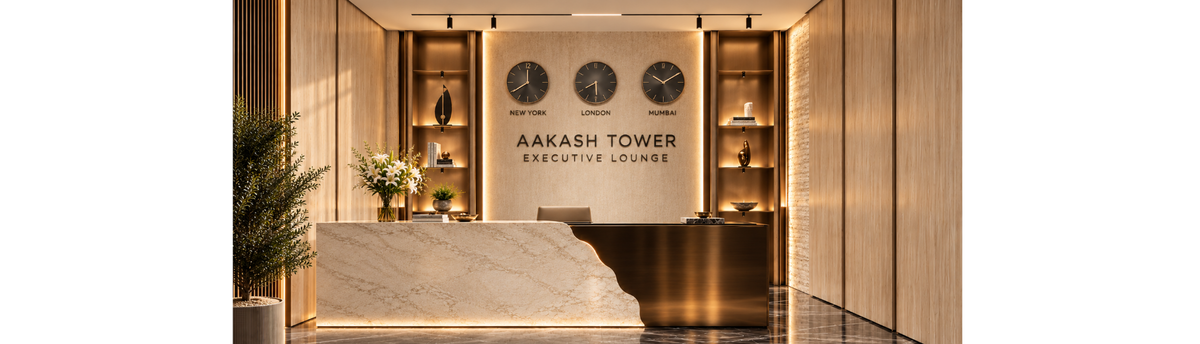

The reception area is often the first interior space a visitor experiences when entering an office. Before a meeting begins, before a conversation takes place and before the visitor sees the rest of the workplace, the reception can establish a visual sense of the business through its furniture, materials, lighting, artwork and decorative objects.
Styling an office reception is therefore different from simply decorating an empty entrance. The objective is to create a considered composition that feels professional, welcoming and connected to the identity of the business. Art, sculptures and statement decor can play an important role, particularly when they are selected according to the scale and architecture of the reception rather than added as unrelated decorative pieces.
A successful reception does not need to contain many objects. In fact, a small number of well-selected pieces can often create a stronger visual impression than a large collection of accessories. The key is to understand the space first, establish a visual hierarchy and then select objects that support that hierarchy.
The central principle: Treat the office reception as a complete composition. Start with the architecture, reception desk, seating, circulation and lighting, then use art, sculptures and statement decor to establish focal points, personality and visual balance.
Table of Contents
- Why Does Office Reception Styling Matter?
- Start With the Reception Space, Not the Accessories
- Create a Visual Hierarchy in the Reception
- Style the Reception Desk
- How to Style the Wall Behind the Reception Desk
- How to Choose Art for an Office Reception
- How to Use Sculptures in an Office Reception
- How to Use Statement Decor Without Overdecorating
- Why Scale and Proportion Matter in Reception Styling
- Choose Materials That Relate to the Reception Interior
- Use Decorative Lighting to Support the Reception Design
- Match Reception Decor to the Character of the Business
- How to Style a Small Office Reception
- How to Style a Large Office Reception
- How to Avoid a Cluttered Reception Area
- How Reception Desk Accessories Fit Into the Overall Design
- Where to Experience Luxury Office Decor in India
- Frequently Asked Questions
- How Should You Begin Styling an Office Reception?
Why Does Office Reception Styling Matter?
An office reception performs several roles at the same time. It is an arrival point, a waiting area, a place where visitors may interact with reception staff and often one of the most visible parts of a workplace. Because of this, the reception needs to balance function, hospitality and visual identity. Visitors need clear circulation and comfortable seating, while the business may also want the space to communicate a particular character.
Art, sculptures and statement decor can help create that visual identity. A sculpture may establish a focal point near the entrance. A large piece of wall art can give a reception wall a clear visual purpose. A distinctive decorative object can introduce material contrast or a reference to the nature of the business.
The important point is that these objects should support the reception rather than compete with the people, furniture and activities taking place there. Within a larger workplace, the reception also sets the visual tone for other areas such as executive offices, meeting rooms and waiting spaces. The decorative language does not need to be identical throughout the office, but the materials, proportions and level of curation can create a sense of continuity.
For a broader understanding of how these categories fit into office interiors, see Spacio's complete guide to office decor accessories and luxury office styling in India.
Start With the Reception Space, Not the Accessories
One of the most useful principles in office styling is to understand the space before choosing the objects. The architecture, entrance, reception desk, seating, wall surfaces, ceiling height, lighting and circulation patterns establish the context for the decorative elements.
Before selecting artwork or sculptures, look at the reception from the perspective of someone entering the office. What do they see first? Where does their eye naturally travel? Which wall has the greatest visual presence? Is there an open area that needs a focal point, or is the room already visually strong?
It is also useful to consider the reception from the waiting area and from the main circulation route. An object that looks balanced from directly in front of the reception desk may feel very different when viewed from the entrance. This is why reception styling should be considered as a three-dimensional composition, not simply as a collection of objects placed against walls.
Create a Visual Hierarchy in the Reception
A reception area usually needs a clear visual hierarchy. Without one, several objects can compete for attention and the space can begin to feel busy. Start by identifying the likely focal point. This could be the reception desk, a branded wall, a large artwork, a sculpture, a distinctive lighting installation or another significant feature of the room.
Once the main focal point is established, other decorative elements should support it rather than compete with it.
One strong focal point
A single large artwork or sculpture can give a reception an immediate point of visual interest. The surrounding space should provide enough negative space for the piece to remain legible.
A primary piece with supporting objects
A larger statement object can also be supported by smaller accessories. In this arrangement, the smaller pieces should have less visual weight so that the composition retains a clear hierarchy.
Several elements with equal importance
This can work in larger receptions where the architecture provides enough space between different areas. However, each zone should still have a clear relationship with the others rather than appearing as several unrelated displays.
Style the Reception Desk
The reception desk is often one of the strongest visual elements in the room, so it should not be treated as an afterthought. Consider its material, size, shape and position before deciding what should be placed on or around it. A substantial desk may already provide strong visual weight, while a lighter reception counter may need additional elements to establish balance.
Reception-desk accessories should remain restrained because the desk also needs to function as a working surface. A small sculptural object, a considered desk accessory or a carefully selected decorative piece can contribute to the composition without turning the reception counter into a display shelf.
The same principles used for executive desk styling apply here: function should remain clear, accessories should have appropriate scale and the arrangement should retain negative space. For a more detailed guide to selecting objects for a desk, see How to Choose Luxury Office Desk Accessories: Scale, Function, Material & Style.
How to Style the Wall Behind the Reception Desk
The wall behind the reception desk often has strong visual importance because it sits directly within the visitor's field of view. It can therefore become an effective location for office wall art, sculptures or other statement decor. Before selecting an artwork, consider the width and height of the wall, the dimensions of the reception desk and the distance from which the artwork will normally be viewed.
A large wall does not automatically require a large number of artworks. A single substantial piece can create a stronger composition when it has sufficient space around it.
Alternatively, several pieces can be arranged as a considered grouping. In this case, the relationship between the pieces becomes important. Their scale, orientation, framing, colour and visual weight should create a coherent composition rather than appearing as unrelated images collected on the same wall.
Spacio's office wall art collection can be considered when developing this part of the reception environment.
How to Choose Art for an Office Reception
Art in a reception area can introduce colour, scale, movement, texture or a visual point of interest. The choice should be guided by the character of the office rather than by the artwork alone.
Consider the scale of the wall
The artwork should relate to the wall on which it is placed and to the furniture below it. A small artwork on a large wall can lose its visual presence, while an oversized piece can dominate a compact reception.
Consider the viewing distance
Reception artwork is often viewed from further away than artwork placed in a private office. Details that are important at close range may therefore have a different effect when the piece is experienced from the entrance or waiting area.
Consider the visual language
The artwork should relate to the design language of the office. This does not mean that it must reproduce the colours or materials used elsewhere. Instead, there should be a meaningful relationship between the artwork and the wider interior.
Consider what should remain quiet
If the reception already contains a strong desk, flooring, ceiling feature or lighting installation, artwork may need to play a supporting role. When several elements are visually dominant, the space can quickly lose clarity.
How to Use Sculptures in an Office Reception
Sculptures can be particularly effective in reception areas because they introduce three-dimensional form. Unlike wall art, a sculpture can be experienced from several viewpoints and can create a focal point within the circulation of the space.
A sculpture can be placed on a reception console, plinth, side table, display surface or another suitable location, depending on its scale and the architecture of the room. The position should be chosen carefully. A sculpture placed in a high-traffic area should not obstruct circulation. A large sculptural object should also have enough surrounding space to be appreciated from different angles.
Business and motivational sculptures can have a particular role in executive and corporate environments because their themes may relate to ideas such as leadership, movement, ambition, achievement or human connection. The interpretation, however, should remain appropriate to the business and the wider interior. Spacio's business and motivational sculptures collection provides a relevant category when considering sculptural pieces for executive and professional spaces.
How to Use Statement Decor Without Overdecorating
A statement object does not need to be surrounded by many smaller decorative objects. Its visual strength often comes from the space around it. One large sculpture, for example, may be more effective than several smaller sculptures placed together without a clear hierarchy. Similarly, a strong artwork may require an otherwise quiet wall.
This is where negative space becomes part of the styling. Empty space allows a statement object to be seen clearly and gives the reception a sense of visual calm. The same principle applies to decorative objects placed on consoles, side tables and reception counters. If every available surface contains an object, there is no longer a clear distinction between the statement piece and the supporting pieces.
Why Scale and Proportion Matter in Reception Styling
Reception areas often have greater ceiling height and more open floor space than private offices. This can create an opportunity to use objects with greater scale, but scale still needs to be related to the architecture. A small sculpture may work beautifully on a reception console but disappear when placed alone in a large entrance hall. Conversely, a large sculpture may overwhelm a compact reception where visitors are seated close to it.
Proportion also matters between the artwork or sculpture and the furniture beneath it. A very small artwork above a broad reception desk can feel visually disconnected. A very large artwork can overpower the desk and the people working behind it. The goal is not to follow one fixed size rule. It is to create a relationship between object, furniture, wall, room and viewing distance.
Choose Materials That Relate to the Reception Interior
Materials help connect individual decorative objects to the wider reception design. Look at the reception desk, flooring, seating, wall finishes, metalwork and lighting before selecting decorative pieces. Accessories can echo an existing material, introduce controlled contrast or create a bridge between different elements in the room.
For example, a reception with substantial timber elements may accommodate objects that reinforce the warmth of the material or introduce a contrasting finish. A reception with stone, glass and metal can similarly use decorative objects to create continuity or controlled variation.
Finish is equally important. Polished, brushed, matte, textured and reflective surfaces can create different relationships with the light in the room. This is particularly noticeable in a reception because visitors may experience the space from several angles as they enter, wait and move through it.
Use Decorative Lighting to Support the Reception Design
Lighting is not only a functional requirement in an office reception. Decorative lighting can also become part of the visual composition. A statement light can establish a focal point above a reception desk or within a larger entrance area. Smaller decorative lights can help create atmosphere in waiting or lounge areas.
The important consideration is the relationship between lighting and the other statement elements. A dramatic chandelier, a large artwork and a substantial sculpture may all compete if each is given equal visual importance. Where lighting is intended to be a major feature, other decorative elements may need to become quieter. Where artwork or sculpture is the main focal point, lighting can instead support the object by providing appropriate illumination and visual balance.
Spacio's office decorative lighting collection can be considered as part of a wider reception styling scheme.
Match Reception Decor to the Character of the Business
The reception should feel like part of the organisation it represents. This does not mean turning the space into a literal expression of the company's industry. Instead, decorative choices can support the qualities the interior is intended to communicate.
Professional and established businesses
A formal office may benefit from substantial materials, controlled colour and carefully selected art or sculpture. The overall composition can communicate permanence without relying on excessive decoration.
Creative businesses
A creative environment may have more freedom to use expressive artwork, unusual forms or stronger visual contrasts. Even here, the individual elements need a relationship with the architecture and furniture.
Global businesses
Globes and world maps can have a natural connection with companies that operate across countries or work with international markets. They can also function simply as statement objects within an executive reception. Spacio's globe collection and world map collection can be considered where these forms fit the character and scale of the interior.
Design-conscious businesses
Where the office itself has a strong design language, decorative objects should reinforce that language. Material, proportion and restraint become especially important because the reception is often experienced as part of a complete interior rather than as an isolated display area.
How to Style a Small Office Reception
A small reception does not require less design thinking. It requires greater control over scale and quantity. Start with the essential functions: reception desk, visitor circulation, seating and storage where required. Once those elements are established, identify one area that can carry the main decorative focus.
This could be the wall behind the desk, a single sculpture on a console or one carefully selected artwork. Avoid distributing several small decorative pieces throughout a compact room simply because there are several available surfaces. In a smaller reception, one clear visual idea can often create a stronger result than several competing ideas.
How to Style a Large Office Reception
A larger reception provides more opportunities to create distinct visual zones. The entrance, reception desk, waiting area and circulation path can each have their own role while remaining part of the same overall composition. A large sculpture can help anchor an open area. Artwork can define a wall. Decorative lighting can establish a focal point above the reception desk, while smaller accessories can give the waiting area a more intimate character.
The challenge in a large reception is not usually a lack of space but the possibility of visual fragmentation. Materials, finishes, colours and forms should therefore have enough continuity to make the different areas feel connected.
How to Avoid a Cluttered Reception Area
A reception can begin to feel cluttered when there are too many focal points, too many small decorative objects or insufficient space between elements.
Several practical principles can help:
- Choose a clear primary focal point.
- Limit the number of statement objects.
- Leave sufficient negative space around major pieces.
- Keep the reception desk functional.
- Use supporting objects with less visual weight than the main feature.
- Repeat selected materials or finishes to create cohesion.
- Consider the room from multiple viewpoints rather than one photograph.
- Remove objects that do not contribute to the composition.
The last point is particularly important. Styling is not only about deciding what to add. It is also about knowing what does not need to be there.
How Reception Desk Accessories Fit Into the Overall Design
Reception-desk accessories occupy a smaller visual scale than a major artwork or sculpture, but they still contribute to the overall experience of the space. Because the reception desk is a working surface, these accessories need to balance appearance with practical requirements. The number of objects should be controlled, and the placement should leave enough room for everyday reception activities.
A carefully selected desk accessory can create a connection between the reception counter and the larger decorative scheme. For example, its material or finish may relate to a sculpture, lighting element or other decorative feature elsewhere in the room. This is why reception styling works best when the desk is considered as part of the complete interior rather than decorated separately from the surrounding walls, furniture and objects.
Where to Experience Luxury Office Decor in India
If you are selecting luxury office decor accessories for an office reception, executive office, private study or professional workspace, seeing the pieces in person can be especially valuable. Scale, material, finish, proportion and visual impact are easier to assess when sculptures, wall art, decorative objects, clocks and lighting can be viewed as part of a complete interior composition. Spacio's Mumbai and Kolkata showrooms bring together relevant office accessories, sculptures, decor accessories, lighting, books, clocks and other collections, allowing you to assess different pieces in person before choosing them for a refined workspace.
Frequently Asked Questions
What should I put in an office reception area?
An office reception can include a reception desk, visitor seating, artwork, sculptures, decorative lighting and a limited number of accessories. The selection should depend on the size and architecture of the space, its functional requirements and the visual character of the business.
What type of art works well in an office reception?
Art that relates to the scale, materials and visual language of the reception generally works well. Large walls may support a substantial artwork or considered grouping, while smaller receptions may benefit from one clearly selected piece rather than several competing artworks.
Are sculptures suitable for office reception areas?
Yes. Sculptures can work particularly well in reception areas because they introduce three-dimensional form and can become focal points within the space. Their scale and placement should allow sufficient circulation and viewing space.
How do I make an office reception look luxurious?
Begin with the architecture, reception desk, seating, materials and lighting. Then use a limited number of well-scaled art pieces, sculptures and decorative objects to create visual hierarchy. Luxury is influenced by proportion, material, craftsmanship, finish, negative space and curation rather than by the number or price of objects alone.
How many decorative objects should an office reception have?
There is no fixed number. The appropriate quantity depends on the size of the reception, the strength of the architecture and furniture, and the visual weight of the objects. A large sculpture or artwork may require very little additional decoration around it.
How can I style a small office reception without making it look cluttered?
Keep the functional layout clear and establish one main decorative focal point. A carefully selected artwork or sculpture can provide character without requiring several smaller objects. Retaining negative space is particularly important in a compact reception.
Should office reception art match the company branding?
It does not have to match the branding exactly. The artwork can instead relate to the overall character of the business and the interior through colour, material, scale and visual language. A reception can feel connected to a brand without becoming a literal expression of its corporate identity.
Where can I see luxury office decor accessories in Mumbai?
You can visit the Spacio Mumbai store at 3BK, Laxmi Industrial Estate, New Link Road, Andheri (West), Mumbai 400 053, where you can explore relevant collections in person and discuss your requirements with the Spacio Interior Styling Team. You can also find the Spacio showroom in Laxmi Industrial Estate, Mumbai on Google Maps before planning your visit.
Where can I see luxury office decor accessories in Kolkata?
You can visit the Spacio Kolkata store at 86B, Topsia Road South, Kolkata 700 046, where you can experience relevant office decor collections and discuss your workspace requirements with the Spacio Interior Styling Team. You can also use Google Maps when planning your visit.
How Should You Begin Styling an Office Reception?
Begin with the space rather than the objects. Understand how visitors enter, where they wait, where the reception team works and which walls, surfaces and interior features naturally attract attention. Then establish a visual hierarchy. Decide whether the main focal point should be the reception desk, a piece of wall art, a sculpture, decorative lighting or another significant feature. Once that decision has been made, supporting objects can be selected with appropriate scale, material, colour and visual weight.
The strongest reception areas are rarely the ones with the most decoration. They are the ones where art, sculptures, furniture, lighting and accessories have a clear relationship with one another. This is the essence of luxury office styling: not filling the reception with expensive objects, but selecting the right pieces and giving each one enough space to contribute to the whole.
If you would like to assess scale, materials and finishes in person, visit a Spacio showroom and speak with the Spacio Interior Styling Team about your office reception or workspace requirements.

Navin Kanodia is the Co-Founder and Creative Director at Spacio, a luxury interior and gifting business in India. An interior stylist and design advisor with over 30 years of experience, he specialises in styling refined residential and professional interiors, with a particular focus on office decor, executive workspaces and design-led commercial environments. He shares practical design insights drawn from working with HNI homeowners, architects and interior designers across India, as well as through Spacio’s retail showrooms in Mumbai and Kolkata.


