
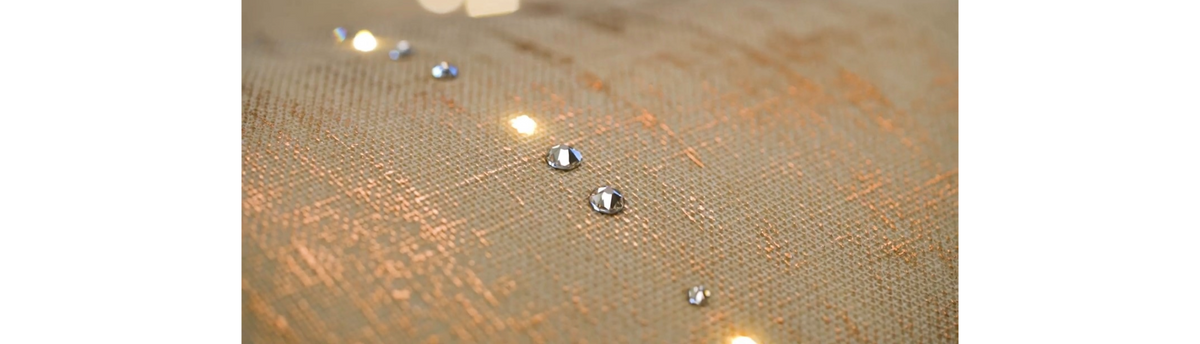

Wallpaper with crystals introduces reflective details into a wall covering, creating sparkle, texture and visual depth. It can make a wall more distinctive, but the result depends on how the crystal elements relate to the pattern, lighting, wall size and furnishings. The aim is not to maximise sparkle. It is to choose a surface that suits the room and gives the wall a clear purpose.
Crystal wallpaper can range from designs with a few restrained highlights to surfaces with more noticeable reflective detailing. Some designs incorporate crystal elements into the wallpaper, while others use printed patterns to suggest their appearance. Specialist options may also combine crystals with integrated LED lighting. Understanding these differences helps you select a wall covering based on its actual material and visual effect, rather than its name alone.
In specialist luxury wall coverings, crystal detailing can also be combined with integrated illumination. LED & Crystal Wallpaper from Meystyle is one such specialist category available through Spacio in India, bringing together decorative surface treatment, crystal elements and, in selected designs, integrated LED lighting. The distinction between crystal detailing and illumination is important: crystals can reflect existing light, while integrated LEDs make light part of the wall covering itself.
This guide explains how crystal detailing affects a wall, how to judge the right amount of sparkle, and how to coordinate the surface with light, furniture, artwork and other materials.
A statement wall needs to work as part of the room, not as an isolated surface. When considering a reflective finish, I look at its scale, the materials around it and the way light reaches it. Crystal detailing is most effective when it contributes to the composition without making every other element compete for attention.
In This Guide
- What Is Wallpaper with Crystals?
- Crystal Wallpaper vs LED Wallpaper
- How Do Crystals Affect Sparkle, Texture and Depth?
- How Much Crystal Detailing Is Right?
- How to Light Crystal Wallpaper
- Where Can Crystal Wallpaper Be Used?
- Choosing Colours and Materials
- How to Style a Crystal Wall
- A Selection Checklist
- Exploring Crystal Wallpaper in India
- Frequently Asked Questions
- Conclusion
What Is Wallpaper with Crystals?
Crystal wallpaper, also described as wallpaper with crystals or crystal-enhanced wallpaper, is a wall covering in which actual crystal elements are incorporated into the design. These details catch and reflect available light, creating points of sparkle across the surface. The underlying wallpaper provides the pattern, colour and overall visual character, while the crystal elements add another layer of reflection and visual detail.
The effect varies with the design. Small, widely spaced crystal elements may produce restrained highlights. More prominent or closely grouped details can draw greater attention to the wall. The background pattern also matters: a quiet surface allows reflective elements to stand out, while a busy pattern can make the overall composition more visually active.
It is important to distinguish a wallpaper that contains crystal elements from one that simply prints a crystal-like image. The two may look similar in a photograph, but they are different in material and finish. Product descriptions and samples should be used to confirm what a particular design contains.
Crystal wallpaper sits within the wider field of specialist wall surfaces. Spacio's Art Surface Coverings collection brings together different materials and surface treatments, while Wallpaper (Art & Murals) offers another approach, using imagery and continuous compositions to shape a wall.
Crystal wallpaper is best understood as one option within the wider field of statement wall coverings. The defining consideration is how the surface contributes to the room through pattern, reflection and texture.
Crystal wallpaper is one of several specialist surfaces that can contribute to a statement wall. For the broader framework covering wall coverings, wall art, sculpture, lighting, mirrors and other approaches, see Spacio's complete guide to wall styling and luxury statement walls in Indian interiors.
Crystal Wallpaper vs LED Wallpaper
Crystal wallpaper and LED wallpaper describe different features. Crystal details reflect light that reaches the surface. LED wallpaper incorporates lighting into the wall covering itself. Some specialist designs combine the two, but crystal detailing alone does not mean that a wallpaper contains integrated lights.
This difference affects both the visual result and the planning required. If the aim is to introduce reflective highlights, the existing daylight and room lighting may be sufficient. If the wall needs to contribute its own illumination, a design with integrated LEDs may be more suitable, subject to its technical specification and installation requirements.
For a closer explanation of illuminated wall coverings, see Wallpaper with Light: How LED Crystal Wallpaper Transforms Luxury Interiors. That article focuses on lighting within the wall covering, while this guide concentrates on the visual effect of crystal detailing and how to use it in a balanced interior.
How Do Crystals Affect Sparkle, Texture and Depth?
Crystal detailing changes the way the eye reads a wall. Reflective points can stand out against the underlying pattern, creating variation across the surface. The effect can be understood through three related qualities: sparkle, texture and visual depth.
Sparkle and reflection
Sparkle occurs when light catches the crystal elements. Its visibility depends on the design, the direction of the light and the viewer's position. A wall may look more reflective from one angle than another, so a close-up photograph cannot always show how the complete surface will behave in a room.
Reflection is also different from illumination. A crystal element can reflect existing light without producing light of its own. This distinction is useful when deciding whether the wall needs additional lighting or whether the room's existing fixtures can reveal the surface adequately.
Texture and surface character
Crystal elements introduce a different visual quality from a flat printed motif. Their relationship with the underlying pattern can make the surface appear more layered. However, the actual profile, material and construction vary by design, so these characteristics should be checked rather than assumed.
Visual depth
Visual depth is the sense that a surface has several layers of interest rather than reading as one uniform field. Crystal highlights can contribute to this effect, particularly when the background pattern and colour provide contrast. A restrained arrangement can create depth just as effectively as a more densely detailed design.
The important decision is how the surface reads at the intended viewing distance. A detail that looks delicate close up may become less noticeable across a large wall, while a strong repeating pattern may become the dominant feature when viewed from across the room.
How Much Crystal Detailing Is Right?
The right amount of crystal detailing depends on the role of the wall and the visual activity already present in the room. Consider the wallpaper alongside the furniture, lighting, artwork and other finishes. A surface should be selected for the effect it creates in the complete interior, not simply for the number of reflective details it contains.
| Crystal detailing | Visual effect | Works well when | Watch for |
|---|---|---|---|
| Light | Small reflective highlights with a quieter overall surface | The room already has strong furniture, artwork or lighting | The details may become less visible across a very large wall |
| Moderate | A clear balance between pattern, sparkle and surface depth | The wall needs to be noticeable without dominating the room | Other reflective materials should be controlled |
| High | A stronger decorative and reflective statement | The wall is intended to lead the visual composition | Too many competing materials, patterns or light sources can make the room feel visually busy |
For a restrained effect
A design with more restrained crystal detailing may be suitable when the room already contains strong focal points. A prominent chandelier, expressive artwork, sculptural furniture or several contrasting materials can all compete for attention. A quieter wall covering can contribute reflection without adding another dominant element.
This does not mean that every other surface must be plain. It means that each element should have a clear role. The wallpaper might provide subtle texture, while the artwork or furniture remains the main point of focus.
For a statement wall
A more expressive crystal design may suit a wall intended to lead the composition. In this case, the surrounding elements should be selected with its pattern and reflective character in mind. Furniture with a controlled form, a considered colour palette and fewer competing details can help the wall retain its presence.
Consider what will sit in front of the wallpaper. A console, television, artwork or shelving may cover important parts of the pattern. The intended arrangement should be reviewed before the final design is chosen.
Assess the design at full scale
A sample helps establish colour and surface character, but it cannot always show how a repeated pattern will read across the entire wall. Ask to see the full design or a suitable visualisation where possible. Confirm the dimensions and layout, and consider how the pattern will relate to the furniture and the main viewing positions.
How to Light Crystal Wallpaper
Lighting influences how crystal details appear, so it should be considered before the wall covering is finalised. The objective is to reveal the surface without creating distracting glare or making every reflective element compete for attention.
Start with the existing light
Daylight, ceiling lights, pendants, chandeliers and wall lights can all affect the appearance of a crystal-enhanced surface. Consider the room at different times of day if possible. A living room may need to work in bright daylight as well as during the evening, while a dining space may be experienced more often under artificial lighting.
Assess the wall from the entrance and the main seating positions. This helps reveal whether the reflective details are visible where they matter, or whether the lighting makes the surface too dominant from certain angles.
Decide whether additional lighting is needed
Crystal wallpaper does not automatically require integrated LEDs. The existing lighting may be enough to reveal the crystal details. If the selected design includes LEDs, the electrical requirements, placement and installation process should be confirmed for that specific product before work begins.
Balance reflective surfaces
Crystal wallpaper may be placed near glass, polished metal, mirrors or other reflective materials. These finishes can work together, but the composition needs control. When several reflective surfaces are placed close together, the eye may struggle to settle on a focal point.
One surface can lead while the others provide contrast or support. The right balance depends on the size of the room, the lighting and the amount of pattern already present.
Where Can Crystal Wallpaper Be Used?
Crystal wallpaper can be considered for living rooms, dining rooms, entrance foyers, bedrooms and private entertaining areas. Its suitability depends on the design, the purpose of the wall and the way the surface relates to the rest of the room.
Living rooms
In a living room, crystal wallpaper can establish a focal wall behind a console or within a seating arrangement. Consider its relationship with the sofa, artwork, decorative lighting and other prominent objects. If the wallpaper has a strong pattern, a more restrained arrangement in front of it may create a clearer composition.
Dining rooms
A crystal-enhanced wall can add reflective detail to a dining space, particularly in the evening. The wall should be considered with the dining table, chandelier and surrounding finishes. These elements need not match, but their scale and visual weight should work together.
Entrance foyers
An entrance foyer offers a first view of the interior, making the wall's position and visibility important. Crystal detailing can create a distinct focal surface, particularly when it is visible from the main approach. A console, mirror or sculpture may be added if it supports the composition; the wall does not need to be filled with objects.
Bedrooms
In a bedroom, consider the atmosphere you want the wall to support. A quieter crystal pattern may suit a more restful setting, while a stronger design can create a more dramatic focal point. Review the wall with the headboard, bedside lighting and view from the bed before making a decision.
Private bars and entertaining spaces
In a private bar or entertaining area, crystal detailing can work with glass, metal and decorative lighting. Because these spaces may already contain several reflective surfaces, a clear focal hierarchy is especially useful. The wall should contribute to the setting without competing with every other element.
Choosing Colours and Materials
The underlying wallpaper, crystal details and surrounding finishes all influence the final appearance. Select the wall covering in relation to the room's palette rather than treating it as an isolated purchase. Flooring, furniture, textiles, artwork and lighting should all be part of the decision.
Warm materials and reflective details
Wood and warm-toned textiles can provide contrast against a reflective wall. This relationship helps balance the cool or bright character that some crystal finishes may have. The specific combination depends on the wallpaper's colour and finish, so assess the materials together rather than relying on general rules.
Glass and metal
Glass and metal can reinforce the reflective character of crystal detailing. The result can feel coherent when the materials have distinct roles. For example, the wallpaper may provide the main pattern while a metal object supplies a smaller highlight. Repeating the same level of shine across every surface can make the composition feel busy.
Artwork and sculpture
Artwork introduces a defined image or composition, while sculpture adds a three-dimensional form in front of the wall. Both can work with crystal wallpaper if their scale and visual weight are considered. A detailed artwork may need a quieter section of wall, while a more restrained piece may sit comfortably against a stronger surface.
Material choice should support the intended hierarchy. Decide which element leads, which elements provide contrast and where the eye needs room to rest.
How to Style a Crystal Wall
Begin by deciding what the wall needs to do. Is it the main focal point, a backdrop for artwork or a supporting surface behind furniture? This decision guides the choice of crystal density, the placement of objects and the amount of negative space to preserve.
Give the surface room to be seen
A crystal wall does not need additional artwork, mirrors or accessories simply because there is space available. Empty space can help the pattern remain clear and allow its reflective details to be noticed. Before adding another object, consider whether it improves the composition or only fills a gap.
Establish a clear focal point
If the wallpaper is the main statement, let the surrounding objects support it. If a large artwork or sculpture needs to lead, choose a wall design that does not compete with it. Several expressive elements can coexist, but they need a deliberate relationship rather than equal visual weight.
Review the complete arrangement
Furniture and accessories can cover parts of the pattern or interrupt its visual rhythm. Review the planned arrangement at the intended scale, including the height and width of the objects placed in front of the wall. Check the result from the entrance and the principal seating positions, not only from directly in front of the surface.
Wall covering: establishes the colour and pattern.
Crystal details: introduce reflection and sparkle.
Lighting: reveals the surface without overwhelming it.
Furniture or artwork: provides a focal point or supports the wall.
Negative space: keeps the arrangement from feeling crowded.
A Selection Checklist
Before choosing a crystal-enhanced wall covering, review the following points. They help turn a visual preference into a decision based on the room's actual requirements.
- Purpose: Decide whether the wall should lead the composition or support another focal point.
- Dimensions: Check the wall size and how the pattern will repeat across it.
- Crystal details: Assess their spacing, prominence and visual character.
- Background: Consider how the underlying pattern and colour work with the room.
- Lighting: Review daylight and existing fixtures before deciding whether integrated LEDs are needed.
- Materials: Consider the relationship with wood, textiles, glass, metal and other finishes.
- Furniture and artwork: Confirm what will sit in front of the wall and how much of the pattern will remain visible.
- Specification: Confirm the actual materials, finish, dimensions and available customisation for the selected design.
- Installation: Check product-specific requirements, particularly if integrated lighting is included.
- Viewing positions: Assess the wall from the entrance, seating area and other main viewpoints.
Exploring Crystal Wallpaper in India
In Indian interiors, crystal wallpaper should be assessed in relation to the actual conditions of the room rather than selected from a sample alone. Apartments, villas, duplexes, penthouses and hospitality-inspired residences can have very different wall sizes, sightlines and lighting conditions. Meystyle, a UK-based specialist brand introduced to India by Spacio, offers selected designs that combine crystal detailing with integrated LED lighting, allowing the relationship between reflection and illumination to become part of the wall specification.
The appropriate choice depends on the specific design and the requirements of the space. Confirm the available finishes, customisation options, dimensions and technical requirements before finalising a specification. Where integrated LEDs are involved, the installation and electrical requirements should also be reviewed for the selected product.
You can view the available designs in the LED & Crystal Wallpaper collection. The key is to begin with the wall and the room, then select a surface that supports the intended composition.
The product is only one part of the decision. Its scale, placement, lighting and relationship with the other materials determine how it works in the room. These factors should be considered together before the final wall covering is selected.
Frequently Asked Questions
What is wallpaper with crystals?
Wallpaper with crystals incorporates crystal elements into a wall-covering design. The details reflect available light and introduce sparkle and visual texture. The actual materials and construction depend on the specific product.
Is crystal wallpaper the same as LED wallpaper?
No. Crystal wallpaper describes the use of crystal detailing, while LED wallpaper incorporates lighting into the wall covering. Some designs combine both features.
Does crystal wallpaper need integrated lighting?
No. Crystal elements can reflect existing daylight and room lighting. Integrated LEDs are a separate feature and should be considered when illumination from the wall itself is part of the intended effect.
How can I stop crystal wallpaper from looking too flashy?
Consider the amount of crystal detailing, the size of the wall and the other prominent elements in the room. A clear focal point, balanced materials and sufficient negative space can help the surface feel considered rather than overwhelming.
Can crystal wallpaper be used in a living room or dining room?
Yes, it can be considered for either space. The design should suit the wall's role and work with the furniture, lighting and surrounding finishes.
Can crystal wallpaper be combined with artwork?
Yes. The important considerations are the scale of the artwork, the pattern of the wallpaper and which element should lead the composition. A detailed artwork may work better against a restrained surface, while a simpler piece may sit comfortably against a more expressive design.
Does every crystal wallpaper contain actual crystals?
No. Some designs use printed crystal-like motifs, while others incorporate crystal elements. Check the individual product specification to establish what the surface contains.
Can crystal wallpaper be used with mirrors, glass or metal?
Yes, but the reflective surfaces should have different roles within the composition. Crystal wallpaper can provide the main pattern and sparkle, while glass, metal or mirrors can introduce smaller areas of reflection. If every surface has the same visual intensity, the wall can become difficult to read.
Where can I see crystal wallpaper in Mumbai?
If you are looking for crystal wallpaper or LED crystal wallpaper in Mumbai, you can visit Spacio's store at 3BK, Laxmi Industrial Estate, New Link Road, Andheri West, Mumbai 400 053. You can discuss available wall-covering options and how crystal detailing, lighting and wall proportions may work in your interior. View the Mumbai store details or find the Mumbai store on Google Maps.
Where can I buy crystal wallpaper in Kolkata?
If you are considering crystal wallpaper for a home or interior project in Kolkata, you can visit Spacio's store at 86B, Topsia Road South, Kolkata 700 046. You can discuss available wall-covering options and consider how the design will work with your room's lighting and materials. View the Kolkata store details or find the Kolkata store on Google Maps.
What should I check before installing crystal wallpaper with LEDs?
Confirm the selected product's installation instructions, electrical requirements, dimensions and any preparation needed for the wall. Requirements vary by product, so do not assume that every illuminated wallpaper uses the same system.
How should I choose crystal wallpaper for a large wall?
Assess the pattern at the intended scale and consider how it will repeat across the full wall. Review the furniture and lighting in front of it, and check the effect from the main viewing positions before finalising the design.
Conclusion
Wallpaper with crystals can introduce sparkle, reflection and texture, but its success depends on the relationship between the details, the background pattern, the lighting and the rest of the interior. A restrained design may provide subtle highlights, while a more expressive surface can become the main focal point.
The strongest choice is not necessarily the one with the most crystals. It is the one that suits the wall's scale, works with the surrounding materials and supports a clear visual hierarchy. Consider the complete room before deciding how much reflection, pattern and detail the wall needs.


