
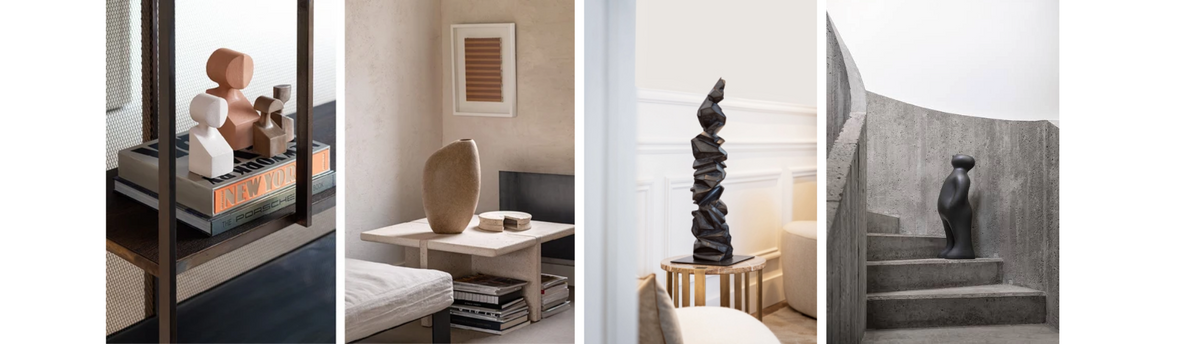

Sculptures and art objects can change the character of a luxury interior without changing its furniture. A carefully selected sculpture can introduce height, movement and visual weight, while a distinctive art object can give a quieter surface a sense of personality and intention.
But the impact of a sculpture does not come from the object alone. Its scale, proportion, position, viewing angle, material and relationship with the furniture around it all influence how successfully it works within a room.
This is particularly important when choosing luxury home decor accessories. A finely crafted sculpture may be exceptional on its own, but placing several strong pieces together without considering visual hierarchy can make even a sophisticated interior feel crowded.
For homeowners, interior designers and architects working with premium home decor accessories, the objective is therefore not simply to display beautiful objects. It is to create relationships between sculpture, art, furniture, lighting, architecture and negative space.
In this guide, I look at how to style sculptures and art objects in modern luxury interiors, from choosing the right scale and position to selecting materials, creating balanced groupings and knowing when a single statement piece is more effective than a collection.
For a broader understanding of how decorative objects are selected for modern Indian homes, you can also explore Spacio's complete guide to luxury home decor accessories.
Table of Contents
- The Role of Sculptures and Art Objects in Luxury Interiors
- Use Sculpture to Create a Focal Point
- Get the Scale and Proportion Right
- Give Sculptures Enough Negative Space
- Consider the Viewing Angle
- Style Sculptures in Relation to Furniture
- Choose Sculpture Materials That Work with the Interior
- Explore Different Types of Sculptures and Art Objects
- How to Group Sculptures with Other Objects
- Styling Sculptures on Different Surfaces
- Styling Sculptures in Different Rooms
- When to Use a Statement Sculpture or Centrepiece
- Common Sculpture Styling Mistakes
- Frequently Asked Questions
- Let the Sculpture Belong to the Room
The Role of Sculptures and Art Objects in Luxury Interiors
Sculptures occupy an interesting position between art and decor. Unlike a purely functional accessory, a sculpture can contribute form, movement, texture and emotion to a room. It can also become an important visual anchor around which other decorative objects are arranged.
Art objects can play a similar role. A distinctive glass piece, porcelain object, crystal form or carefully crafted decorative object can bring character to a console, shelf, centre table or niche without requiring the scale of a large artwork.
The important distinction is that these pieces should be treated as part of the interior composition. They are not simply objects to be placed wherever there happens to be an empty surface. Their success depends on how they relate to everything around them.
In a luxury interior, a sculpture may repeat a material already found elsewhere, introduce contrast against a restrained palette or provide a focal point in an otherwise quiet area. The object therefore becomes part of the visual language of the room rather than an isolated decorative addition.
I look at a sculpture as part of the room rather than as a separate purchase. Before deciding where it should go, I consider what the space already has, where the eye naturally travels and whether the sculpture adds something that the room is missing.
Use Sculpture to Create a Focal Point
A sculpture can become the focal point of an entire room or simply the focal point of a smaller composition on a console, sideboard, shelf or centre table. The key is to give the object enough visual importance and enough space for the eye to recognise it.
This does not necessarily mean choosing the largest sculpture available. A relatively small piece with an unusual silhouette, strong material or exceptional craftsmanship can command more attention than a much larger object with little visual character.
Before placing a sculpture, identify what the room already considers important. A dramatic fireplace, large artwork, statement chandelier or strong architectural feature may already dominate the space. In that situation, the sculpture should support the existing focal point rather than compete with it.
Conversely, a quieter wall, console or niche may benefit from a sculptural object that becomes the main visual point of interest. This is where a carefully chosen statement home decor accessory can give a room personality without requiring several other dramatic pieces.
Visual hierarchy matters. If everything in a room demands attention, nothing becomes memorable. One strong sculpture supported by quieter objects will often create a more sophisticated composition than several competing statement pieces.
Get the Scale and Proportion Right
Scale is one of the first things to consider when styling sculpture. An object that is too small can disappear against a large wall or substantial piece of furniture, while an oversized sculpture can overwhelm the room and leave insufficient space around it.
Look at the sculpture in relation to the furniture beneath or beside it, the wall behind it and the volume of the room. A large living room with generous ceiling height can accommodate stronger sculptural forms, while a more compact room may benefit from a single object with a restrained footprint but a distinctive silhouette.
Proportion becomes even more important when a sculpture is displayed with other objects. A tall sculpture beside another tall accessory can create a monotonous vertical line. Introducing a lower bowl, books or a smaller art object can create variation and give the eye a more natural path through the composition.
For a broader guide to selecting decorative objects according to scale, proportion, material and placement, see Spacio's guide to choosing decorative objects for your home.
The same principle applies to statement home decor accessories. A statement sculpture should have enough presence to register within the room, but the surrounding objects should generally become quieter so that the composition retains a clear hierarchy.
Physical size and visual weight are also different things. A dark, solid sculpture may appear heavier than a larger transparent glass piece. When choosing an object, therefore, consider not only its dimensions but also its colour, density, finish and silhouette.
Give Sculptures Enough Negative Space
Negative space is one of the most important elements in styling art objects. The empty area around a sculpture allows its silhouette to be understood and prevents the composition from becoming visually dense.
This is particularly noticeable with sculptural pieces that have unusual or open forms. If another object is placed too close, the two silhouettes can merge and the visual character of the sculpture becomes harder to appreciate.
Leaving space around an object also increases its perceived importance. A single sculpture on a quiet console can feel more significant than the same sculpture surrounded by several unrelated accessories.
This is one reason luxury interiors often feel edited rather than filled. The quality of the object becomes easier to appreciate when the composition gives it room to breathe.
Negative space is especially useful when working with high-end home decor accessories. Expensive or highly crafted objects do not automatically make a room look luxurious if there is no visual breathing room between them.
Consider the Viewing Angle
A sculpture is rarely viewed from one fixed position. In a living room it may be seen from the sofa, entrance, dining area and circulation paths. On a console, it may be viewed from several angles as people move through the home.
Consider whether the sculpture has an equally strong presence from different viewpoints. Some objects have a clearly defined front, while others are designed to be appreciated from multiple directions.
This becomes particularly important when styling a centre table or an open room where people can walk around the composition. An object that works beautifully from the front may look unbalanced from the side.
Move around the room before finalising the placement. The best position is usually the one that works with the room's natural movement rather than simply the angle from which the object looks best in a photograph.
Do not style a sculpture for one photograph. Style it for the way people actually move through the room and experience it from different distances and directions.
Style Sculptures in Relation to Furniture
A sculpture should have a natural relationship with the furniture around it. The height, material and visual weight of the piece can either reinforce the furniture or create a deliberate contrast.
On a substantial console, a small sculpture may disappear unless it has a strong silhouette or is elevated on a carefully selected stack of books. A large sculptural object, however, may need more empty space around it so that the console does not feel visually compressed.
The same principle applies to centre tables. Because they are usually viewed from several directions, sculptures placed on them should work as part of a three-dimensional composition rather than as a flat arrangement designed from one viewpoint.
Sideboards and credenzas offer greater horizontal space and can therefore accommodate more than one visual grouping. Even then, the objects should be related through scale, material, colour or form rather than simply distributed evenly across the surface.
The relationship with furniture also helps determine whether a sculpture should stand alone or be grouped with other accessories. A substantial piece of furniture may need a stronger object to balance it, while a delicate console may work better with a lighter sculptural form.
For more guidance on styling decorative objects across different surfaces, see Spacio's guide to styling consoles, coffee tables and shelves with luxury decor accessories.
Choose Sculpture Materials That Work with the Interior
Material changes the way a sculpture is perceived. Marble, stone, bronze, metal, glass, crystal, porcelain, ceramic and wood each introduce a different combination of texture, reflection, colour and visual weight.
A polished metal sculpture may introduce reflection and connect naturally with decorative lighting or furniture hardware. Glass and crystal can bring transparency and allow light to move through the composition. Stone and marble tend to create a stronger sense of solidity, while ceramic and porcelain can provide a quieter tactile quality.
Material contrast can also prevent a collection of sculptures from feeling repetitive. A transparent glass object beside a solid stone form creates a very different relationship from two objects with identical finishes and similar visual weight.
The objective is not to collect as many different materials as possible. Choose materials that either repeat something already present in the interior or provide a controlled contrast that makes the composition more interesting.
This is particularly relevant when selecting premium home decor accessories or high-end home decor accessories. Material quality should contribute to the overall visual language of the room rather than exist as a luxury detail in isolation.
I do not begin by asking which material is the most luxurious. I ask what the room needs. Sometimes that means the transparency of glass, sometimes the weight of metal, sometimes the warmth of wood or the craftsmanship of Murano glass. The right sculpture is the one that completes the composition.
Explore Different Types of Sculptures and Art Objects
Sculptures can differ dramatically in material, technique, scale and visual character. Choosing between glass, crystal, metal, wood, porcelain or mixed media is therefore not simply a matter of personal preference. Each material behaves differently within an interior and creates a different relationship with light, furniture and surrounding accessories.
For a luxury interior, this variety makes it possible to select a sculpture that adds exactly the quality the room needs. A transparent piece may create lightness, while a substantial metal sculpture can provide weight. A warm wood form can soften a contemporary space, while Murano glass can introduce colour, craftsmanship and movement.
Spacio's Sculptures & Art Objects collection brings together different forms of sculptural and artistic objects for considered interiors.
Crystal Sculptures
Crystal sculptures can introduce transparency, reflection and delicacy to a composition. They work particularly well when the surrounding interior already has substantial furniture or strong architectural forms and the sculpture needs to add detail without increasing visual weight significantly.
Glass Sculptures
Glass sculptures can bring colour, shape and reflection while maintaining a sense of visual openness. Their relationship with natural and artificial light makes placement especially important, as the appearance of the piece can change throughout the day.
Metal Sculptures
Metal sculptures generally introduce stronger visual weight and a defined sense of form. Metallic finishes can also connect a sculpture with lighting, furniture hardware and other metal details already present in the interior, creating continuity without requiring an exact match.
Mixed-Media Sculptures
Mixed-media sculptures can be particularly effective when an interior needs contrast in texture and material. By combining different materials within one piece, they can create visual complexity without requiring several separate objects.
Murano Glass Sculptures
Murano glass sculptures can bring craftsmanship, colour and distinctive glassmaking traditions into a contemporary interior. Their sculptural quality allows them to function as both decorative objects and focal pieces, particularly on consoles, sideboards and other carefully edited surfaces.
Objects of Curiosity
Objects of Curiosity take decorative styling beyond conventional sculpture. These pieces can introduce surprise, individuality and conversation into a room and work particularly well when the objective is to create a collected interior rather than an overly coordinated one.
Porcelain and Ceramic Sculptures
Porcelain and ceramic sculptures can bring softer texture and a quieter material presence to a composition. They can work particularly well alongside timber, stone, linen and other tactile materials where the objective is to create warmth without adding excessive visual intensity.
Wall Art, Sculptures and Murals
Not every artistic statement has to sit on a surface. Wall art, sculptures and murals can become part of the architecture of a room and establish a much larger visual focal point. When a wall carries strong artistic expression, the objects placed on nearby consoles or sideboards should generally support rather than compete with it.
Wood Sculptures
Wood sculptures introduce natural texture and warmth and can soften interiors dominated by stone, glass or metal. Their organic character can also create a useful contrast against contemporary furniture with strong geometric lines.
The important point is that material should never be selected in isolation. A crystal sculpture, Murano glass piece, metal form, mixed-media object or wood sculpture will each behave differently within a composition. Consider what the room already has and choose the material and form that add something meaningful to it.
How to Group Sculptures with Other Objects
Sculptures do not always need to stand alone. They can be combined with vases, books, bowls, trays and other art objects to create a layered composition. The key is to give each piece a distinct visual role rather than allowing several objects to compete for attention.
Sculptures with Vases
A sculpture and vase can work well together because their forms are often naturally different. A tall vase can provide vertical height while a more irregular sculpture introduces movement or visual tension.
However, avoid placing two equally dominant objects directly beside each other. If both pieces are tall, dark and visually heavy, the composition may feel crowded. Reducing the visual intensity of one of them can create a more balanced relationship.
Spacio's vase collection can be considered alongside the Sculptures & Art Objects collection when creating this kind of layered composition.
Sculptures with Books
Books introduce a horizontal layer that can ground a sculptural object. A small sculpture placed on a carefully selected stack of books gains height, while the rectangular shape of the books provides contrast to an organic or abstract form.
The books should not simply be used as a pedestal. Their subject matter, colour and scale should make sense within the room, particularly when they are visible from the main seating area.
Spacio's coffee table books collection provides options that can contribute both visual structure and character to a decorative composition.
Sculptures with Bowls and Trays
A decorative bowl can introduce a low, broad form beside a sculpture, creating useful contrast in height. A tray can perform a similar role while also organising smaller objects within a defined area.
This combination works particularly well on consoles and sideboards where a sculpture establishes the focal point and the lower accessory group provides balance without competing for attention.
Styling Sculptures on Different Surfaces
The same sculpture can require a different styling approach depending on where it is placed. A console, coffee table, shelf, niche and sideboard each have different proportions, viewing angles and relationships with the surrounding architecture.
Console Tables
On a console, a sculpture can become the main vertical element in the composition. Consider the wall behind it, particularly if there is artwork or a mirror above the console.
Leave sufficient space around the sculpture so that its silhouette remains clear. If the sculpture is visually strong, support it with lower objects such as books, a bowl or a tray rather than another dominant piece.
For a more detailed approach to console styling, see Spacio's guide to how to style a console table with vases, sculptures, books and decorative objects.
Coffee Tables
A centre table is experienced from multiple directions, so sculptures placed here should have enough presence to work from different viewpoints. Lower sculptural forms can work particularly well because they maintain sightlines across the room.
Books can create a base, while a sculpture or decorative object can sit above them. Keep the arrangement low enough that it does not interfere with conversation or everyday use of the table.
Open Shelves
On open shelving, sculptures become part of a larger rhythm. Do not place a sculptural object on every shelf. Allow some shelves to remain quieter so that the stronger pieces create points of visual interest.
Vary the height, material and silhouette across the shelves. A sculpture can be balanced by books on one level and a vase or art object on another, creating movement without making the shelving feel crowded.
Niches
Niches give sculptures an architectural setting, so scale becomes especially important. An object that is too small can appear lost within the recess, while an oversized piece may make the niche feel cramped.
Use the empty space around the sculpture as part of the composition. A niche does not need to be filled simply because it is available.
Sideboards and Credenzas
A sideboard provides greater horizontal width, allowing a sculpture to become part of a broader grouping. A tall object can establish one end of the composition while lower accessories create a gradual transition across the surface.
Think about the entire elevation rather than styling each object independently. The sideboard, wall, artwork, lighting and accessories should read as one considered arrangement.
When styling a sculpture on a surface, first consider the entire composition. The object should have enough presence to be noticed, but enough space around it to remain visually distinct.
Styling Sculptures in Different Rooms
The role of a sculpture changes depending on the room. A living room may need a stronger focal object, while a bedroom may benefit from something quieter and more contemplative. The principles of scale, proportion and visual hierarchy remain the same, but the level of visual intensity should respond to the character and function of the space.
Living Room
The living room usually offers the greatest flexibility. Sculptures can be placed on consoles, centre tables, sideboards, shelves, niches or dedicated plinths, depending on the size and character of the room.
Look first at the room's existing focal points. A fireplace, artwork, chandelier or architectural feature may already command attention. A sculpture can reinforce that hierarchy or provide a secondary point of interest elsewhere in the room.
If the living room is relatively restrained, a distinctive sculptural piece can introduce personality without requiring additional decoration throughout the space. One well-positioned object can often do more than several smaller accessories scattered around the room.
Dining Room
In a dining room, sculptures can work on sideboards, consoles, niches or other surfaces away from the dining table itself. This allows the art object to contribute to the room without interfering with conversation across the table.
A sculpture can also create a visual relationship with the dining lighting. For example, a reflective metal or glass object may pick up the light from a chandelier or decorative pendant and create subtle movement across the room.
When styling the dining table itself, consider the height carefully. A sculptural centrepiece should add character without blocking the sightline between people seated opposite one another.
Entrance Foyer
The entrance is an opportunity to introduce the home's design language immediately. A sculptural object on a console can establish character before a visitor encounters the main living spaces.
Because people often view an entrance console while standing or moving through the space, stronger vertical forms can work particularly well. A sculpture can be paired with a mirror, artwork or decorative lighting to create a considered first impression.
The Entrance Foyer collection at Spacio offers further inspiration for creating a considered arrival space.
Bedroom
Bedrooms generally benefit from lower visual intensity. A sculptural object can add personality to a console, dresser or shelf, but it should support the calm quality of the room rather than become unnecessarily dominant.
Natural materials, softer forms and restrained colours can work particularly well here. One carefully selected piece may be enough to give a quiet surface a sense of character.
Home Office or Study
A study or home office can accommodate sculptures and art objects that reflect the character of the person using the space. Books, collected objects and sculptural pieces can create a more personal environment without making the workspace feel decorative for its own sake.
In a larger study or library, a sculpture can also become a focal point alongside bookshelves, artwork or a fireplace. In this setting, the object should contribute to the overall atmosphere without interfering with the practical function of the room.
When to Use a Statement Sculpture or Centrepiece
A statement sculpture can be one of the most effective ways to establish character in a luxury interior, but it should be used when the room has enough visual space to support it.
The statement may come from scale, material, silhouette, craftsmanship or artistic expression. It does not have to be an enormous piece. A smaller sculpture with an exceptional form can have greater impact than a large object with little visual character.
Before introducing a statement sculpture, identify the room's existing hierarchy. If a fireplace, artwork or chandelier already dominates the space, the sculpture may work better as a supporting element. If the room has a quieter focal point, the sculpture can take on a more prominent role.
This is also where exclusive centrepieces can become relevant. A sculptural object placed at the centre of a dining table, centre table or other important surface can act as the defining element of the composition when its scale and placement are carefully considered.
The strongest statement pieces are not simply noticed. They give the room something to remember.
A statement sculpture should not need several other dramatic objects around it to prove its importance. If the piece has strong form and character, give it enough space and let the object speak for itself.
Common Sculpture Styling Mistakes
Even exceptional sculptures can lose their impact when the surrounding composition is not considered carefully. Most problems come from scale, placement or visual competition rather than from the object itself.
Using Too Many Statement Pieces
Several large sculptures and dramatic accessories can compete for attention. Choose one primary statement and allow supporting objects to become quieter.
Ignoring the Scale of the Room
A sculpture that works beautifully in a large living room may overwhelm a smaller space. Always consider the object in relation to the furniture, wall and surrounding negative space.
Placing Sculptures Too Close Together
When two strong sculptural forms are positioned too close, their silhouettes can merge. Give each important object enough space to be understood independently.
Using the Same Visual Weight Throughout
A composition made entirely from dark stone, heavy metal or solid forms can feel dense. Introduce lighter materials, transparent objects or more open shapes where appropriate.
Styling for One Viewing Angle
A sculpture may be seen from several parts of the room. Check the composition from different seating positions and circulation paths before deciding that the placement is finished.
Filling Every Niche or Shelf
Architectural recesses and shelves do not need to be filled simply because they exist. Negative space can make a sculpture feel more significant and allow the architecture itself to remain visible.
Making Every Object Compete for Attention
Not every decorative object needs to be a statement. A successful composition usually has a clear hierarchy, with one or two pieces carrying more visual importance while the others provide support.
Frequently Asked Questions
How do you style sculptures in a luxury interior?
Begin by identifying the room's existing focal points and then choose a sculpture that complements the scale, material palette and visual hierarchy of the space. Give it enough negative space and use supporting objects only when they strengthen the composition.
Where should I place a sculpture in my home?
Sculptures can work on consoles, sideboards, centre tables, shelves, niches, plinths and other display surfaces. The right location depends on the sculpture's scale, viewing angle and relationship with the surrounding furniture and architecture.
How large should a sculpture be for a console table?
The sculpture should be appropriately scaled to the console, wall and surrounding objects. A tall sculpture can establish height, while a smaller piece may work when supported by books or paired with other lower objects.
Should sculptures match other decor accessories?
They do not need to match exactly. It is usually more effective to create relationships through material, colour, shape and visual weight while allowing enough variation to keep the composition interesting.
How do I style a sculpture with books?
A small sculpture can be placed on a carefully selected stack of books to introduce height and create a horizontal foundation. The books should relate to the character of the room rather than being used purely as a decorative pedestal.
Can sculptures be used as centrepieces?
Yes. A sculptural object can become an effective centrepiece for a dining table, centre table or other important surface. Consider its height carefully so that it does not obstruct sightlines or interfere with the practical use of the table.
What makes a sculpture a statement home decor accessory?
A statement sculpture has enough visual character to become a focal point. This may come from its scale, silhouette, material, craftsmanship, artistic expression or distinctive character rather than simply its size.
What are premium home decor accessories?
Premium home decor accessories are pieces selected for their design, material quality, craftsmanship and ability to contribute meaningfully to an interior. Sculptures and art objects can become particularly powerful premium accessories because they combine decorative value with artistic character.
How do sculptures work with fireplaces in luxury interiors?
A fireplace can already be a strong focal point, so a sculpture placed nearby should generally complement rather than compete with it. Consider the scale, material and visual weight of the sculpture in relation to the fireplace and the surrounding composition.
Where can I see and buy sculptures and art objects in Mumbai?
For anyone looking to see and buy luxury sculptures and art objects in Mumbai, the Spacio Mumbai store offers an opportunity to experience these pieces in person at 3BK Laxmi Industrial Estate, New Link Road, Andheri (West), Mumbai 400 053. Seeing a sculpture or art object physically can make a significant difference when choosing a statement piece, particularly when considering its scale, form, material and relationship with the surrounding furniture and decor. You can see the Spacio showroom location in Laxmi Industrial Estate, Mumbai and visit to select decorative pieces for a luxury home or commercial interior.
Where can I experience and buy luxury sculptures and art objects in Kolkata?
In Kolkata, luxury sculptures and art objects can be seen and bought at the Spacio showroom at 86B Topsia Road South, Kolkata 700 046. The Spacio Kolkata store brings together furniture, lighting and decor accessories, making it possible to consider a sculptural piece within the wider context of a luxury interior rather than selecting it in isolation. If you are visiting Topsia Road South to look for statement decor, you can see the Spacio showroom location in Topsia, Kolkata and experience the sculptures and art objects in person before making your selection.
Let the Sculpture Belong to the Room
The most successful sculpture styling does not make the object look as though it has simply been placed in an empty space. It makes the sculpture feel as though it belongs there.
That comes from understanding scale, proportion, material, viewing angle, negative space and visual hierarchy. A sculpture may be exceptional on its own, but its real impact emerges when it establishes a meaningful relationship with the furniture, artwork, lighting and architecture around it.
This is why styling luxury home decor accessories should always be approached as a process of curation. A sculpture can become a focal point, a vase can provide height, books can create structure and a decorative bowl can soften the composition. Each object has a role, and the room becomes stronger when those roles are understood.
For a broader understanding of selecting decorative objects for modern Indian homes, explore Spacio's complete guide to luxury home decor accessories. You can also explore the Sculptures & Art Objects collection and discover different forms of sculptural expression through crystal sculptures, glass sculptures, metal sculptures, mixed-media sculptures, Murano glass sculptures, Objects of Curiosity, porcelain and ceramic sculptures, wall art, sculptures and murals and wood sculptures.
The objective is not to fill every surface with premium or statement accessories. It is to select pieces with enough character to contribute to the room, give them enough space to be appreciated and allow the composition to remain calm, balanced and personal.
Explore Sculptures & Art Objects at Spacio
Discover curated sculptures and art objects selected to bring form, character and visual interest to refined luxury interiors.
Explore Sculptures & Art Objects


