
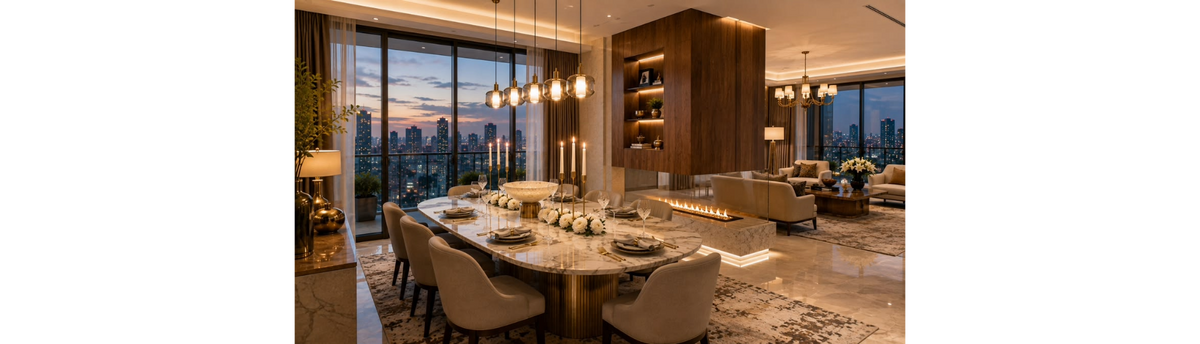

A fireplace can be technically sophisticated and still fail to look convincing. The difference is rarely determined by brightness alone. A realistic fire depends on the way movement, depth, colour, light, shadow and reflection work together to create the visual impression of a living flame.
This becomes particularly important when a fireplace is positioned below, beside or within a TV feature wall. A television is an exceptionally precise visual surface, so a flat or repetitive flame effect placed directly beneath it can make the artificial nature of the fire surprisingly obvious. The fireplace has to look convincing from the actual viewing position while also becoming part of the architecture around the screen. For a luxury interior, therefore, the objective is not simply to install something that resembles fire. It is to create a fire experience that behaves visually like a source of light and movement within the room.
This article explains what makes an artificial fireplace flame look realistic, why some flame effects appear flat, and how movement, apparent depth, flame colour, media, reflections and viewing distance influence the final experience. It also considers one of the most important applications of contemporary fireplaces: the relationship between the fireplace and TV wall.
Choosing the right fireplace involves more than deciding where it will be installed or which technology it will use. The proportion, type of flame, visual depth and way the fire interacts with the surrounding interior can significantly change the finished result. Spacio's complete guide to choosing the right fireplace for your space explores the broader considerations involved in selecting a fireplace for an Indian home. Here, the focus is more specific: what makes the fire itself look convincing, and why those visual qualities matter so much when it becomes part of a prominent TV feature wall.
Table of Contents
- What Makes Fire Look Real to the Eye?
- Why a Fireplace Beneath a TV Is a Tough Test of Flame Realism
- Movement: The Difference Between a Flame and a Graphic Effect
- Depth: Why Flat Fire Effects Look Artificial
- Flame Colour: Warmth, Variation and Visual Credibility
- Why the Fire Media Matters
- Light, Glow, Shadow and Reflection
- Viewing Distance Changes What Realistic Fire Means
- Designing a Fireplace Around a TV Without Making the Fire Compete with the Screen
- How the Surrounding Materials Affect Flame Realism
- Daylight, Evening and the Changing Appearance of Fire
- Why Artificial Flames Can Look Flat or Unconvincing
- How Designers Evaluate a Convincing Fire Feature
- Realistic Fire in Indian Interiors
- Why Should You See & Experience Fireplaces in India Before Buying?
- How Different Fireplace Technologies Create Different Fire Experiences
- Exploring Different Fireplace Experiences with Spacio
- The Final Test: Does the Fire Belong to the Room?
- Frequently Asked Questions
What Makes Fire Look Real to the Eye?
The eye does not recognise fire from colour alone. A convincing flame is understood as a combination of movement, light, depth and changing intensity. Real fire is never completely static: it rises, separates, contracts, changes brightness and creates a constantly changing pattern of illumination.
That is why an artificial flame can use the correct orange and yellow tones and still look obviously artificial. If the movement is repetitive, the flame appears to sit on a flat plane, or the surrounding materials do not respond to its light, the illusion quickly breaks down.
For designers evaluating a realistic artificial fireplace, it is useful to think beyond the flame itself. The visual experience is created by the relationship between several elements:
Movement: The flame needs variation rather than an obviously repeated animation.
Depth: Different layers of light and visual movement help prevent the fire from appearing flat.
Colour: Natural-looking variation is more convincing than one uniform tone.
Media: Logs, stones, crystals or other decorative media establish a visual foundation for the fire.
Glow: The light produced by the fire should influence the immediate area around it.
Reflection: Glass, polished stone, metal and other surfaces can change the way the fire is perceived.
Viewing distance: A flame that looks convincing close up must also remain credible from the sofa, bed or other principal viewing position.
These factors become particularly important in contemporary interiors because the fireplace is increasingly treated as an architectural element rather than a traditional hearth. Spacio's fireplace collection therefore spans different technologies and applications, including artificial and real-flame systems, each creating a different visual experience.
Flame realism is the degree to which a fireplace's visual fire reproduces the cues people associate with natural fire—irregular movement, changing intensity, apparent depth, colour variation, light interaction and believable integration with the fire media and surrounding space.
Realism is therefore not determined by one feature. A flame can have convincing colour and still look artificial if its movement is repetitive, its depth appears flat, or its light feels disconnected from the room.
It is also important to distinguish real flame from realistic artificial flame. A real-flame fireplace produces combustion and therefore has the naturally irregular movement of a live fire. An artificial fireplace creates the visual experience of fire through a different technology, so its realism depends on how effectively that technology reproduces the visual cues people associate with flame.
The goal is not necessarily for every fireplace technology to look identical. The more useful question is whether the particular fire experience feels convincing, appropriate to its setting and visually integrated with the interior.
Why a Fireplace Beneath a TV Is a Tough Test of Flame Realism
A fireplace below a television is one of the most demanding environments in which to judge the realism of an artificial flame. The reason is simple: the TV and the fire perform completely different visual roles. The television presents highly detailed, controlled imagery on a flat rectangular surface. The fire introduces movement, irregularity and changing light. When the two are combined on one feature wall, any weakness in the flame effect can become immediately noticeable.
This is why the fireplace should not be selected independently of the media wall. Its width, height, visual intensity and relationship with the screen need to be considered as part of one architectural composition.
Spacio already addresses this specific application in its Expert Advice article, How to Choose a Fireplace Below a TV in Modern Indian Homes. That article focuses on the broader design and selection considerations of the TV-wall application; here, the emphasis is narrower: how convincing the fire itself needs to be when it occupies such a visually prominent position.
Why the TV makes artificial fire easier to judge
A large television creates a strong reference point for the eye. Its edges are precise, its imagery is detailed and its surface is visually controlled. If an artificial flame beneath it has a visibly repeating movement pattern or appears to sit on a flat luminous plane, the contrast can make the difference between the two surfaces more obvious.
The solution is not necessarily to make the fire brighter. In many cases, excessive brightness simply creates another competing focal point. The better approach is to create a fire that has sufficient movement, depth and luminous variation to feel alive while remaining subordinate to the television when the screen is in use.
Viewing distance matters on a media wall
A flame can look impressive when photographed close to the fireplace yet appear much flatter when viewed from the sofa several metres away. This is particularly relevant with long linear installations because the viewer sees the entire fire as one horizontal composition.
At greater distances, tiny details may disappear. What remains visible is the overall movement of the flame, the distribution of brightness, the apparent depth of the fire and the glow it creates around the opening. This is why a realistic artificial fireplace should be evaluated from the position from which it will actually be experienced. For a living room TV wall, that may mean sitting on the principal sofa. For a bedroom, it may mean viewing the fireplace from the bed. For a home theatre, the assessment needs to reflect the normal screen-viewing position.
Movement: The Difference Between a Flame and a Graphic Effect
Movement is one of the first qualities the eye notices when deciding whether an artificial fire feels convincing. Real flames do not follow a perfectly predictable cycle. They rise, narrow, divide, brighten and disappear. Different parts of the fire can appear to move at different speeds, producing a constantly changing silhouette.
An artificial flame begins to look less convincing when its movement becomes too uniform. If every flame rises in exactly the same way or the same sequence repeats at predictable intervals, the viewer can begin to read the effect as an animation rather than as fire.
Variation is more important than maximum movement
Realism does not necessarily mean making the flame as active as possible. Excessive movement can itself appear unnatural if the entire fireplace behaves like one energetic graphic effect. What matters more is variation in height, intensity, rhythm and direction. A convincing fire allows different areas to behave differently, giving the overall flame a less mechanical appearance.
This is especially important beneath a television. A long fireplace opening can make repetitive movement visible across the entire width. When the fire is being used as part of a media wall, the movement needs to provide atmosphere without becoming so dominant that it competes with the screen.
The distinction is subtle but important: a realistic fire should feel active without feeling busy.
When evaluating a realistic artificial fireplace, do not ask only whether the flame moves. Ask whether the movement remains believable after you have watched it for several minutes. Repetition that is invisible in a short product video can become obvious when the fire is part of an everyday interior.
Depth: Why Flat Fire Effects Look Artificial
Movement creates life, but movement alone does not necessarily create depth.
A flame can move continuously and still look as though it is playing on a flat surface. This is one of the clearest differences between a basic visual effect and a more sophisticated artificial fire experience. Real fire occupies three-dimensional space. Some parts of the flame appear closer, others further away, while overlapping areas of light create a changing sense of volume. Artificial systems attempt to reproduce some of these visual cues through their particular flame-generation technology and the way that technology is combined with the fireplace media.
Depth also becomes important when the fireplace is viewed obliquely. A TV wall may be seen not only straight on but also from adjacent seating positions, dining areas or circulation spaces. If the fire only reads correctly from one narrow angle, its visual integration into the room can be weakened.
Depth is also influenced by the way the fire is created. Different fireplace technologies produce different visual effects, so the apparent depth of the flame should be considered as part of the overall fire experience rather than judged by the movement of the flame alone. This is particularly important when a fireplace is viewed from different positions within the room, because an effect that appears convincing straight on may read quite differently from an angle.
Flame Colour: Warmth, Variation and Visual Credibility
Colour is one of the quickest ways for the eye to judge a flame, but realistic fire is rarely defined by a single shade of orange.
Natural fire contains variation. Depending on the flame, fuel and viewing conditions, the eye can perceive different combinations of warm yellows, oranges and deeper tones. A convincing artificial fire therefore benefits from variation in colour and intensity rather than presenting one uniform orange shape across the fireplace opening.
This becomes particularly important in a contemporary interior where the fireplace sits against carefully selected materials. A uniformly orange flame can appear visually disconnected from a neutral stone wall, dark television surround or refined architectural palette. A more nuanced fire effect can sit within that palette without looking like a separate graphic element.
Brightness is not the same as realism
One of the easiest mistakes when evaluating an artificial flame is to equate brightness with visual quality. A very bright flame may initially attract attention, but that does not necessarily make it more convincing. In a living room where the fireplace sits below a large television, excessive brightness can also disturb the visual hierarchy of the media wall.
The more useful question is whether the flame has appropriate luminosity for the room, the surrounding materials and the time of day.
A fire that looks balanced in a showroom under controlled lighting may behave differently in a darker residential interior. Conversely, a subtle flame that appears understated during the day may become considerably more atmospheric after sunset.
Why the Fire Media Matters
The flame is only one part of the visual composition. What sits underneath and around it can significantly influence how realistic the entire fire feature appears.
Logs, stones, crystals and other media provide a visual reference for the flame. They establish where the fire appears to originate and help connect the luminous effect to something that occupies physical space.
This is particularly important when the fireplace is designed as part of a feature wall. Without an appropriate relationship between flame and media, the fire can appear to float independently inside the opening rather than emerge from a believable fire bed.
The media should support the intended design language
The choice of media also changes the character of the installation.
A contemporary interior may call for a restrained arrangement of stones or a cleaner visual treatment, while a more traditional composition may benefit from the visual familiarity of logs. Crystalline or reflective media can introduce another layer of light interaction, particularly when the fire is viewed in the evening.
The important principle is that the media should not be selected in isolation. It should relate to the fireplace opening, surrounding architecture, wall finish and overall interior palette.
This is also why the visual experience of an artificial fireplace cannot be judged solely by examining the flame-generation system. The finished installation is a composition of technology, media and architecture.
Light, Glow, Shadow and Reflection
A convincing fire does more than illuminate its own opening. Its light should appear to have a relationship with the environment around it.
Real fire produces an atmospheric glow. Nearby surfaces can become warmer, shadows can shift and reflective materials can respond to the changing light. These secondary effects contribute substantially to the perception of realism.
When an artificial fire remains visually confined to its own opening, the effect can feel detached from the room. When the surrounding environment responds appropriately, the fire begins to feel more integrated into the architecture.
Reflections can strengthen the illusion
Materials such as polished stone, glass and metal can introduce subtle reflections of the fire. These reflections do not need to be dramatic. In many luxury interiors, a restrained response is more convincing than a highly saturated reflection.
The same principle applies to the surfaces immediately surrounding the fireplace. A pale stone surround may catch a soft warmth from the fire, while a darker material may absorb more of the light and create a stronger contrast around the flame.
This is where the relationship between a fireplace and the wider interior becomes important. Fire should not be treated as an isolated product. It is a light source, visual focal point and architectural element.
Firelight and decorative lighting need to work together
The surrounding lighting scheme can either support or weaken the impression created by the fireplace.
Strong overhead lighting can reduce the perceived warmth of a flame, while carefully layered ambient and accent lighting can allow the fire to become more prominent in the evening without making the room feel dependent on the fireplace alone.
This relationship becomes particularly important on a TV wall. The television already emits light, the fireplace introduces another luminous element, and architectural or decorative lighting may add a third layer. The three need to be considered together rather than specified independently.
Viewing Distance Changes What Realistic Fire Means
There is no single viewing distance at which a fire must look realistic. The appropriate visual characteristics depend on where the fireplace will be experienced.
A small installation in a compact room may be viewed relatively close to the fire. A long linear fireplace beneath a television may be several metres away from the main seating. A fireplace in a double-height room may need to remain visually legible from substantially greater distances.
This changes which details matter most.
Close viewing: Surface detail, media arrangement and the apparent depth of the flame become more noticeable.
Medium viewing distance: Flame movement, colour variation and the overall relationship between fire and media become more important.
Long viewing distance: The overall flame silhouette, brightness, glow and scale of the fire become dominant visual cues.
This is particularly relevant when choosing a fireplace for a large TV feature wall. A flame that looks highly detailed in a close-up photograph may lose some of that detail at sofa distance. The installation should therefore be assessed as it will actually be experienced in the room.
Designing a Fireplace Around a TV Without Making the Fire Compete with the Screen
The fireplace below a TV is not simply a popular placement. It is an architectural relationship that needs careful proportion and visual hierarchy.
The television generally provides the detailed focal point, while the fire provides movement, warmth and atmosphere. The fireplace therefore needs enough presence to anchor the wall without becoming a competing screen.
The width of the fireplace changes the composition
A long linear fireplace can visually extend the base of a television and create a strong horizontal composition. A narrower fireplace creates a different relationship, with more of the surrounding wall remaining visually dominant.
Neither approach is automatically more convincing. The appropriate proportion depends on the television, wall width, ceiling height, furniture arrangement and the architectural treatment surrounding the installation.
The key is to avoid treating the fireplace dimensions as an isolated specification. The fireplace, TV, wall and furniture should read as one composition.
The same principle applies whether the fireplace sits below a TV, beside the screen or is integrated into a larger TV feature wall. The visual relationship should be designed as one composition rather than treating the television and fireplace as two unrelated installations.
The fire should remain visually comfortable when the TV is on
When the television is displaying content, the viewer's attention naturally moves between the screen and the lower portion of the wall. An excessively bright fireplace can become distracting, particularly during darker scenes.
A well-integrated fire feature therefore needs a level of visual intensity that works both when the television is operating and when the screen is switched off.
This is one of the advantages of approaching fireplace selection as an interior-design decision rather than simply a technical purchase. The fire needs to work with the room's intended atmosphere throughout the day.
How the Surrounding Materials Affect Flame Realism
The material surrounding a fire changes how the flame is perceived.
Stone can provide a substantial architectural frame. Metal can create a sharper contemporary contrast. Glass can introduce reflections and transparency, while timber and timber-look finishes can bring a warmer visual character to the composition.
These materials also influence the apparent scale of the flame. A highly contrasting surround can make the fire opening appear more pronounced, while a visually continuous surround can allow the fire to become part of a larger architectural plane.
For a TV feature wall, this becomes especially significant because the fireplace is usually one component of a much larger material composition. The TV frame, wall finish, cabinetry, shelving, decorative objects and lighting all contribute to how the fire is ultimately read.
Do not evaluate flame realism against a blank background alone. Look at the fire within its intended architectural surround. A convincing flame should remain visually credible when combined with the stone, metal, glass, wood, lighting and decorative elements that will actually surround it.
Daylight, Evening and the Changing Appearance of Fire
Fire is particularly sensitive to ambient light.
During daylight, natural light entering through windows can reduce the perceived intensity of a flame. The fire may become a more subtle architectural feature rather than the dominant visual element in the room. After sunset, the balance changes. The same flame can appear warmer and more luminous as the surrounding ambient light decreases. Its glow and reflections become easier to perceive, and the fireplace can take on a much stronger atmospheric role.
This is one reason a fireplace should be considered across different lighting conditions rather than assessed only in a brightly lit showroom.
The evening is often when flame realism becomes most apparent
When the room becomes darker, the eye has fewer competing sources of visual information. Small variations in flame movement, brightness and colour become easier to notice. The surrounding materials also begin to participate more visibly in the experience. Stone can catch a subtle glow, polished surfaces can reflect fragments of light, and the fireplace can create a softer transition between the illuminated TV wall and the darker areas of the room.
For this reason, the best assessment of a fire feature should include both daytime and evening conditions.
Why Artificial Flames Can Look Flat or Unconvincing
When an artificial fire does not look convincing, the problem is not always the flame-generation technology itself. Often, the final impression is weakened by the way the fire has been selected, positioned, illuminated or integrated into the surrounding architecture.
Several recurring issues can make an otherwise sophisticated fire feature appear less realistic than expected.
1. The flame is too uniform
A flame that maintains the same height, intensity or movement pattern across the entire opening can quickly feel repetitive. This is particularly noticeable with a long linear fireplace beneath a television because the viewer can see the full width of the installation at once.
Variation gives the eye more information to interpret. Different areas of the fire should contribute to the overall effect without appearing as identical animated elements repeated along the opening.
2. The flame appears to sit on a flat plane
Even continuous movement may not be enough if the fire has no convincing sense of depth. When the flame appears visually detached from its media or confined to a single flat layer, the viewer can perceive it as an illuminated graphic rather than something occupying space.
This is particularly important when the fireplace is visible from several angles. A fire feature integrated into an open-plan living space may be seen from the sofa, dining area and circulation routes rather than from one fixed frontal position.
3. The fire is brighter than the architecture requires
Brightness can attract attention, but realism is not a competition for maximum luminosity. A very bright fire can dominate a TV wall and make the installation feel visually unbalanced.
The most successful result is usually one in which the flame has enough presence to establish the intended atmosphere while remaining appropriate to the rest of the room.
4. The media looks disconnected from the flame
Logs, stones or decorative media should feel like part of the fire composition rather than an unrelated layer placed underneath it. If the relationship between flame and media is visually weak, the fire can appear suspended above its supposed source.
The media should therefore be considered together with the flame, opening dimensions and architectural surround.
5. The surrounding light works against the fire
Strong ambient lighting can reduce the visual impact of a flame, while poorly positioned accent lighting can introduce competing highlights and reflections. A fire feature should be assessed as part of the complete lighting environment rather than as an isolated source of illumination.
6. The fireplace is judged only from a photograph
Photography can make a fire look dramatically different from the way it appears in an actual room. Exposure, camera settings, surrounding darkness and the distance from which the image was captured can all affect the appearance of the flame.
For a significant installation, particularly a fireplace integrated into a TV feature wall, the more meaningful test is the experience from the intended viewing positions.
“When I evaluate a fireplace, I do not judge the flame only from close range or from a product photograph. I look at how it reads from the actual seating position, how its movement holds up over time, and how the light interacts with the TV wall, surrounding materials and the rest of the room. A fire feature may look impressive on its own, but what matters is whether it continues to feel convincing once it becomes part of the finished interior.”
How Designers Evaluate a Convincing Fire Feature
For an interior designer or architect, the question of realism begins before the fireplace is installed. The fire has to satisfy both a visual brief and an architectural one.
A useful evaluation considers the fireplace in several stages.
The six-point flame realism test
When comparing fireplaces, designers can use six simple questions to evaluate the visual credibility of the fire:
Look for variation rather than an obvious repeating sequence.
2. Does it have visual depth?
The fire should not appear confined to a single flat luminous plane.
3. Does the colour vary convincingly?
A nuanced flame usually feels more natural than one uniform block of colour.
4. Does the flame belong to the media?
Logs, stones, crystals or other media should feel visually connected to the fire rather than separate from it.
5. Does the fire affect its surroundings?
Look at the relationship between flame, glow, reflections, shadow and surrounding materials.
6. Does it still look convincing from the real viewing position?
Judge the fireplace from the sofa, bed, dining position or other place from which it will actually be experienced.
This six-point test is more useful than asking whether a flame simply “looks real” in a close-up photograph. It evaluates the fire as part of the complete interior experience.
Start with the room, not the flame
First establish where the fire will sit and how it will be viewed. A fireplace intended for a compact bedroom has a different visual brief from one forming the base of a large living-room TV wall.
The scale of the room, ceiling height, furniture position, wall width and principal viewing distance all influence the required visual presence of the fire.
Then consider the architectural composition
The fireplace opening should relate to the surrounding wall and the elements above and beside it. On a TV wall, this means considering the relationship between the fireplace, television, cabinetry, shelving, wall finish and decorative elements.
The fire should look as though it belongs to the architecture rather than having been inserted into an otherwise completed wall.
Assess the flame from the actual viewing distance
Once the architectural relationship is established, evaluate the fire from the position where people will normally experience it.
Look for natural variation in movement, apparent depth and brightness. Then move closer and examine the relationship between flame and media. Finally, view the installation from an angle to understand whether the visual effect remains coherent beyond the principal axis.
Evaluate the fire with the television switched on and off
This is particularly important for a fireplace beneath a TV.
When the television is operating, the fire should support the media wall without becoming an equally dominant luminous screen. When the television is switched off, the fireplace may become the principal visual element and should still feel appropriately scaled and integrated.
This dual-use condition is one of the reasons TV-wall fireplaces require more considered specification than a decorative fire viewed independently.
Realistic Fire in Indian Interiors
The visual appeal of a fire feature is universal, but the reason for choosing one can change considerably from one Indian city to another. Climate, architecture, room size, lifestyle and the way a home is used all influence whether the fireplace is primarily intended to provide heat, atmosphere, a strong architectural focal point or some combination of these.
For contemporary Indian interiors, realism becomes particularly important when the fireplace is integrated into a television or media wall. The fire is often visible throughout the year, even when the room does not require heating, so the quality of its movement, depth, colour and light can determine how successful the feature feels in everyday use.
The following city contexts illustrate why the same visual principles need to be interpreted differently when specifying a fireplace in India.
Vastu can also form part of the broader fireplace decision for Indian homes. While the visual realism of the flame is the focus here, the final placement should also be considered in relation to the home's layout and the Vastu principles being followed for the fireplace. Spacio's guide to Vastu corrections with a fireplace in India explores this aspect in greater detail.
Fireplace in Mumbai: When Ambience Matters More Than Heating
In Mumbai, a fireplace is often considered for its visual and atmospheric contribution rather than because the home requires a conventional heating solution for much of the year. This changes the brief. The fire needs to create warmth visually without necessarily making physical heat the central purpose of the installation.
This is particularly relevant in contemporary Mumbai apartments and residences where the fireplace forms part of a living-room TV wall. A linear fire feature can establish a horizontal architectural base beneath the screen, introducing movement and a changing source of light into what might otherwise be a large expanse of stone, wood, cabinetry or other wall treatment.
For a fireplace in Mumbai, realism therefore has an important role beyond the traditional idea of a hearth. If the installation is primarily being used for ambience, the flame is itself part of the decorative experience. It needs to look convincing in daylight, remain appropriately subtle when the television is being watched, and become more atmospheric as the room transitions into the evening.
Fireplace in Pune: Balancing Seasonal Use with Year-Round Design
Pune presents a different fireplace brief. Cooler periods can make the idea of a fireplace more functionally relevant than it is in a consistently warm coastal city, but a contemporary installation may still be expected to contribute to the interior long after the colder months have passed.
For a fireplace in Pune, this makes the distinction between heating and ambience particularly useful. A homeowner may want a fire feature that becomes part of the living room's architecture and can be enjoyed throughout the year, rather than selecting an installation that is useful only when temperatures fall.
TV walls are an important application here as well. In a living room where the fireplace sits below a television, the flame becomes part of the room even when it is not being used for practical warmth. Its scale should relate to the screen and the wall, while its visual intensity should remain comfortable during extended television viewing.
Pune residences also vary considerably in scale, from city apartments to larger independent homes. The appropriate fire experience can therefore change with the viewing distance and architecture. A compact installation needs to work at relatively close range, while a larger linear fireplace may need enough movement and visual depth to remain convincing from several metres away.
For that reason, choosing a fireplace in Pune should begin with the intended room, viewing position and role of the fire before the final technology and format are selected.
Fireplace in Coimbatore: Creating Visual Warmth Without Overheating the Room
Coimbatore's warmer climate makes the distinction between visual warmth and physical heat particularly relevant. A fireplace can introduce the character of fire into a residence without the room necessarily needing a heating-led solution.
For a fireplace in Coimbatore, the design opportunity lies in using fire as an atmospheric element. In a contemporary living room, it can provide movement beneath a television, create a focal point within a large wall, or add a changing source of light to an otherwise static architectural composition.
This makes flame realism important even when heating is not. If the fireplace is being used primarily for visual effect, the flame needs to withstand repeated everyday viewing. A convincing sense of movement and depth can make the fire feel like part of the room rather than an illuminated graphic placed into a wall.
The surrounding architecture matters too. Stone, wood, metal, glass and darker wall finishes can all change the way the flame is perceived. In a warm-climate interior, where the fire may be operated for ambience rather than necessity, these relationships become an important part of the overall design.
For homeowners and designers specifying a fireplace in Coimbatore, the starting point should therefore be the visual role the fire is expected to play: focal point, TV-wall feature, atmospheric element or architectural statement.
Fireplace in Nashik: A More Seasonal Relationship with Fire
Nashik offers a different relationship with the idea of a fireplace because cooler periods can make the experience of fire feel more naturally connected to the season. At the same time, a fireplace in a contemporary home is rarely expected to function only as a seasonal heating appliance.
A fireplace in Nashik can therefore be designed as a year-round architectural feature, with the fire providing atmosphere when heating is unnecessary and a more functional role when the weather makes warmth desirable.
This dual role places greater emphasis on controllability and visual balance. The flame should have enough presence to create the desired atmosphere without overwhelming the television, artwork or other focal elements around it. On a TV wall, this becomes particularly important because the fireplace and screen will often be experienced together for long periods.
The scale of the installation should also respond to the architecture. A substantial villa with a wide entertainment wall can accommodate a very different fireplace composition from a compact urban residence. In either case, flame realism should be judged from the position from which the fire will normally be viewed.
For anyone considering a fireplace in Nashik, the strongest result comes from treating the fire as part of the interior architecture first and deciding how much heating capability is actually required afterwards.
Fireplace in Jaipur: Scale, Architecture and the Statement Interior
Jaipur's larger residences and villas can provide a very different canvas for a fireplace. Expansive living rooms, generous wall dimensions, stone surfaces and strong architectural detailing can allow the fireplace to become a substantial focal element rather than a compact decorative feature.
For a fireplace in Jaipur, scale therefore becomes one of the first visual considerations. A fireplace that is too small can lose its presence within a large room, while an excessively dominant flame can compete with the architecture and other focal points.
The TV wall is particularly important in this context. A large television combined with a linear fireplace can create a strong horizontal composition, but the relationship needs to be proportioned carefully. The fire should establish a visual base for the screen rather than simply filling the space beneath it.
Materials also influence the result. Stone can provide a substantial architectural frame, while metal, glass or timber can shift the character towards something more contemporary. Decorative objects, artwork, lighting and furniture then become part of the wider composition around the fire.
When choosing a fireplace in Jaipur, realism should therefore be considered alongside scale, viewing distance and architectural context. The objective is not simply to create a convincing flame, but to create a fire feature that remains convincing as part of the complete room.
Why Should You See & Experience Fireplaces in India Before Buying?
Fireplaces are one of the interior categories where experiencing the product in person can add considerable value to the selection process. Flame movement, apparent depth, brightness, scale, media and the way the fire interacts with its surround are difficult to judge completely from a product photograph.
This is especially true when the fireplace is being considered for a TV wall or another major architectural feature. Seeing different fireplace formats in person allows homeowners, architects and interior designers to think about the fire as part of the room rather than as an isolated appliance.
Where Can You See and Experience a Fireplace in Mumbai?
If you want to see, experience or buy a fireplace in Mumbai, Spacio's fireplace store provides an opportunity to explore the category in person. The showroom is located at 3BK, Laxmi Industrial Estate, New Link Road, Andheri (West), Mumbai - 400 053, and brings the fireplace category into a physical design environment where proportions, finishes and visual effects can be discussed before specifying an installation.
This can be particularly useful for a TV-wall project, where the intended fireplace width, flame character and visual intensity need to be considered alongside the television, wall treatment and furniture. Instead of judging realism only from a screen, you can experience how different fire effects read at an actual viewing distance.
View the Spacio Mumbai showroom on Google Maps or visit the Mumbai store page before planning your visit.
Where Can You See and Experience a Fireplace in Kolkata?
If you are looking to see, experience or buy a fireplace in Kolkata, Spacio's Kolkata fireplace store is located at 86B, Topsia Road South, Kolkata - 700 046. The showroom provides a physical setting in which homeowners, architects and interior designers can explore fireplace concepts and consider how different fire experiences might work within a contemporary interior.
For a TV wall or other prominent installation, seeing a fireplace in person can help with decisions that are difficult to make from photographs alone. Flame movement, apparent depth, scale and brightness can all feel different when viewed within an actual showroom environment, making the experience useful before committing to a major architectural feature.
View the Spacio Kolkata showroom on Google Maps or visit the Kolkata store page before planning your visit.
Whether you are looking for a fireplace in Mumbai, a fireplace in Pune, a fireplace in Coimbatore, a fireplace in Nashik or a fireplace in Jaipur, the same principle remains useful: choose the fire according to the architecture, viewing distance and atmosphere you want to create. The city changes the context, but the quality of the visual experience remains central to a successful installation.
How Different Fireplace Technologies Create Different Fire Experiences
Not every fireplace creates the same visual impression of fire. The technology behind the flame affects its movement, depth, brightness, relationship with the fire media and, ultimately, how convincing it feels within the room. This matters particularly when the fireplace is being used as a major architectural element, such as beneath a television or within a statement feature wall.
For interiors where the visual experience of fire is the priority, indoor artificial water vapour fireplaces create a distinctive combination of light and vapour that can give the flame a sense of movement and depth. They are particularly relevant when the intention is to create the appearance and atmosphere of fire without making conventional combustion the centre of the installation.
Indoor artificial LED fireplaces take another approach, using controlled lighting effects to create the visual character of a flame. Their appeal lies in the ability to introduce the warmth and movement associated with fire into contemporary interiors where controllability, ambience and a clean architectural integration may be important considerations.
A holographic fireplace approaches realism differently again. Rather than relying on a conventional physical flame, digital and optical effects create the appearance of fire. This can be particularly interesting in interiors where the fireplace is being considered as a visual feature and where the designer wants the fire experience to integrate closely with a modern media or entertainment environment.
Real flame creates a different visual relationship altogether. Indoor bioethanol fireplaces provide an actual flame, making natural movement and variation inherent to the fire itself. For interiors where the authenticity of a genuine flame is important, this creates a fundamentally different experience from an artificial visual effect.
Indoor gas fireplaces similarly use real flame, but offer a different design and installation context. They can become substantial architectural features, particularly where a larger fireplace is being integrated into a living room, TV wall or other principal focal point. Here, the relationship between flame, fire media, surround and room scale becomes just as important as the flame itself.
For a more traditional fire experience, indoor wood-burning fireplaces introduce the natural irregularity of burning wood, including changing flame patterns, glowing embers and the visual presence of real logs. The experience is therefore not simply about reproducing the appearance of fire but about experiencing the changing character of a live fire.
The same distinction continues outdoors. Outdoor bioethanol fireplaces can introduce a genuine flame into terraces, gardens and other open-air entertaining spaces, while outdoor gas fireplaces can provide a larger architectural fire feature suited to outdoor living environments.
The important point is that fire realism does not mean making every technology look identical to a traditional flame. Each technology creates its own interpretation of fire. The right choice depends on what the designer or homeowner wants the fire to contribute: natural flame movement, visual depth, atmosphere, architectural presence, controllability or a combination of these qualities.
For a fireplace beneath a TV, this distinction becomes especially useful. The best fire is not necessarily the one that looks most dramatic in isolation. It is the one whose movement, brightness and visual character remain convincing while working comfortably with the television, surrounding materials, lighting and the scale of the room.
Outdoor applications have their own requirements, with separate collections for outdoor bioethanol fireplaces and outdoor gas fireplaces.
The important point for this article is that realism should be assessed according to the visual experience a particular technology is designed to create. The purpose is not to suggest that every artificial fire should be indistinguishable from a real combustion flame. Rather, the question is whether the technology creates a convincing and appropriately integrated fire experience for its intended interior.
Exploring Different Fireplace Experiences with Spacio
Once flame realism is understood as a combination of movement, depth, colour, light, media and viewing distance, the choice of fireplace technology becomes much more meaningful. A water-vapour fire, LED electric fireplace, holographic fire and genuine flame do not attempt to reproduce fire in exactly the same way. They create different visual experiences, and those differences become particularly noticeable when the fireplace is integrated into a prominent part of an interior.
Spacio's fireplace collection brings together these different approaches to fire, from artificial fireplaces designed primarily around visual ambience to real-flame installations. Looking at them as a group makes an important point about realism: there is no single definition of what a convincing fire should look like. The appropriate fire experience depends on the architecture, viewing distance, desired atmosphere and the role the fireplace has within the room.
For example, indoor artificial water-vapour fireplaces use light and water vapour to create a three-dimensional visual interpretation of fire. This can be particularly relevant where a fireplace is intended to provide ambience without conventional combustion. In a contemporary living room, the apparent depth and movement of the effect can become part of the architecture rather than simply an imitation of a traditional hearth.
Indoor artificial LED fireplaces offer another interpretation, using controlled illumination to reproduce the visual character of flames. Their relevance to realistic interior fire is not simply whether the flame resembles a photograph of a real fire. Brightness, colour variation, movement and the way the light falls onto the surrounding wall all contribute to whether the effect feels integrated into the room.
A holographic fireplace takes a more explicitly digital approach, creating the appearance of fire through optical and visual effects. This makes it particularly interesting when the fireplace is being considered alongside contemporary media, entertainment spaces or highly designed TV walls, where the relationship between digital imagery, architecture and ambient light is already part of the interior experience.
Real-flame fireplaces create a different category of visual experience. The indoor bioethanol fireplace collection, for instance, brings the natural variation of an actual flame into the interior. The flame is not a fixed visual effect: it changes continuously, responds to its environment and interacts with the fire media and surrounding surfaces. That natural irregularity can be an important part of perceived realism.
Indoor gas fireplaces provide another real-flame option, often allowing the fire to become a substantial architectural element within a living room or feature wall. Here, realism extends beyond the flame itself. The scale of the burner, arrangement of the media, proportions of the opening and relationship between the fire and the surrounding materials all influence how convincing the finished installation feels.
For those seeking the visual and sensory character associated with a traditional fire, indoor wood-burning fireplaces introduce another layer of natural variation through burning logs, changing flames and glowing embers. The resulting experience is fundamentally different from a digital or artificial interpretation because the fire itself becomes a continuously changing element within the room.
The choice also extends beyond the indoor environment. Spacio's outdoor bioethanol fireplaces and outdoor gas fireplaces demonstrate how the same question of visual realism changes when the fire is experienced in a terrace, garden or outdoor entertaining space. Viewing distance, ambient light, surrounding architecture and the open environment all affect how the flame is perceived.
Spacio's fireplace offering also includes international fireplace systems and brands such as DRU fireplaces, Planika fireplaces and GlammFire fireplaces. These provide further examples of how fireplace technology, flame presentation, installation format and architectural design can come together to create different fire experiences.
For a designer or homeowner, the useful question is therefore not simply which fireplace looks most realistic? It is which interpretation of fire will remain convincing in this particular room? A flame that looks excellent in a close-up photograph may appear too flat from four metres away. A highly active flame may become distracting beneath a television. A beautifully bright fire may lose its subtlety once the room lighting changes. Conversely, a quieter flame with convincing depth and reflected light may integrate far more successfully into the finished architecture.
This is why fireplace selection should be considered as part of the complete interior composition. Whether the fire sits beneath a TV, within a stone feature wall, beside artwork or as the centre of an entertaining space, its realism is ultimately judged in relation to everything around it. The technology creates the fire, but the architecture, materials, lighting, scale and viewing position determine how believable that fire feels.
“The most important test for a realistic fire feature is to judge it from the position where it will actually be experienced, rather than looking at the flame in isolation. I look at its movement, depth, colour and glow, and then consider how those qualities interact with the television, wall, fire media, lighting and surrounding architecture. A convincing flame is one that continues to feel natural as part of the complete interior.”
The Final Test: Does the Fire Belong to the Room?
The most convincing fire feature is not necessarily the one with the brightest flame or the most elaborate visual effect. It is the one that feels as though it belongs in the room.
That sense of belonging comes from several decisions working together: appropriate scale, convincing movement, apparent depth, controlled colour, suitable media, considered lighting and a clear relationship with the surrounding architecture.
On a TV wall, the test becomes even more specific. The fireplace should create enough visual interest to anchor the lower portion of the composition while allowing the television to remain the primary source of detailed visual information. When the screen is switched off, the fire should still have enough presence to sustain the wall as an evening focal point.
This is ultimately what separates a decorative flame effect from a well-designed fire feature. The latter is not merely something that looks like fire. It is an element of the interior that contributes movement, light, depth and atmosphere to the architecture.
Frequently Asked Questions
What makes an artificial fireplace flame look realistic?
A realistic artificial fireplace flame depends on more than colour. Movement, apparent depth, variation in brightness, flame colour, media, glow, reflections and viewing distance all influence how convincing the fire appears. The quality of the surrounding installation also matters because the flame needs to feel visually connected to the architecture.
Does a fireplace below a TV need to have a realistic flame?
Yes, particularly when the fireplace is a prominent part of the TV feature wall. The television provides a highly precise visual reference, making repetitive or flat flame effects easier to notice. A convincing fire should complement the screen rather than behave like a second competing display.
Why does an artificial flame sometimes look flat?
A flame can look flat when its movement is repetitive, its visual layers do not create sufficient apparent depth, or the flame appears disconnected from the media beneath it. Viewing distance also matters: an effect that looks detailed close up may read differently from several metres away.
Is a brighter artificial flame more realistic?
Not necessarily. Brightness and realism are different qualities. An excessively bright flame can overpower a TV wall or compete with other lighting. A convincing fireplace should have an intensity that suits the room, surrounding materials and intended atmosphere.
What should I look for when choosing a realistic fireplace for a TV wall?
Consider the television size, fireplace width, viewing distance, flame movement, apparent depth, brightness, media, surrounding materials and evening lighting. The fireplace should be evaluated as part of the complete TV-wall composition rather than as an isolated product.
Can you put a TV above an artificial or electric fireplace?
Yes, a TV can be positioned above an artificial or electric fireplace, but the installation needs to be designed around the fireplace's heat output and venting arrangement. The important distinction is between the visual flame effect and the heating function: many electric fireplaces create the flame effect without heat, while others can direct warm air towards the area above the unit. The manufacturer's installation instructions should therefore determine the permitted TV position and clearance rather than relying on a generic measurement.
How much space should there be between an electric fireplace and a TV?
There is no single clearance that applies to every electric fireplace. Manufacturer guidance varies according to the fireplace design, heat output and direction of ventilation. The correct clearance should always be taken from the installation manual for the specific fireplace and checked against the television manufacturer's operating requirements.
Is a flame-only artificial fireplace better for a TV wall?
A flame-only setting can be particularly useful when the fireplace is intended primarily to create ambience rather than provide heat. Because the visual flame effect can be enjoyed without activating the heating function on applicable models, it can make the fireplace more practical alongside a television. However, flame-only operation does not automatically remove installation requirements, so the manufacturer's specified clearances and installation instructions should still be followed.
Can a soundbar or other electronics be installed near an artificial fireplace?
Yes, but heat exposure, ventilation and the operating-temperature limits of each electronic device need to be considered. A soundbar positioned between the fireplace and TV, for example, may be exposed to warm air depending on how the fireplace vents. Cable routing and access should also be planned at the same time as the fireplace and television rather than added after the feature wall has been completed.
Can a TV and artificial fireplace be installed on the same feature wall?
Yes. A TV and artificial fireplace can be integrated into the same feature wall to create a strong architectural composition, particularly with a linear fireplace positioned beneath the screen. The design should account for the fireplace's required clearances, the television's viewing height, ventilation, cable management and the scale of the wall. Visually, the fireplace should provide a balanced base for the TV rather than becoming so bright or visually active that it competes with the screen.
Which types of fireplaces are available from Spacio?
Spacio's fireplace offering includes real-flame and artificial-fire solutions, including water vapour, LED electric, holographic, bioethanol, gas and wood-burning fireplaces. The complete fireplace collection provides the broadest starting point, while dedicated collections allow specific fireplace technologies to be explored.
Where can I explore fireplace options in Mumbai?
Homeowners, architects and interior designers looking to explore fireplace solutions in Mumbai can visit Spacio's Mumbai fireplace studio. The local studio provides an opportunity to discuss the visual and architectural requirements of a fireplace installation, including contemporary artificial-fire solutions.
Can a realistic fire feature be used in a warm Indian city?
Yes. In many Indian homes, a fireplace is selected primarily for ambience and architectural impact rather than heating. Artificial fire technologies can therefore be particularly relevant where the homeowner wants the visual character of fire without making heat the central purpose of the installation.
Choosing a fireplace can involve questions about technology, flame realism, size, installation, heat, TV placement, materials and how the fire will work with the rest of the interior. Spacio's fireplace experts are happy to help you work through those questions and identify the right fire experience for your project.
Whether you are looking for a luxury fireplace for a home, hotel, cafe, restaurant or office, or exploring an indoor or outdoor fireplace, real or artificial fire, TV-wall feature, architectural installation or statement fireplace designed to create a wow factor, you can speak to our team before making a decision.
Explore Luxury Fireplaces
Have questions about a fireplace?
Speak to our fireplace experts, chat with us, arrange a virtual call or visit one of our stores to experience different fireplace technologies and fire effects in person. We are happy to discuss your space, understand what you are trying to achieve and help you explore the possibilities.


