
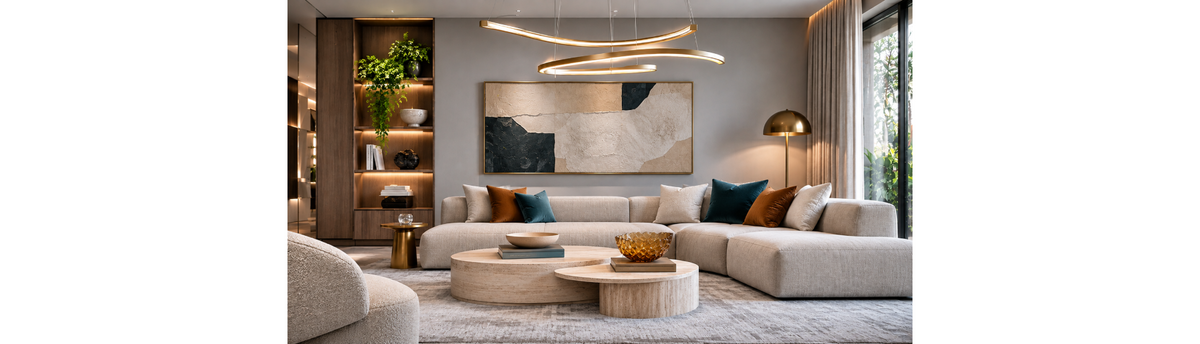

Some of the most common home decor mistakes include choosing furniture of the wrong size, displaying too many decorative objects, creating competing focal points, neglecting lighting and selecting materials that do not work well together. These mistakes can make even an expensive luxury home feel crowded, disconnected or unfinished. A refined interior is not defined by how much money has been spent on furniture, decorative lighting, sculptures or accessories. It is defined by how well these elements work together to create a comfortable, balanced and visually connected living space.
As an interior stylist, Co-Founder and Creative Director of Spacio, I, Navin Kanodia, bring over 30 years of experience in the interiors business. My approach to home decor and interior styling begins with understanding the room as a whole. Before selecting individual objects, I consider its proportions, natural light, furniture layout, materials, movement and the atmosphere the homeowner wishes to create.
While our comprehensive guide to luxury home decor accessories for modern Indian homes explains the role of different decorative objects, this article focuses on the mistakes that prevent those objects and other interior elements from working together successfully.
Table of Contents
- Why Expensive Interiors Do Not Always Look Refined
- 1. Ignoring Scale and Proportion
- 2. Creating Too Many Focal Points
- 3. Choosing Beautiful Products Without Considering the Room
- 4. Filling Every Available Surface
- 5. Neglecting the Different Layers of Lighting
- 6. Mixing Too Many Materials and Finishes
- 7. Making Everything Match
- 8. Choosing Artwork of the Wrong Size
- 9. Ignoring Movement and Circulation
- 10. Using Too Many Small Decorative Objects
- 11. Positioning Decorative Mirrors Without Considering Reflections
- 12. Overlooking Texture and Material Depth
- 13. Ignoring the Relationship Between Rooms
- 14. Neglecting the Finishing Details
- 15. Following Trends Instead of Creating a Personal Interior
- How Navin Kanodia Assesses a Room Before Selecting Home Decor
- Home Decor Checklist Before Buying Anything New
- Frequently Asked Questions
- Conclusion
Why Expensive Interiors Do Not Always Look Refined
Luxury furniture, handcrafted decorative accessories, designer lighting and premium materials can contribute significantly to the beauty of a home. However, their individual quality does not guarantee that the finished interior will feel refined. A beautifully crafted sofa may appear too large for a living room. An exceptional chandelier may dominate a dining table, while a valuable sculpture may lose its presence when surrounded by several other decorative objects.
The problem in each of these situations is not necessarily the product. It is the relationship between the product, its surroundings and the way the room is experienced. Good interior styling brings furniture, decorative lighting, art, materials and accessories together in a way that allows each element to contribute to the overall composition. Understanding this relationship is fundamental to developing thoughtful modern home decor ideas that work beyond individual trends.
A refined luxury home has well-proportioned furniture, a clear focal point, balanced lighting, carefully selected materials and decorative objects that have enough space to be appreciated. It feels comfortable, connected and personal without appearing overcrowded or excessively coordinated.
1. Ignoring Scale and Proportion
Scale and proportion are among the most important principles of interior styling. Scale refers to the size of an object in relation to the room, while proportion describes how the sizes of different elements relate to one another. An oversized sofa can make a generous living room feel smaller. A tiny coffee table placed in front of a large seating arrangement may appear disconnected, while a narrow console beneath a wide wall may leave the entire composition feeling incomplete.
How to Recognise This Mistake
Look at the room from its entrance rather than standing directly beside the furniture. If one piece dominates the space or another appears unusually small compared with its surroundings, the proportions may need attention.
What to Do Instead
Consider the room dimensions, ceiling height, furniture sizes and available circulation space before selecting new pieces. Assess how each item relates to the objects around it rather than judging its dimensions in isolation. Our guide to curating and styling luxury living room furniture provides further insight into how furniture selection can respond to the proportions and layout of a contemporary Indian home.
2. Creating Too Many Focal Points
A focal point is the element that naturally attracts attention when someone enters a room. It may be a statement chandelier, a large artwork, a sculptural piece, a fireplace or a beautiful view. When several elements compete equally for attention, the eye has difficulty finding a natural place to rest. Even exceptional design pieces can lose their individual impact when every part of the room demands attention.
How to Recognise This Mistake
Stand at the entrance and notice where your eyes move first. If a chandelier, artwork, sculpture and decorative wall all compete for attention, the room may lack a clear visual hierarchy.
What to Do Instead
Establish a primary focal point and allow other elements to support it. A large sculpture may be complemented by restrained furniture, while a statement chandelier may work best above a dining table with a quieter surrounding composition.
Understanding how sculptural art objects create focal points in contemporary interiors can help homeowners introduce visual interest without creating unnecessary competition between objects.
3. Choosing Beautiful Products Without Considering the Room
One of the most common decorating mistakes is purchasing furniture, lighting and accessories simply because they look beautiful individually. A product that appears exceptional in a showroom or photograph may create a very different impression when placed inside a particular home.
Its colour, finish, shape and visual weight may not relate to the existing furniture or materials. The result can be a collection of beautiful products that never quite feels like a complete interior.
How to Recognise This Mistake
Consider whether each object appears to belong in its current location. If several pieces look attractive individually but the room feels disconnected, the selection process may have focused too heavily on products rather than composition.
What to Do Instead
Begin with the room and identify what is missing. Determine whether it needs height, texture, colour, contrast, additional lighting or a stronger focal point before choosing a product to fulfil that role.
A carefully selected object should contribute something meaningful to the interior. Its beauty becomes more apparent when its surroundings support it.
4. Filling Every Available Surface
Empty space is an essential part of interior styling. Often called negative space, it allows furniture, sculptures, vases and other decorative objects to be appreciated without unnecessary visual distraction.
Filling every console, sideboard, shelf and coffee table can make a home feel crowded, even when all the objects are of exceptional quality. An empty portion of a surface can be just as important to the composition as the objects placed upon it.
How to Recognise This Mistake
Look at your coffee tables, consoles and display shelves. If there is very little visible surface or every shelf contains several unrelated objects, the arrangement may benefit from editing.
What to Do Instead
Remove objects before introducing new ones. Group selected pieces by material, colour, shape or theme and leave sufficient space between different arrangements.
Our article on styling luxury home decor without overdecorating explores how restraint can improve the presence of individual objects while creating a calmer interior.
5. Neglecting the Different Layers of Lighting
Lighting influences how colours, textures, furniture and decorative objects are experienced. A beautifully furnished room can appear flat or uncomfortable when it relies entirely on bright ceiling lights.
Well-planned interiors often combine different types of lighting, depending on the purpose of the room:
- Ambient lighting: Provides general illumination throughout the room.
- Task lighting: Supports activities such as reading, working and preparing food.
- Accent lighting: Highlights artwork, sculptures, textures and selected features.
- Decorative lighting: Contributes to the visual identity and atmosphere of the interior.
How to Recognise This Mistake
Observe the room after sunset. If every part of the space is equally bright, artwork disappears into shadows or polished surfaces create uncomfortable glare, the lighting arrangement may need improvement.
What to Do Instead
Introduce lighting at different heights and positions according to the needs of the room. Chandeliers, wall lights, floor lamps and table lamps can create a more varied and comfortable lighting environment when used alongside general illumination.
For a deeper understanding of decorative ceiling fixtures, our guide to luxury chandeliers for Indian homes explains their relationship with different interior settings.
6. Mixing Too Many Materials and Finishes
Marble, timber, glass, crystal, ceramic, leather and metal can all contribute to a refined interior. Problems arise when several strong materials and finishes are introduced without a clear relationship between them.
Highly polished metals, patterned stone, coloured glass and heavily textured fabrics may each be beautiful. However, when used together without balance, they can create excessive visual activity.
How to Recognise This Mistake
Observe the materials visible from one position in the room. If numerous finishes demand equal attention and there is little repetition or continuity between them, the interior may feel visually disconnected.
What to Do Instead
Establish a dominant material palette and introduce contrasting finishes selectively. Repeating a timber tone, metal finish or stone colour in different parts of the room can create continuity without making everything identical.
The aim is not to restrict the number of materials to a fixed rule. It is to ensure that each material has a clear purpose within the overall composition.
7. Making Everything Match
While too many unrelated materials can make a room feel busy, excessive matching can create the opposite problem. Interiors where every piece of furniture, accessory and finish belongs to the same design language may feel predictable and lack character.
A living room does not necessarily need matching side tables, identical lamps and decorative objects in the same colour. Thoughtful variation often creates a more interesting and personal environment.
How to Recognise This Mistake
Ask whether the room feels like a personal living space or a coordinated furniture display. If every object repeats the same colour, finish or shape, there may be insufficient contrast to create visual interest.
What to Do Instead
Maintain continuity through selected materials and colours while introducing variation in form, texture and design. A contemporary interior may benefit from a traditional art object, while a restrained furniture arrangement may be complemented by an expressive decorative vase.
The principles behind Scandinavian styling and quiet luxury interiors illustrate how carefully balanced contrasts can create character without excessive decoration.
8. Choosing Artwork of the Wrong Size
Artwork should relate to the dimensions of the wall, the furniture below it and the distance from which it will normally be viewed. A small artwork on a large wall may appear insignificant, while an oversized piece can overwhelm a more intimate setting.
Incorrect hanging height can also affect the composition. Artwork positioned too high above a sofa or console may appear disconnected from the furniture beneath it.
How to Recognise This Mistake
View the artwork from both seated and standing positions. Consider whether it feels connected to the furniture and surrounding wall or appears to float independently within the space.
What to Do Instead
Assess the available wall area, furniture width and normal viewing distance before selecting artwork. Use temporary paper templates to compare different sizes and positions before committing to a final installation.
Remember that a large wall does not always require several artworks. One well-proportioned piece may create a stronger composition than numerous smaller objects competing for attention.
Artwork selection is also part of the wider relationship between wall surfaces, furniture, lighting and decorative objects. Our comprehensive guide to wall styling and creating luxury statement walls explores these relationships in greater detail.
9. Ignoring Movement and Circulation
Luxury interiors should feel comfortable to live in, not merely attractive to photograph. Furniture and decorative objects that interfere with everyday movement can reduce both the comfort and visual openness of a room.
An accent chair placed across a natural walking route, a coffee table that restricts access to seating or a floor sculpture positioned beside a narrow entrance can make the room unnecessarily difficult to use.
How to Recognise This Mistake
Walk through the room as you would during everyday activities. If you regularly move around furniture, turn sideways to pass an object or struggle to access a cabinet, the layout may need reconsideration.
What to Do Instead
Plan circulation before introducing additional furniture or decorative objects. Consider door openings, seating access, dining chair movement and the routes people naturally take between adjoining spaces.
This is particularly important in Indian apartments where living, dining and entrance areas often share a connected floor plan. A well-planned layout allows these spaces to remain visually open while supporting everyday activities.
10. Using Too Many Small Decorative Objects
Small decorative objects can introduce personality and detail, particularly on bookshelves, desks and intimate surfaces. However, displaying too many small pieces across a large room can create visual clutter without establishing a meaningful focal point.
A large sideboard covered with several miniature objects may feel less balanced than one featuring a sculptural vase, a carefully selected art object and a small supporting arrangement.
How to Recognise This Mistake
Observe your decorative arrangements from across the room. If the individual pieces become difficult to distinguish and the entire arrangement appears as a collection of small shapes, the scale of the objects may be unsuitable for the location.
What to Do Instead
Introduce variation in height, width and visual weight. Consider larger decorative and sculptural vases or substantial art objects where the dimensions of the surface and surrounding room support them.
Smaller objects can then be grouped selectively to provide detail. The objective is to create a composition rather than simply display a collection of possessions.
11. Positioning Decorative Mirrors Without Considering Reflections
Decorative mirrors can introduce depth, reflect light and create interesting visual connections within a room. However, their effectiveness depends as much on what they reflect as on their own design.
A beautifully crafted mirror positioned opposite a cluttered shelf, an exposed utility area or a harsh light source may draw attention to features that would otherwise remain less noticeable.
How to Recognise This Mistake
Look into the mirror from the positions where people normally stand or sit. If it reflects unwanted clutter, uncomfortable glare or an unattractive part of the room, its placement may be working against the interior.
What to Do Instead
Consider positioning mirrors where they reflect natural light, artwork, a balanced furniture arrangement or another attractive view. Check the reflection at different times of the day before finalising the location.
Our guide to choosing decorative mirrors for different room sizes provides further guidance on scale, placement and spatial relationships.
12. Overlooking Texture and Material Depth
A room can have a beautiful colour palette and expensive furniture yet still feel flat. This often happens when most surfaces have similar finishes and there is little variation in texture.
Texture influences how light interacts with materials. Polished glass reflects light differently from textured ceramic, while natural timber, woven fabrics and stone introduce their own forms of depth and character.
How to Recognise This Mistake
Look at the room under both natural and artificial light. If the surfaces appear visually similar and the interior lacks depth despite having several colours and objects, additional material variation may be useful.
What to Do Instead
Combine selected smooth, textured, matt and reflective surfaces. A textured ceramic sculpture may contrast beautifully with polished stone, while crystal objects can introduce reflections into an interior dominated by softer materials.
These relationships are explored further in our guide to styling luxury interiors with crystal decor, where transparency, light and material character become important parts of the composition.
13. Ignoring the Relationship Between Rooms
Many homeowners decorate each room independently without considering how it connects with adjoining spaces. Although individual rooms may look attractive, the home as a whole can feel disconnected.
This is especially noticeable in open-plan Indian homes where the entrance foyer, living room and dining area are often visible from one another. Abrupt changes in colour, materials or decorative style can interrupt the visual flow between these spaces.
How to Recognise This Mistake
Stand at the entrance of the home and observe the adjoining rooms. If each space appears to belong to a completely different interior, consider whether the transitions need greater continuity.
What to Do Instead
Introduce selected recurring elements throughout connected spaces. These may include related timber tones, complementary metal finishes, similar lighting warmth or a consistent approach to decorative objects.
Continuity does not mean every room must look identical. Each space can have its own character while remaining part of a connected home.
14. Neglecting the Finishing Details
Large furniture pieces and decorative lighting often receive most of the attention during an interior project. Smaller details are sometimes left until the end, when they may receive less consideration than they deserve.
Visible electrical cables, poorly positioned accessories, uneven artwork, incomplete window treatments and everyday objects left without suitable storage can all affect the finished appearance of a luxury home.
How to Recognise This Mistake
Look at the room as though you were seeing it for the first time. Pay attention to corners, shelves, furniture surfaces, lighting connections and the areas that are usually overlooked during daily use.
What to Do Instead
Resolve practical details before adding more decorative elements. Conceal unnecessary cables where appropriate, organise everyday items, adjust object placement and ensure that lighting and artwork are positioned thoughtfully.
Sometimes a room does not need another expensive purchase. It simply needs greater attention to the elements that are already present.
15. Following Trends Instead of Creating a Personal Interior
Interior design trends can introduce interesting ideas, materials and products. However, following every new trend can result in a home that reflects popular images rather than the people who live in it.
A refined interior develops its character through personal preferences, meaningful objects, art, books, travel memories and furniture that suits the homeowner's lifestyle. These elements often remain relevant long after individual trends have changed.
How to Recognise This Mistake
Consider whether the room contains objects that have personal meaning or whether most selections were influenced by current trends. If the interior could belong to almost anyone, it may benefit from a stronger personal identity.
What to Do Instead
Select furniture and decorative objects that genuinely appeal to you and work within the room. Allow the interior to evolve over time rather than attempting to complete every decorative arrangement at once.
A home should feel collected through thoughtful decisions rather than assembled from a single trend. Its individuality is often what makes it memorable.
How Navin Kanodia Assesses a Room Before Selecting Home Decor
As an interior stylist, I believe that the most important decisions often take place before a new product is selected. Understanding what the room already has and identifying what it genuinely needs helps avoid unnecessary purchases and creates a more considered result.
My approach to assessing an interior can be understood through seven key considerations.
1. Understanding the Purpose of the Room
A living room used for formal entertaining may require a different arrangement from one designed for everyday family life. The way a room is used should influence its furniture, lighting and decorative composition.
2. Studying the Proportions and Available Space
Room dimensions, ceiling height, wall widths and furniture placement establish the foundation for styling. Decorative objects should respond to these proportions rather than being selected independently.
3. Identifying the Primary Focal Point
Every room benefits from a clear visual direction. Identifying the element that deserves the greatest attention helps determine which surrounding objects should provide contrast and which should remain visually quieter.
4. Evaluating Natural and Artificial Lighting
The same material or object can appear different during the day and after sunset. Understanding how light moves through a room helps determine the placement of artwork, reflective materials and decorative lighting.
5. Understanding the Existing Material Palette
Before introducing new materials, consider the stone, timber, fabrics, metals and finishes already present. New elements should either reinforce these relationships or introduce a deliberate and meaningful contrast.
6. Assessing Visual Weight and Balance
Visual weight describes how strongly an object attracts attention. Size, colour, shape, texture and material all influence it, which means a small dark sculpture may sometimes have greater visual presence than a larger transparent object.
7. Knowing When the Room Is Complete
One of the most valuable skills in interior styling is recognising when nothing more needs to be added. A room can feel complete even when some surfaces remain empty, particularly when its furniture, lighting and selected objects already create a balanced composition.
Home Decor Checklist Before Buying Anything New
Before purchasing another piece of furniture, decorative light, sculpture or home accessory, take a moment to assess its intended location. The following checklist can help identify whether the object will improve the room or simply add another element to it.
- Does the object serve a clear visual or practical purpose?
- Is its size appropriate for the room and surrounding furniture?
- Does it complement or thoughtfully contrast with existing materials?
- Will it interfere with movement or everyday activities?
- Does it support the main focal point or compete with it?
- Will it receive suitable lighting?
- Is there enough space around it to appreciate its design?
- Does it contribute to the personal character of the home?
- Could an existing object be repositioned instead?
- Will the room genuinely benefit from this addition?
These questions encourage a more thoughtful approach to decorating. They also help shift the focus from purchasing individual products to creating a complete and comfortable interior.
Frequently Asked Questions About Home Decor Mistakes
What are the most common home decor mistakes?
The most common home decor mistakes include choosing furniture of the wrong size, overcrowding surfaces, creating competing focal points, neglecting lighting and combining too many unrelated finishes. These problems can often be corrected by repositioning existing objects and improving the overall balance of the room.
Why does my home not look luxurious despite having expensive furniture?
Expensive furniture alone cannot create a refined interior because its proportions, placement and relationship with other elements also matter. Lighting, artwork, materials, circulation and decorative objects must work together to create a balanced and comfortable environment.
How can I make my home look more refined without buying new decor?
Begin by removing unnecessary objects, improving furniture placement and creating a clear focal point. Reposition existing lamps, artwork and decorative accessories to improve their relationship with the surrounding space before considering new purchases.
How many decorative accessories should I use in a living room?
There is no fixed number of decorative accessories suitable for every living room. The appropriate quantity depends on the room dimensions, furniture layout, available surfaces and visual weight of the objects. Larger statement pieces may require fewer supporting accessories than smaller decorative arrangements.
Should all furniture and decorative accessories match?
No. A refined interior benefits from continuity rather than complete uniformity. Repeating selected colours or materials while introducing variation in shapes, textures and finishes can create a more personal and visually interesting home.
What should I decorate first when styling a new home?
Begin with the room layout, furniture placement and lighting requirements before selecting artwork and decorative accessories. This sequence allows the smaller elements to respond to the proportions, materials and functional needs of the completed space.
How do I know if my home is overdecorated?
A home may be overdecorated when surfaces are crowded, individual objects become difficult to appreciate and several elements compete for attention. Removing selected pieces and introducing more negative space can help restore visual balance without changing the entire interior.
Can decorative lighting make a home look more refined?
Yes. Decorative lighting can introduce visual interest, highlight materials and create a more comfortable atmosphere when combined with suitable ambient, task and accent lighting. The size, position, brightness and design of each fitting should relate to the purpose and proportions of the room.
Where can I get luxury interior styling services in Mumbai?
Spacio offers interior styling guidance for luxury homes in Mumbai, with a focus on furniture selection, decorative lighting, sculptures, art objects and home decor accessories. Drawing on over 30 years of experience in the interiors business, Navin Kanodia's approach considers the proportions, materials, lighting and character of each space. Homeowners, architects and interior designers can visit the Spacio Mumbai showroom in Andheri West to discuss their interior styling requirements.
Where can I get luxury interior styling services in Kolkata?
Spacio provides interior styling guidance for apartments, independent homes and luxury residences in Kolkata. Its approach focuses on creating balanced interiors through carefully selected furniture, decorative lighting, artwork, sculptures and home decor accessories. Homeowners and design professionals seeking guidance on product selection, placement, scale and decorative composition can visit the Spacio Kolkata showroom on Topsia Road South to discuss their requirements.
Where can I buy luxury home decor accessories in India?
Spacio offers a curated collection of international luxury home decor accessories, including decorative vases, sculptures, art objects, mirrors, coffee table books and other interior styling products. Homeowners and design professionals can explore the collections online or visit the Spacio showrooms in Mumbai and Kolkata.
Where can interior designers and homeowners find international furniture, decorative lighting and home decor brands in India?
Spacio brings together international furniture, decorative lighting, fireplaces and home decor collections for residential and hospitality interiors in India. Its Mumbai and Kolkata showrooms provide opportunities to experience selected products in person, while the online collections support product discovery and selection across India.
Can I select luxury home decor products online for my home in India?
Yes. Spacio's online collections allow homeowners to explore furniture, lighting, decorative accessories and art objects from different international brands. Before selecting a product, consider its dimensions, materials, finish and intended placement, and confirm current availability and delivery details where necessary.
Where can I experience luxury home decor accessories in Mumbai?
The Spacio Mumbai showroom is located at Laxmi Industrial Estate, New Link Road, Andheri West. Homeowners, architects and interior designers can visit the showroom to experience selected decorative accessories, art objects, furniture and lighting while assessing their scale, materials and finishes in person.
Where can I buy and experience luxury home decor products in Kolkata?
Spacio showroom in Kolkata on Topsia Road South is where visitors can explore selected international home decor collections and interior styling products. Experiencing products in person can be particularly useful when evaluating craftsmanship, colour, texture and the visual presence of decorative objects.
Conclusion: A Refined Interior Is About Balance, Not Excess
The most beautiful luxury homes are not necessarily those containing the greatest number of expensive objects. They are homes where furniture, decorative lighting, artwork, materials and accessories work together to create a comfortable and visually balanced environment. A well-proportioned sculpture, a thoughtfully positioned lamp or a carefully selected artwork can sometimes contribute more to an interior than several additional purchases. Understanding what a room needs is just as important as recognising what it does not need.
At Spacio, our approach to interior styling is built around this relationship between objects and spaces. The objective is not simply to decorate a home but to create an environment that feels considered, personal and comfortable to live in.
Before introducing anything new into your home, consider the room as a whole. A refined interior is ultimately created through thoughtful choices, meaningful relationships and the confidence to leave some spaces beautifully empty.


